
Building Confidence One Small Daily Win at a Time

Confidence can feel a little shaky after big life changes. Retirement, health changes, losing a partner, moving, or simply having a quieter routine can all make a person wonder, “Can I still do this?”
The good news is that confidence doesn’t have to arrive in one big burst. Most of the time, it grows from small proof. You do something. You notice it. You trust yourself a little more.
That’s the heart of Building Confidence One Small Daily Win at a Time. Not giant goals. Not pressure. Just steady, doable moments that remind you, “I’m still capable.”

Small wins work because they give the mind proof for building confidence
Confidence isn’t just a feeling. It’s built through experience.
When you finish something you meant to do, even something tiny, your brain gets a clear message: “I followed through.” That message matters. It’s especially helpful on days when motivation is low or self-doubt is loud.
A small win might be:
Making the bed
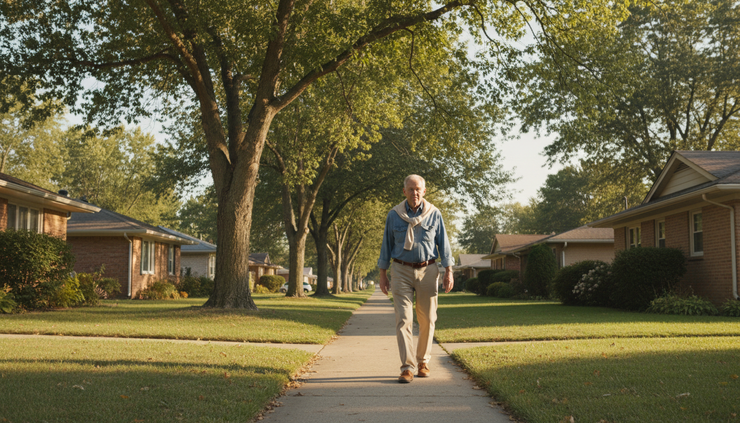
Taking a 10-minute walk
Calling a friend
Drinking a full glass of water with breakfast
Sorting one drawer
Reading five pages
Stretching while the coffee brews
Paying one bill
Cooking one simple meal
Writing down one good thing from the day
None of these sound dramatic. That’s the point. They’re small enough to do without a big buildup, and clear enough to count.
Big goals can sometimes feel like a mountain. Small wins feel like steps. And steps are how most good changes happen.
Pick wins that fit the day you actually have
A useful daily win should match real life. Some days come with energy. Some come with sore knees, poor sleep, doctor visits, grief, or a schedule full of errands.
Confidence grows better when the goal is honest.
Instead of saying, “I need to walk two miles every day,” try, “I’ll walk to the mailbox and back.” If the day goes well, keep going. If not, the win still counts.
Instead of saying, “I’ll clean the whole kitchen,” try, “I’ll clear the counter by the sink.”
Instead of saying, “I need to reconnect with everyone,” try, “I’ll send one text or make one call.”
The win should be small enough that it doesn’t require perfect conditions.
A good test is this:
If the day gets messy, can this still be done in 5 to 15 minutes?
If the answer is yes, you’ve found a strong daily win.
Make the win specific
Vague goals make it harder to see progress. “Be healthier” is too broad. “Eat a piece of fruit with lunch” is clear.
“Get organized” can feel heavy. “Put all unopened mail in one basket” is simple.
“Be more social” may bring up pressure. “Say hello to one neighbor” feels possible.
Specific wins are easier to begin and easier to celebrate.
Keep a few backup wins ready
Confidence can take a hit when a plan falls apart. Backup wins help prevent that all-or-nothing feeling.
Here are a few gentle backups:
Sit outside for five minutes
Put on fresh clothes
Wash one cup or plate
Stand and stretch three times
Listen to one favorite song
Write down tomorrow’s first task
Take medication as directed
Step into the hallway or onto the porch
A backup win is not a lesser win. It’s a way of staying connected to yourself on a hard day.

Notice the win before rushing to the next thing
Many people finish a task and move straight to what’s next. The laundry is folded, so now the floor needs sweeping. The walk is done, so now the dishes are waiting.
That habit can make progress feel invisible.
Pause for a few seconds after a small win. Let it land.
You might say quietly:
“I did that.”
“That counts.”
“I kept my promise to myself.”
“I’m making progress.”
“This was enough for today.”
This may feel odd at first, especially for people who were raised not to “make a fuss.” But noticing effort is not bragging. It’s training the mind to see evidence instead of only seeing what’s unfinished.
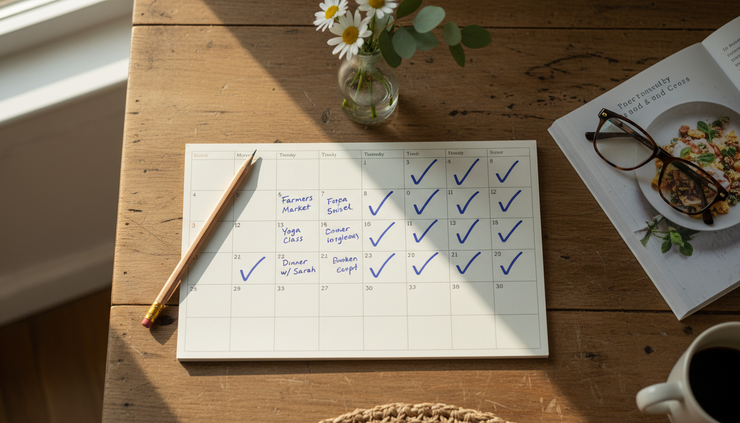
A simple check mark can help too. Keep a small notebook, calendar, or paper on the fridge. Each day, write the win and mark it done.
There’s no need for a fancy system. A plain calendar works.
After a week, you’ll have visible proof that you showed up for yourself several times. That proof is powerful, especially on days when confidence dips.
Build a rhythm instead of chasing perfection
A small daily win works best when it becomes part of a rhythm.
Think of a rhythm as a gentle routine, not a strict rule. The goal is to make the win easier to remember and easier to repeat.
Try attaching a win to something already in the day.
After breakfast, take a short walk.
After brushing teeth, stretch shoulders.
After lunch, drink a glass of water.
After dinner, write down one thing that went right.
Before bed, set out clothes for tomorrow.
This is helpful because the day already has natural anchors. You’re not trying to remember something from scratch. You’re adding one small action onto a habit that’s already there.
Keep the first step tiny
Starting is often the hardest part. Make the first step so small it feels almost silly.
If the goal is to walk, put on walking shoes.
If the goal is to tidy, set a timer for three minutes.
If the goal is to call someone, find the phone number.
If the goal is to cook more, set one ingredient on the counter.
Tiny starts lower the pressure. Once you begin, you may keep going. If you don’t, you still completed the first step, and that still matters.
Don’t punish yourself for missing a day
Everyone misses a day. That’s normal life.
A missed day doesn’t erase progress. It just means the next win needs to be small and kind.
Try this phrase: “I’m starting again today.”
No lecture. No guilt. No long explanation. Just a restart.
Confidence grows when you learn that a slip doesn’t have to become a stop.
Choose wins that support independence
For many older adults, confidence is closely tied to independence. That doesn’t mean doing everything alone. It means feeling capable, involved, and able to make choices.
Small wins can support that.
Here are a few areas where daily wins can help.
Home
Put away five items, wipe one counter, water one plant, or prepare tomorrow’s breakfast.
Mind
Work on a puzzle, read a few pages, learn one new phone feature, or write in a journal.
Body
Take a short walk, do chair stretches, stand up during a TV commercial, or practice balance near a sturdy surface.
Connection
Call one person, wave to a neighbor, attend one class, or send a birthday card.
These wins don’t have to be impressive to anyone else. They only need to matter to the person doing them.
A small action that protects dignity, choice, or connection can have a big emotional effect.
Let support make the win easier
Asking for support doesn’t take away from the win. It can make the win more likely.
Support might look like a friend walking with you once a week. It might be a family member helping set up a pill organizer. It might be a coach helping you choose realistic goals and stay encouraged.
The key is to keep ownership. The win still belongs to the person doing the work.
A helpful support person won’t take over. They’ll ask good questions:
What feels doable today?
What would make this easier?
What got in the way yesterday?
What win would feel meaningful this week?
How can we make this smaller?
Support also helps when confidence is low. Sometimes another person can see progress before it feels real.
If building steady confidence with kind, practical support sounds helpful, take a look at My Senior Coach pricing plans. A little guidance can make small daily wins easier to choose and easier to keep.
A simple seven-day confidence plan
Here’s a gentle way to begin. No special tools needed. Just a piece of paper and a pen.
Day 1
Choose one tiny win for tomorrow.
Keep it under 10 minutes if possible. Write it down.
Example: “After breakfast, I’ll walk to the mailbox.”
Day 2
Do the win and mark it down.
Use a check mark, sticker, or short note. Make the progress visible.
Day 3
Repeat the same win or make it slightly easier.
The goal is not to prove how much you can do. The goal is to prove you can show up.
Day 4
Add one sentence.
Write, “Today I kept my promise by…” and fill in the blank.
This helps connect the action to confidence.
Day 5
Choose a connection win.
Call someone, send a note, greet a neighbor, or make a plan to see a friend.
Day 6
Choose a home or body win.
Pick something that brings a sense of order, comfort, or steadiness.
Day 7
Look back at the week.
Count the wins. Notice what helped. Choose one win to carry into next week.
If you only complete three of the seven days, that still gives you three pieces of proof. Start there.
FAQ
What if my daily win feels too small to matter?
If it helps you follow through, it matters. Small wins build trust over time. A five-minute task done regularly can do more for confidence than a huge plan that never gets started.
How many daily wins should I aim for?
Start with one. One clear win is easier to remember and easier to repeat. Once that feels steady, you can add another if it feels helpful.
What should I do when I feel discouraged?
Make the win smaller. Choose something gentle, like opening the curtains, stepping outside for fresh air, or writing one sentence. Confidence often returns through action, not waiting.
Can small wins help after a major life change?
Yes, they can help create structure and a sense of control. After loss, illness, retirement, or a move, tiny routines can make the day feel less overwhelming.
Do I need an app or tracker?
No. A paper calendar, notebook, or sticky note works well. The best tracker is the one you’ll actually use.
The next win can be very small
Confidence doesn’t need a grand plan to begin. It needs one honest action and a little attention afterward.
Pick one small win for today. Make it clear. Make it doable. Then, when it’s done, pause long enough to let yourself feel it.
That quiet moment matters.
It says, “I did what I said I’d do.”
And that’s how confidence starts to grow again.


Comments