
Gentle Knee Strengthening for Seniors Without Pain

Knees can get cranky fast. One day the stairs feel fine, and the next day one step makes you pause and think, “Do I really need to go upstairs right now?”
The good news is that stronger knees don’t require hard workouts, deep squats, or “pushing through.” In fact, the safest plan is usually the opposite: small movements, good support, and steady practice.
This guide walks through gentle knee strengthening for seniors without pain, using simple exercises you can do at home with a sturdy chair, a wall, and a little patience.
This is general information, not medical advice. If you’ve had a recent fall, surgery, swelling, sharp pain, or a diagnosed knee condition, check with a doctor or physical therapist before starting.

Start with the real goal
The goal isn’t to make your knees “tough.” The goal is to help the muscles around your knees do more of the work, so the joint doesn’t have to carry the whole load by itself.
Your knees rely on several muscle groups:
The front of the thighs
The back of the thighs
The hips and buttocks
The calves
The muscles around the ankles and feet
When these areas get stronger, everyday movement often feels steadier. Standing from a chair, walking to the mailbox, stepping into the shower, and climbing a few stairs may feel less stressful.
A good knee-strengthening routine should feel controlled, mild, and repeatable. You should finish thinking, “I could do that again tomorrow,” not “I need to recover from that.”
Know the difference between effort and pain
A little muscle effort is normal. Knee pain is different.
During these exercises, aim for a feeling of mild work in the muscles around the knees and hips. That might feel like warmth, light fatigue, or “my legs are waking up.”
Stop if you feel:
Sharp pain
Catching or locking in the knee
Sudden swelling
Pain that changes your walking
Pain that gets worse as you continue
Pain that lasts into the next day
A helpful rule is the two-hour check. If your knee feels more irritated two hours after exercising, you probably did too much. Next time, reduce the number of repetitions, make the movement smaller, or choose an easier version.
If pain is severe, new, or comes with swelling, warmth, or redness, it’s best to get medical guidance.
Warm up before you strengthen
Cold joints often complain. A short warm-up tells your knees, hips, and ankles that movement is coming.
Try this easy warm-up for 3 to 5 minutes.
March in place while seated
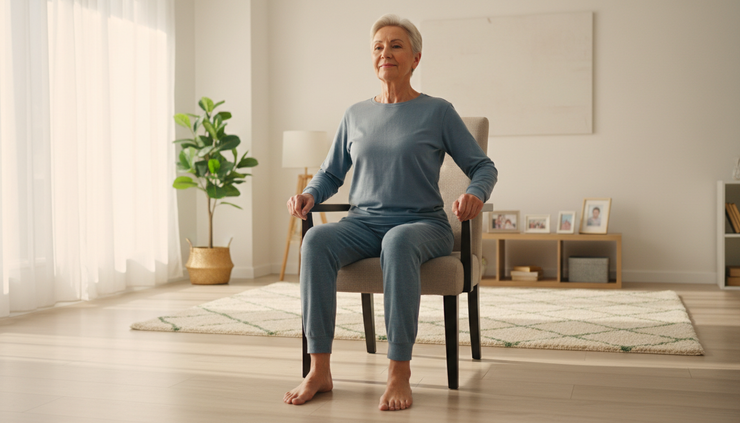
Sit tall in a sturdy chair with both feet flat on the floor.
Lift one knee a few inches, set it down, then lift the other. Keep the movement small. Use your hands on the chair if you need balance.
Do 20 to 30 slow marches.
Ankle circles
Lift one foot slightly off the floor. Circle the ankle 5 times one way, then 5 times the other way. Switch sides.
This helps the lower leg move better, which can take pressure off the knee during walking.
Heel and toe raises
Sit with both feet flat. Lift your heels while keeping your toes down. Then lower them and lift your toes while keeping your heels down.
Do 10 of each.
This wakes up the calves and shins, which help with balance and walking.
Try five gentle knee exercises at home
These exercises are simple, but they’re not “too easy.” Done slowly, they can build useful strength without stressing the knees.
Start with 5 to 8 repetitions of each exercise. If that feels fine, work up to 10. Rest when needed.
Sit-to-stand with chair support
This is one of the most useful exercises because it trains a movement used all day.
Sit near the front of a sturdy chair. Place your feet hip-width apart and flat on the floor. Lean forward slightly from the hips. Push through your heels and stand up.
Pause. Then slowly sit back down.
Use the chair arms if needed. If your chair has no arms, place your hands lightly on your thighs.
Keep your knees pointing in the same direction as your toes. Don’t let them cave inward.
Make it easier by using a higher chair or placing a firm cushion on the seat.
Seated knee straightening
Sit tall with your back supported. Keep one foot on the floor. Slowly straighten the other leg until the knee is almost straight, but don’t lock it.
Hold for 2 seconds. Lower slowly.
You should feel the front of the thigh working. If you feel pain at the kneecap, lift the leg only halfway or skip this one for now.
Heel slides
Lie on your back on a bed, or sit with your leg stretched out on a couch.
Slowly slide one heel toward you, bending the knee. Then slide it away until the leg is comfortable again.
Keep the movement smooth and easy. This exercise helps with gentle range of motion as well as control.
If lying down is uncomfortable, do it seated by sliding your foot back and forth on a towel.
Standing hamstring curl
Stand behind a sturdy chair and hold the backrest. Keep your knees close together.
Bend one knee and bring your heel toward your bottom. Only go as far as comfortable. Lower slowly.
Try not to arch your back or swing the leg. The movement should come from bending the knee.
This strengthens the back of the thigh, which helps support the knee during walking.
Side leg raise
Stand behind a chair and hold on lightly. Keep your body tall.
Move one leg out to the side a small distance, keeping the toes pointed forward. Bring it back slowly.
This works the outer hip muscles. Strong hips can help keep the knees aligned, especially when walking, turning, or using stairs.
Keep the movement small. Bigger isn’t better here.
Use the right amount of challenge
Knees usually respond better to slow progress than sudden effort.
A good starting plan is:
Exercise habit | What to do |
Frequency | 3 days per week |
Repetitions | 5 to 10 per exercise |
Sets | 1 set to start |
Rest | 30 to 60 seconds as needed |
Effort level | Mild to moderate muscle work |
After two weeks, if your knees feel fine, add a second set to one or two exercises. You don’t need to increase everything at once.
The best progress often feels boring. That’s a good sign. Boring usually means safe, steady, and repeatable.
Protect your knees during daily movement
Exercise helps, but daily habits matter too. Many knee flare-ups happen during ordinary movements, not formal workouts.
Use the whole foot when standing
When standing from a chair, press through the whole foot, especially the heel and midfoot. Try not to push only through the toes.
This helps bring in the hips and thighs instead of asking the knees to do everything.
Keep your knees in line
When you stand, sit, or step, look at where your knees point. They should generally follow your toes.
If the knees drift inward, reduce the range of motion and slow down.
Take stairs one step at a time when needed
There’s no prize for rushing stairs. If your knees are sensitive, use the railing and step carefully.
A common approach is:
Go up with the stronger leg first
Go down with the more sensitive leg first
Use the railing for support
If both knees feel about the same, move slowly and place the whole foot on each step.
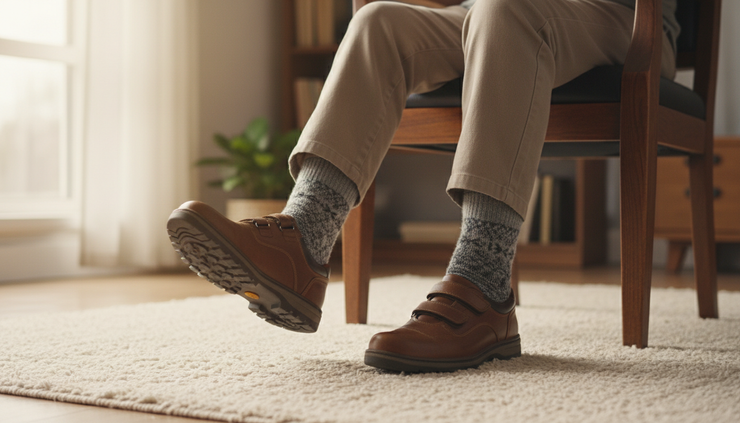
Choose supportive shoes
Very worn-out shoes can change how the knee absorbs force. Around the house, avoid slippery socks if balance is a concern. A supportive shoe with a secure heel can make walking and exercise feel steadier.
Build balance along with strength
Knee strength and balance go together. Stronger legs help balance, and better balance helps protect the knees from awkward twists.
Try this simple balance drill near a counter or sturdy chair.
Stand tall and hold the support with both hands. Shift your weight gently from one foot to the other. Keep both feet on the floor.
After a few days, if that feels safe, try holding with one hand. Later, try lifting one heel slightly while the toes stay down.
Don’t practice balance where you might fall. Stay close to support, and skip this if you feel dizzy or unsteady.
Make it easier on stiff or achy days
Some days knees feel more sensitive. That doesn’t mean the plan has failed. It just means the body is asking for a lighter day.
On stiff days, try:
Fewer repetitions
Smaller movements
More seated exercises
A longer warm-up
A short walk instead of strengthening
Gentle movement can help stiffness, but pain is a stop sign. Respect it.
If swelling shows up after activity, rest and consider calling a health professional, especially if swelling is new or unusual.
A simple weekly routine
Here’s a calm routine that fits into a normal week.
Monday, Wednesday, Friday
Warm up for 3 to 5 minutes.
Do:
Sit-to-stand
5 to 8 repetitions
Seated knee straightening
5 to 8 repetitions each leg
Heel slides
5 to 8 repetitions each leg
Standing hamstring curl
5 to 8 repetitions each leg
Side leg raise
5 to 8 repetitions each leg
Finish with a slow walk around the room or hallway for 1 to 2 minutes.
Tuesday, Thursday, Saturday, or Sunday
Take an easy walk, do seated marching, or rest. Recovery is part of strengthening.
If you’d like more support building safe routines at home, you can compare options here: view senior coaching plans.
FAQ
Should knee exercises hurt to be effective?
No. Gentle muscle effort is fine, but sharp or increasing knee pain is a sign to stop. Strengthening should feel controlled, not punishing.
How long does it take to feel stronger?
Some people feel steadier within a few weeks, while others need longer. The key is consistency. Small sessions done regularly usually work better than one hard session now and then.
Can I do knee exercises every day?
Light movement, like seated marching or ankle circles, may be fine daily. Strength exercises are often best 2 to 3 days per week at first, with rest days between.
What if one knee is worse than the other?
Let the more sensitive knee set the pace. Use smaller movements and fewer repetitions on that side. If one knee has sudden pain, swelling, or weakness, get checked before continuing.
Are squats safe for seniors with knee pain?
Deep squats can bother sensitive knees. A supported sit-to-stand is often a safer starting point because it uses a chair, keeps the movement practical, and lets you control the depth.
Keep it gentle and keep going
Strong knees are built through patience. You don’t need fancy equipment, heavy weights, or painful exercise to make progress.
Start small. Move slowly. Stop when your knee complains. Give yourself rest days. Over time, the muscles around your knees can become better helpers, and everyday movement can feel more steady and comfortable.


Comments