
Improve Your Balance in Just 5 Minutes a Day for Seniors

A small wobble can change the way a day feels. Reaching for a shelf, stepping off a curb, turning in the kitchen, or getting up at night can feel less certain than it used to.
The good news is that balance can be trained. It does not require a gym, special equipment, or a long workout. A steady 5-minute routine, done most days, can help the body practice the skills that keep you upright: leg strength, ankle control, posture, coordination, and confidence.
This guide shares a simple daily balance routine for seniors, plus safety tips, ways to make the exercises easier or harder, and signs that the work is helping.
This article is for general information only. If there has been a recent fall, dizziness, fainting, new weakness, numbness, chest pain, or a medical condition that affects movement, speak with a health care professional before starting.

Why five minutes can make a real difference in balance for seniors
Balance is not one single skill. It is a team effort.
The eyes help judge distance. The inner ear helps sense motion. The feet and ankles feel the floor. The legs and core help correct small shifts before they become large ones. The brain brings all of that information together.
With age, some of these systems may slow down. Muscles may lose strength. Joints may feel stiffer. Vision may change. Medications can affect steadiness. Less activity can also make balance worse over time.
A short daily practice helps because it gives the body regular reminders. Five minutes may sound small, but it is enough to practice standing tall, shifting weight, controlling the ankles, and stepping with purpose.
The goal is not to stand like a statue. Real balance means being able to adjust when life moves, such as when a pet walks by, a rug edge catches the foot, or a sidewalk is uneven.
Set up your space before you start
A safe setup matters more than doing the “perfect” exercise. Before practicing, choose a place where support is close by.
Good options include:
Beside a kitchen counter
Behind a sturdy dining chair
Near a wall in a hallway
Next to a bed if getting tired is likely
Use a chair that does not roll. Clear throw rugs, cords, shoes, pet toys, and clutter from the area. Wear shoes with a secure fit and a flat, non-slip sole. If practicing barefoot feels safer and a clinician has approved it, that can work too, but avoid socks on smooth floors.
Keep the phone nearby. If balance is very poor, practice with another person at home.
Use this simple safety rule:
Challenge balance, but do not scare the body. A mild wobble is fine. A near fall is too much.
During each exercise, keep one or both hands close to support. Touch the chair or counter whenever needed. Light fingertip contact still trains balance.
A simple five minute daily routine
This routine uses five exercises. Do each one for about 45 seconds, with a short pause between moves. If 45 seconds feels too long, begin with 20 to 30 seconds.
Move slowly. Breathe normally. Keep the knees soft, not locked.
Stand tall and find your center
Stand with feet about hip-width apart. Place one or both hands lightly on the chair or counter.
Imagine the body stacking upward:
Ears over shoulders
Shoulders over hips
Hips over ankles
Gently shift weight from the heels to the balls of the feet, then back to the middle. Do not rise up on the toes yet. Just notice where the weight goes.
Then shift slightly right and left. Keep the movements small.
This wakes up the feet and ankles. It also teaches the body to find center again after a shift.
Make it easier by holding the support with both hands.
Make it harder by using only fingertip support or standing with feet a little closer together.
Practice heel raises with control
Stand tall and hold the support. Slowly lift both heels so the weight moves onto the balls of the feet. Pause for one second. Lower the heels with control.
Do not rush the lowering part. That is where the ankles and calves do useful work.
Aim for 8 to 12 slow raises during the time.
Heel raises help with ankle strength, which matters for walking, stairs, and recovering from small stumbles. They also train the lower legs to support a steady posture.
If the calves cramp, reduce the height of the lift. If there is pain, stop.
March in place with steady steps
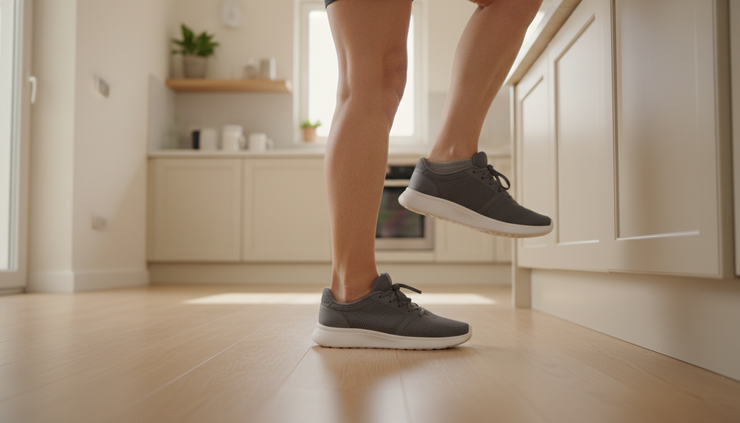
Hold the counter or chair. Lift one knee a few inches, lower it, then lift the other knee. Keep the steps smooth and quiet.
The goal is not to lift high. The goal is to stay tall while weight moves from one leg to the other.
Try to keep the shoulders relaxed. Look straight ahead instead of down at the feet. If looking forward feels too difficult, glance down only when needed, then look ahead again.
Marching in place helps with walking confidence because every step requires a brief moment of balance on one leg.
Make it easier by lifting the feet only slightly.
Make it harder by slowing the march. Slower steps often require more control.
Step to the side and return
Stand behind a chair or in front of a counter. Step the right foot to the side, then bring it back to the starting position. Repeat a few times, then switch to the left.
Keep the toes facing forward. Avoid leaning the upper body far to the side. Think of the foot stepping out, then the body returning to center.
Side stepping trains the hips, especially the muscles that help keep the pelvis steady. These muscles support walking, turning, and moving around furniture.
This move is helpful because many daily balance losses happen sideways, not just forward.
Make it easier with very small steps.
Make it harder by pausing after the side step before returning.
Hold a supported tandem stance
Tandem stance means standing with one foot in front of the other, as if standing on a line. For many people, this is challenging, so start with a gentler version.
Place one foot slightly ahead of the other, with space between the feet. Hold the chair or counter. Stand tall and breathe.
After 20 seconds or so, switch which foot is in front.
If this feels too easy, move the feet closer to a straight line. If it feels too hard, widen the feet.
This exercise trains the body to handle a narrower base of support. That can help with stepping through tight spaces, turning, and walking on uneven ground.
Stop if dizziness appears. Sit down and rest.
How to make balance practice safer and more effective
The best balance routine is the one that can be done often without fear. Progress should feel steady, not dramatic.
Use the right level of support
Holding on is not cheating. It is smart training.
Start with two hands. Move to one hand when ready. Later, try light fingertip contact. Some people may always need support, and that is fine.
A good challenge feels like this:
The body wobbles a little.
The hand can reach support easily.
Breathing stays calm.
The exercise feels possible to repeat tomorrow.
Too much challenge feels like this:
The body lurches.
The feet shuffle quickly to prevent a fall.
The heart races from fear.
The exercise causes pain or dizziness.
Practice at the same time each day
A 5-minute habit works best when it attaches to something already familiar. Try practicing:
After morning coffee
Before lunch
After brushing teeth
During the first TV commercial break
Before an afternoon walk
The routine does not need to be perfect. Missing a day is not failure. Return the next day and keep it simple.
Keep a tiny progress record
A notebook or calendar can help. Write one short note after practice.
Examples:
“Used both hands today.”
“Marching felt steadier.”
“Tandem stance was hard.”
“No dizziness.”
“Did 5 minutes.”
Over a few weeks, these notes can show progress that may be hard to feel day by day.

What progress may look like
Balance improvements are often quiet. They may not feel like a big breakthrough. Instead, daily tasks may start to feel less tense.
Signs of progress can include:
Standing from a chair feels more controlled.
Turning in the kitchen feels smoother.
Walking across a room feels less cautious.
Reaching for a light object feels steadier.
The hands grip the counter less during practice.
The body recovers faster from small wobbles.
Confidence matters too. Fear of falling can cause shorter steps, stiffness, and less movement. Gentle practice can help rebuild trust in the body.
Still, balance training should not replace medical care. If unsteadiness is new, getting worse, or paired with dizziness or vision changes, check in with a clinician. A medication review, eye exam, hearing check, physical therapy referral, or strength program may help.
A weekly plan that fits real life
Here is a simple way to use the routine without overthinking it.
Day | Practice goal |
Monday | Do the 5-minute routine with steady support |
Tuesday | Repeat the same routine and notice which move feels hardest |
Wednesday | Keep the steps smaller and focus on posture |
Thursday | Try lighter hand contact if it feels safe |
Friday | Repeat the full routine and write one progress note |
Saturday | Practice before or after a short walk |
Sunday | Rest or do a gentle version for 3 minutes |
The plan can be adjusted at any time. If energy is low, practice seated posture, ankle pumps, or a shorter standing routine with support. If energy is good, keep the same 5-minute length but improve control.
More time is not always better. Better attention is better. Slow, careful movement teaches the body more than rushing through extra minutes.
When to stop and get help
Stop the session and sit down if any of these happen:
Dizziness or spinning
Chest pain or pressure
Shortness of breath that feels unusual
New weakness on one side
Numbness
Sudden vision changes
Sharp joint pain
A feeling that a fall is likely
Call a health care professional if symptoms are new, repeated, or concerning. Call 911 for signs of a possible stroke, heart attack, serious injury, or sudden severe symptoms.
A physical therapist can also create a personal balance plan, especially after a fall, surgery, illness, or long period of inactivity.
FAQ
Is five minutes a day really enough to improve balance?
Five minutes can help when practiced often and safely. It gives the body repeated practice with posture, weight shifting, ankle strength, and stepping. Some people may need a fuller program, but five minutes is a strong place to start.
Should balance exercises be done with shoes on?
For most people, supportive shoes are a safe choice. Shoes should fit well and have non-slip soles. Avoid socks on smooth floors because they can slide.
What time of day is best for balance practice?
The best time is when energy is steady and the home is calm. Morning works well for some people. Others prefer afternoon after the body has warmed up. Avoid practicing when rushed, dizzy, or very tired.
Should the exercises hurt?
No. Mild muscle work is normal, but pain is a signal to stop or change the movement. Joint pain, sharp pain, dizziness, or unusual symptoms should be taken seriously.
Can a cane or walker still be used?
Yes. Balance practice does not mean giving up helpful support. A cane, walker, chair, or counter can all be part of safer movement. Use the support recommended by a clinician.

Keep the habit small enough to repeat
Better balance starts with a simple promise: practice a little, practice safely, and practice often. Five minutes gives the body a daily chance to remember how to shift, steady, step, and recover.
Choose one safe spot at home. Place a sturdy chair there. Try the routine today with as much support as needed.
For more guided support with healthy aging habits, balance, and daily wellness, explore My Senior Coach pricing plans.


Comments