
Safe Exercise Tips for Seniors 65 Plus Living With Heart Conditions

Exercise can feel a little scary when your heart has already given you trouble. Maybe the doctor said to “stay active,” but no one explained what that should look like on a Tuesday morning when your knees are stiff, your energy is low, and you’re wondering if that flutter in your chest is normal.
The good news is that movement can still be part of your life. For many older adults with heart conditions, gentle, steady exercise helps with stamina, balance, mood, blood pressure, and day-to-day independence. The key is to do it in a way that respects your body and your medical history.
This guide is for general information only. It doesn’t replace medical advice. Before starting or changing an exercise routine, check with your doctor, cardiologist, or cardiac rehab team, especially if you’ve had recent chest pain, surgery, a heart attack, a new diagnosis, or a medication change.
Start with a doctor’s green light
Before thinking about steps, weights, or workout videos, start with one question:
What kind of exercise is safe for my heart right now?
That answer can change depending on your condition. A person with stable coronary artery disease may get different advice than someone with heart failure, atrial fibrillation, a valve problem, a pacemaker, or recent bypass surgery.
Ask your doctor a few clear questions:
What activities are safe for me?
Are there movements I should avoid?
What heart rate range is safe, if I should track it?
Should I join cardiac rehab?
What symptoms mean I should stop?
Do any of my medications affect exercise?
If your doctor recommends cardiac rehabilitation, take that seriously. Cardiac rehab is supervised exercise and education for people recovering from or living with certain heart conditions. It can help you learn how hard to work, how to monitor symptoms, and how to build confidence.
If you’ve been inactive for a long time, don’t feel embarrassed. Doctors hear that all the time. A safe plan can start very small, even with a few minutes at a time.
Choose activities that are gentle on the heart and joints
The best exercise is the one you can do safely and regularly. It doesn’t need to look impressive.
For many seniors living with heart conditions, good options include:
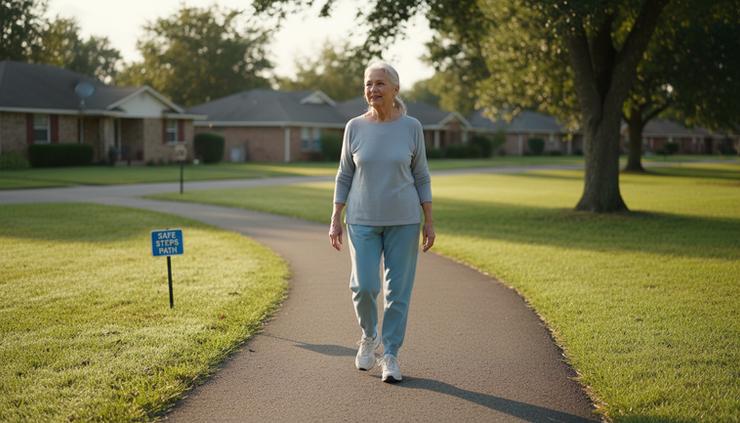
Walking on flat ground
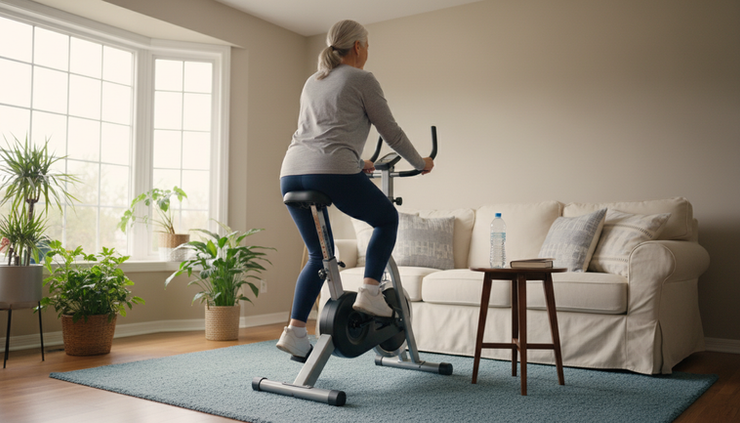
Stationary cycling
Water walking or gentle swimming
Chair exercises
Light strength training
Stretching
Balance practice
Tai chi or gentle yoga, with modifications
Walking is often the easiest place to begin. It doesn’t require special equipment beyond supportive shoes, and you can adjust the pace as needed. A flat hallway, driveway, shopping mall, community center, or quiet sidewalk all count.
If balance is a concern, use a cane, walker, railing, or walking partner. Safety matters more than speed.
Try to avoid sudden bursts of hard effort unless your doctor has cleared them. Shoveling snow, carrying heavy groceries up stairs, pushing a heavy mower, or rushing to catch a bus can put a sudden load on the heart. These activities may feel “normal,” but they can be more demanding than a planned walk.
Use the talk test instead of chasing numbers
Fitness watches and heart rate monitors can be helpful, but they’re not perfect. Some heart medications, especially beta blockers, can keep your heart rate lower during activity. Atrial fibrillation can also make heart rate readings jump around.
That’s why the talk test is so useful.
During a moderate walk or workout, you should usually be able to talk in short sentences. You may breathe a little heavier, but you shouldn’t be gasping.
Here’s a simple way to judge effort:
Effort level | What it feels like | What to do |
Easy | You can talk comfortably | Good for warmups, cooldowns, and recovery days |
Moderate | You can talk, but singing would be hard | Often a good target if your doctor approves |
Hard | You can only say a few words | Slow down unless your care team told you this is okay |
Too hard | You feel chest pressure, dizziness, nausea, or severe shortness of breath | Stop and seek help if symptoms don’t quickly improve |
You can also use a 0 to 10 effort scale. Sitting still is 0. All-out effort is 10. Many people with heart conditions are told to stay around a light to moderate level, such as 3 to 5, but your personal range should come from your clinician.
Build your routine slowly
A safe exercise plan doesn’t begin with “push through.” It begins with start small and repeat.
If you’re cleared to exercise but haven’t been active lately, try this kind of gentle start:
Warm up for 5 minutes with slow walking or easy marching in place.
Walk or move at a comfortable pace for 5 to 10 minutes.
Cool down for 5 minutes.
Notice how you feel during and after.
If that feels fine for several sessions, add a few minutes. Not 30 minutes all at once. Just a little.
A sample first-month plan might look like this:
Week | Goal if you feel well and your doctor approves |
Week 1 | 5 to 10 minutes of easy walking, 3 to 5 days |
Week 2 | 10 to 15 minutes, still easy to moderate |
Week 3 | 15 to 20 minutes, with rest breaks as needed |
Week 4 | 20 to 30 minutes, broken into shorter walks if needed |
Short sessions count. Three 10-minute walks can be easier than one 30-minute walk, and they still help build the habit.
Pay attention to the next day. If you feel wiped out, unusually short of breath, dizzy, or sore in a way that affects daily activity, the session may have been too much. Scale back and talk with your care team if it keeps happening.
Warm up and cool down every time
This is one of the easiest safety habits to skip, and one of the most useful.
A warmup gives your heart, lungs, blood vessels, and muscles time to adjust. A cooldown helps your body return to rest more gradually. Stopping suddenly after exercise can sometimes cause lightheadedness, especially if blood pools in the legs.
A simple warmup can include:
Slow walking
Gentle shoulder rolls
Easy ankle circles
Marching in place
Slow sit-to-stand practice from a sturdy chair
A simple cooldown can be the same movements, just slower.
Skip deep forward bends or holding your breath during stretches. Move gently. Stretching should feel mild, not painful.
If you exercise outdoors, take the weather seriously. Very hot, cold, humid, or windy days can make the heart work harder. On those days, walk indoors, use a hallway, or do chair exercises at home.
Know the symptoms that mean stop
Exercise should not cause chest pain, fainting, or severe shortness of breath. Mild tiredness can be normal. Distress is not.
Stop exercising right away if you notice:
Chest pain, pressure, squeezing, or heaviness
Pain spreading to the arm, jaw, neck, back, or stomach
New or worsening shortness of breath
Dizziness, faintness, or feeling like you may pass out
A racing, irregular, or pounding heartbeat that feels unusual
Nausea, cold sweat, or sudden weakness
Sudden swelling or unusual weight gain over a short time, if you’ve been told to watch for heart failure symptoms
If symptoms are severe, don’t drive yourself. Call 911. If symptoms are mild but new, stop and contact your doctor before exercising again.
Also watch for patterns. If a walk that used to feel easy now feels hard, that’s worth mentioning to your clinician.

Make strength and balance part of the plan
Cardio exercise gets most of the attention, but strength and balance matter too. Stronger legs help with stairs, getting out of chairs, carrying light items, and preventing falls.
If your doctor says strength training is safe, start very light. You can use body weight, light dumbbells, resistance bands, or household items like a small water bottle.
Good starter moves may include:
Sit-to-stand from a sturdy chair
Wall pushups
Heel raises while holding a counter
Gentle seated leg lifts
Light biceps curls
Side steps near a counter or railing
The biggest safety rule is simple: don’t hold your breath while lifting or pushing. This can raise pressure in the chest and may stress the heart. Breathe out during the effort. For example, breathe out as you stand up from a chair.
Keep the effort light to moderate. If you’re straining, grunting, or clenching your jaw, it’s too much.
Balance practice can be done in tiny doses. Stand near a counter and practice shifting weight from one foot to the other. Try heel-to-toe walking along a hallway with a hand near the wall. Tai chi can also be helpful for balance and confidence.
Set up your exercise space so it’s safe
A safe routine includes the area around you. Falls, heat, dehydration, and poor footwear can turn a good plan into a problem.
Before you start, check a few basics:
Wear shoes with good grip and support.
Keep the floor clear of throw rugs, cords, and clutter.
Use a sturdy chair, not one with wheels.
Keep water nearby, unless your doctor has given fluid limits.
Carry a phone if you walk outside.
Bring identification and a medication list if you exercise away from home.
Walk in well-lit areas.
Avoid icy sidewalks and uneven paths.
If you use nitroglycerin or another rescue medication, ask your doctor whether you should carry it during exercise and exactly when to use it.
If you have diabetes along with a heart condition, ask how to manage blood sugar around activity. If you use oxygen, get clear instructions about safe use during movement.
Make it easier to keep going
The safest exercise plan is one you’ll actually repeat. That means it should fit your real life, not an imaginary schedule.
Try pairing movement with something familiar:
Walk after breakfast.
Do chair exercises during the evening news.
Stretch after brushing your teeth.
Walk with a neighbor once or twice a week.
Use indoor walking routes during bad weather.
Tracking can help, but keep it simple. Mark a calendar with a checkmark on days you move. Write down how long you exercised and how you felt. This gives your doctor useful information too.
If motivation dips, lower the bar. A 5-minute walk is better than waiting for the perfect day. Confidence grows from keeping promises you can actually keep.
For extra support with healthy aging routines, coaching, and practical planning, you can explore senior coaching plan options.
Frequently asked questions
How many minutes should I exercise with a heart condition?
Your doctor should give you the safest target. Many people build toward regular moderate activity, but that may need to happen slowly. If 30 minutes feels like too much, break it into 5 or 10-minute sessions.
Is walking enough exercise for heart health?
Walking can be an excellent choice, especially if it’s safe for your condition. It’s low-cost, gentle, and easy to adjust. Strength and balance exercises can round out the routine.
Should I check my heart rate during exercise?
Ask your clinician. Heart rate can be helpful, but some medications and rhythm conditions make it less reliable. The talk test and symptom tracking are often useful too.
Can I exercise if I have a pacemaker?
Many people with pacemakers can exercise, but the safe plan depends on the device settings, your condition, and your doctor’s guidance. Ask what arm movements, intensity levels, and activities are safe for you.
What should I do if I feel short of breath?
Slow down and rest. If the shortness of breath is severe, new, or comes with chest discomfort, dizziness, sweating, or nausea, get medical help right away.

A safe routine should leave you feeling steady, not scared
Living with a heart condition doesn’t mean giving up movement. It means being thoughtful about it.
Start with your doctor’s guidance. Choose gentle activities. Warm up. Use the talk test. Stop if warning signs appear. Build slowly, even if slowly means just a few minutes today.
The goal isn’t to prove anything. It’s to keep your body moving in a way that supports your heart, your balance, and your everyday life.


Comments