
Summer Walking Tips for Seniors to Stay Cool and Hydrated

A good summer walk can feel wonderful, until the heat sneaks up on you. One minute you’re enjoying the breeze, and the next you’re tired, thirsty, dizzy, or ready to head home sooner than planned.
The good news is that walking in warm weather can still be safe and enjoyable with a few smart habits. You don’t need fancy gear or a complicated routine. You just need to plan around the heat, drink before you feel desperate for water, and know when your body is asking for a break.
This guide is for general information only. If you have heart disease, kidney disease, diabetes, blood pressure concerns, or you take medications that affect fluids, sweating, or dizziness, it’s best to ask your healthcare provider what’s safe for you.

Walking when the day is cooler easy for seniors
The easiest way to stay safer in the summer is to avoid the hottest part of the day. Heat usually builds as the day goes on, so late morning through afternoon can be tough, especially on sunny sidewalks and parking lots.
Try walking:
Early in the morning
After dinner, if the air has cooled
Indoors during heat advisories
In shaded parks or tree-lined streets
Morning walks are often the most comfortable. The pavement hasn’t had all day to bake, and the air may feel fresher. If mornings don’t work, an evening walk can be a nice backup, but keep an eye on visibility. Wear light-colored clothing, walk in familiar areas, and bring a small flashlight if it’s getting dark.
Check the heat index, not just the temperature. The heat index combines heat and humidity, which matters because humid air makes it harder for sweat to cool you down. A day that says 85°F can feel much hotter when the air is sticky.
If your local weather report mentions a heat advisory, take it seriously. That may be a good day for an indoor walk at a mall, grocery store, recreation center, or hallway at home.
Drink water before, during, and after your walk
Thirst is not always the best early warning sign, especially with age. Some people feel thirsty later than their body needs fluids. That’s why it helps to drink a little before heading out, even if you don’t feel thirsty yet.
A simple routine works well:
Drink a glass of water before your walk
Carry water with you, even on short walks
Take small sips every 10 to 15 minutes
Drink again when you get home
You don’t have to chug water. In fact, small steady sips often feel better than drinking a lot at once.
If plain water gets boring, try adding a slice of lemon, cucumber, orange, or a few berries. Some people like cold herbal tea or diluted juice. Just go easy on sugary drinks, and be careful with alcohol before walking. Alcohol can make dehydration and balance problems more likely.
If your doctor has told you to limit fluids, follow that advice. People with certain heart, kidney, or liver conditions may need a personal hydration plan.

Dress for shade and airflow
Clothing makes a big difference in hot weather. The goal is to help your body release heat while protecting your skin from the sun.
Look for:
Lightweight fabric
Loose-fitting shirts and pants
Light colors
A wide-brimmed hat or visor
Sunglasses with UV protection
Comfortable shoes with good grip
Cotton can feel nice for short, easy walks, but it may stay damp if you sweat a lot. Athletic fabrics that wick moisture can help you feel cooler. Choose what feels comfortable and doesn’t rub.
A wide-brimmed hat is especially helpful because it shades your face, ears, and neck. A baseball cap is better than nothing, but it leaves some areas exposed. If you wear a cap, add sunscreen to your ears and neck.
Sunscreen matters even if you don’t burn easily. A broad-spectrum sunscreen with SPF 30 or higher is a common choice for daily outdoor use. Apply it before you leave, and reapply if you’re out for a long time or sweating heavily.
Choose safer walking routes
A familiar route can be comforting, but summer may change what makes a route safe. A sunny sidewalk with no benches might be fine in April and miserable in July.
Choose routes with:
Shade from trees or buildings
Benches or places to rest
Smooth pavement
Lower traffic
Easy access to bathrooms
A nearby store, library, or community center where you can cool off
If you walk alone, tell someone where you’re going or carry a phone. Keep ID with you. If you use a cane, walker, or walking poles, bring them even if you’re “just going around the block.” Heat can make people feel weaker or less steady than usual.
Try not to push too far from home on very hot days. Loops are often better than out-and-back walks because you can shorten them more easily. For example, walk around one block, then decide if you feel good enough for another.
Slow down and take breaks before you need them
Summer walking is not the time to prove anything. A slower pace still counts. Short walks still count. Sitting on a bench halfway through still counts.
A helpful rule is to start easier than you think you need to. If you still feel good after 5 or 10 minutes, you can keep going. If you feel heavy, tired, or overheated, turn back early.
Try this simple summer pace check:
You can talk in full sentences
You’re breathing hard and can’t chat
You feel dizzy, chilled, confused, or sick
Your pace is probably comfortable
Slow down or stop
Stop walking and get help if symptoms don’t improve
Rest breaks are not a sign of weakness. They’re good heat safety. Sit in the shade, sip water, and give your body time to cool.
If you’re walking with a friend, agree ahead of time that either person can call for a break. No teasing, no pressure, no “just a little farther” if someone feels off.

Know the warning signs of heat illness
Heat problems can come on gradually. They can also get serious quickly. The sooner you notice the signs, the easier it is to stop, cool down, and get help.
Common warning signs include:
Heavy sweating or suddenly not sweating
Muscle cramps
Weakness or unusual tiredness
Headache
Nausea
Dizziness or lightheadedness
Fast heartbeat
Confusion
Flushed, hot, or dry skin
If you notice mild symptoms, stop walking right away. Move to shade or air conditioning, loosen tight clothing, and sip water. A cool cloth on the neck, wrists, or forehead may help.
Call 911 right away if someone is confused, faints, has a very high body temperature, has a seizure, or can’t keep fluids down. Those can be signs of a medical emergency.
Don’t try to “walk it off.” Heat illness is not something to push through.
Be extra careful with medications and health conditions
Some medications can affect how the body handles heat. These may include certain blood pressure pills, diuretics, allergy medicines, antidepressants, and medications that cause drowsiness or dizziness. This doesn’t mean you should stop taking anything. It means you should ask your doctor or pharmacist what to watch for during hot weather.
It’s especially wise to ask about summer walking if you:
Have heart or lung disease
Have diabetes
Have kidney problems
Take water pills
Have a history of fainting or falls
Recently had an illness with vomiting or diarrhea
Are recovering from surgery or a hospital stay
Diabetes deserves special care because heat, activity, and hydration can all affect how you feel. If you check blood sugar, ask your healthcare team when to check around exercise. Bring a quick source of sugar if your doctor has advised it.
Make hydration easier at home too
Staying hydrated for a walk starts before your shoes go on. Many people do better when water is visible and easy to reach.
Try setting up a few simple habits:
Keep a filled water bottle near your favorite chair
Drink water with meals
Have water after taking medications, if allowed
Eat water-rich foods like watermelon, oranges, cucumbers, or soup
Refill your bottle as soon as you get home
Your urine color can offer a basic clue. Pale yellow often suggests better hydration. Very dark yellow may mean you need more fluids, though vitamins and some medications can change the color too.
If you sweat a lot on a longer walk, you may need salts and minerals as well as water. Food usually helps with this. A snack such as yogurt, fruit, crackers, soup, or a light sandwich can be enough after an easy walk. Sports drinks may help some people, but they can have sugar or sodium that doesn’t work for every health condition.
Build a simple summer walking kit
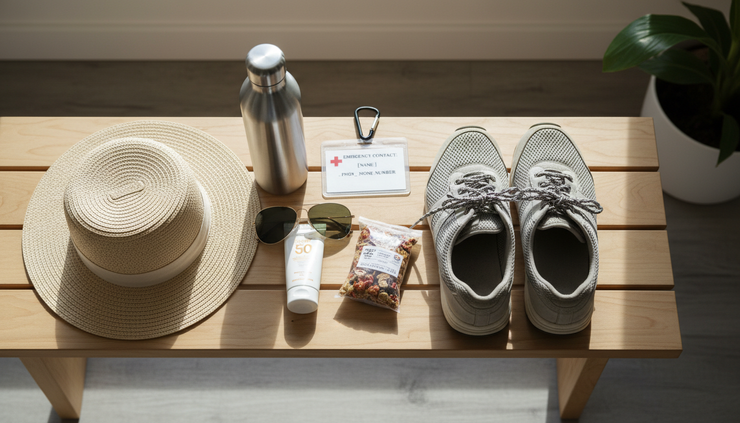
A small walking kit can make outings more comfortable. Keep it by the door so you don’t have to hunt for things.
Good items to include:
Water bottle
Hat or visor
Sunglasses
Sunscreen
Phone
ID
List of medications or medical conditions
Small snack
Cooling towel or bandana
House key
Emergency contact card
If you use hearing aids, glasses, or mobility supports, make them part of the routine too. Summer heat can be distracting, and it’s easier to forget something when you’re rushing.
For longer walks, bring a little cash or a payment card in case you need a drink, ride, or indoor break.
Adjust your goal when the weather changes
Some days are made for a longer walk. Some days are made for five quiet minutes in the shade. The trick is to stay consistent without being stubborn.
On very hot days, try one of these instead:
Walk indoors at a store or mall
Do several short walks at home
March gently in place during TV commercials
Walk in a shaded hallway
Do seated exercises with your doctor’s approval
Stretch near a fan or in an air-conditioned room
A good summer walking plan should feel flexible. If you normally walk 30 minutes, break it into three 10-minute walks. If you’re tired after five minutes, stop there. You can try again later.
That’s one of the best summer walking tips for seniors to stay cool and hydrated. Plan the walk around your body and the weather, not the other way around.
Get support when walking feels harder than it used to
If summer heat has made walking feel more difficult, you don’t have to figure it out alone. A little guidance can help you set realistic goals, choose safer routines, and stay motivated without overdoing it.
If you’d like help building healthier habits at a pace that fits your life, review the My Senior Coach plan options.
FAQ
How much water should I drink before a summer walk?
A glass of water before you leave is a good starting point for many people. Then take small sips during the walk. If your doctor has told you to limit fluids, follow that personal advice instead.
Is it safe to walk when it’s 90°F outside?
It can be risky, especially with humidity, direct sun, or health conditions. If the heat index is high, choose an indoor walk or wait until early morning or evening.
What time of day is best for summer walking?
Early morning is often best because the air and pavement are usually cooler. Evening can work too, as long as visibility is good and the air has cooled.
What should I do if I feel dizzy while walking?
Stop right away. Sit in the shade or a cool indoor place, sip water if you can, and don’t continue the walk. If dizziness is severe, comes with confusion or fainting, or doesn’t improve, get medical help.
Are electrolyte drinks a good idea for older adults?
Sometimes, but they’re not right for everyone. Some contain sugar, sodium, or other ingredients that may not fit certain health conditions. Ask your doctor or pharmacist if they’re a good choice for you.
Keep the walk pleasant, not punishing
Summer walking should leave you feeling refreshed, not wiped out. Pick cooler times, bring water, dress for the sun, and give yourself permission to slow down. If the weather feels too hot, move the walk indoors and call that a smart choice.
The best walk is the one you can enjoy safely and repeat tomorrow.


Comments