
The Best Household Items Seniors 65 Plus Can Use for Safe Exercise

You don’t need a gym, fancy machines, or a pile of equipment to stay active at home. A sturdy chair, a towel, a wall, and a couple of soup cans can do more than many people think.
The key is choosing items that help with balance, strength, flexibility, and gentle movement without adding unnecessary risk. For anyone 65 plus, safe exercise should feel steady, controlled, and doable. A little effort is good. Pain, dizziness, or feeling rushed is not.
This guide is informational only and isn’t a substitute for medical advice. If there’s a heart condition, recent surgery, joint replacement, severe balance trouble, or new pain, it’s smart to check with a doctor or physical therapist before starting.
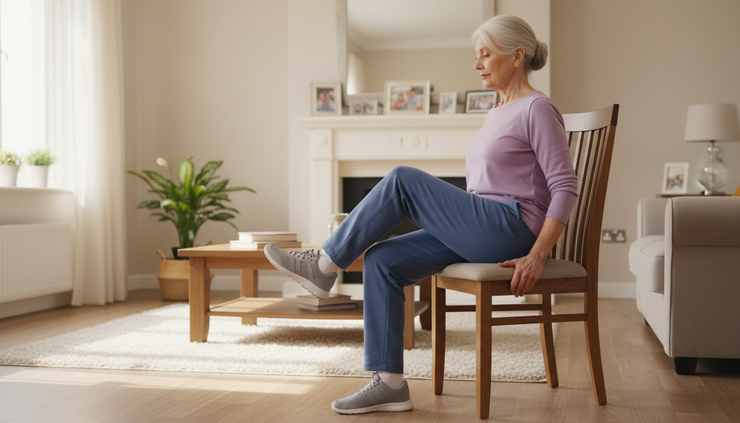
Start with a few safety basics
Before using anything around the house as exercise equipment, take a minute to set up the space. This part matters more than the exercise itself.
Clear away throw rugs, cords, pet toys, and anything that could slide underfoot. Wear shoes with good grip, not socks on a slick floor. Keep a phone nearby, especially when exercising alone.
A good rule is to use the talk test. During light to moderate exercise, it should still be possible to talk in short sentences. If breathing gets too hard, slow down or stop.
Also keep these simple safety cues in mind:
Move slowly and smoothly.
Hold onto support when standing.
Stop if there’s chest pain, dizziness, sharp joint pain, or unusual shortness of breath.
Drink water before and after.
Skip exercises that require getting on the floor if getting back up is difficult.
For most home exercises, aim for comfort and control. The goal isn’t to “push through.” The goal is to build strength and confidence little by little.
A sturdy chair is the most useful item in the house
If there’s one household item that works best for safe senior exercise, it’s a sturdy chair. Not a rolling office chair. Not a folding chair that wobbles. A solid dining chair with a firm seat and no wheels is ideal.
A chair helps with seated exercises, standing balance work, and sit-to-stand strength.
Chair sit-to-stands
This is one of the most practical exercises because it trains the same movement used all day long.
Sit near the front of the chair with feet flat on the floor. Keep the knees pointed forward. Lean slightly forward and stand up slowly. Sit back down with control.
Use the chair arms if needed. If that feels too easy, try crossing the arms over the chest, but only if it still feels safe.
Try 5 to 10 repetitions.
Seated marches
Sit tall with both feet on the floor. Lift one knee a few inches, lower it, then lift the other. Keep the movement slow.
This warms up the hips, legs, and core without needing to stand.
Try 30 seconds to 1 minute.
Seated heel and toe raises
Sit tall. Lift the heels while the toes stay down. Then lift the toes while the heels stay down.
This helps the lower legs and ankles, which can support steadier walking.
Try 10 to 15 repetitions each way.
A wall or countertop can help with balance
A wall, kitchen counter, or bathroom vanity can be a steady support for balance exercises. A countertop is often better than furniture because it’s fixed and less likely to move.
Balance training doesn’t need to be dramatic. Small, safe challenges can help the body practice staying steady.
Side leg lifts
Stand behind a chair or next to a countertop. Hold on with one or both hands. Lift one leg out to the side a few inches, then lower it.
Keep the toes pointing forward. Avoid leaning the body to the side.
Try 8 to 12 repetitions on each leg.
Standing heel raises
Hold the counter. Rise up onto the balls of the feet, then lower slowly.
This strengthens the calves and can support walking, stair use, and balance.
Try 8 to 15 repetitions.
Gentle weight shifts
Stand with feet hip-width apart and hands lightly on the counter. Shift weight slowly from one foot to the other.
This is simple, but it teaches control. It’s a good starting point for anyone who feels unsteady.
Try 30 seconds.

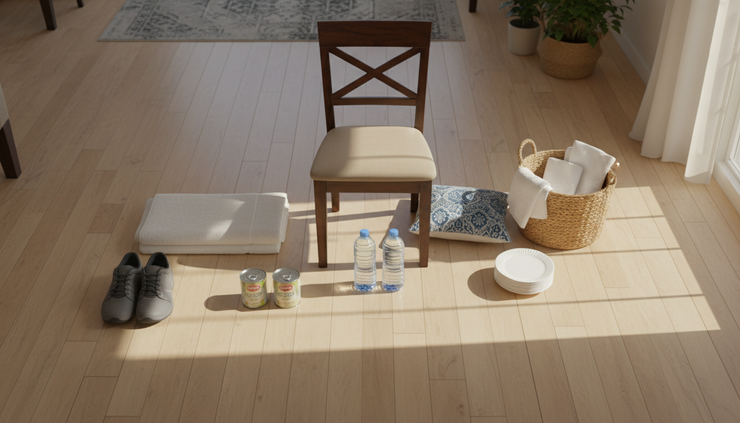
Soup cans and water bottles make light hand weights
Light strength training can help with everyday tasks like carrying groceries, lifting laundry, opening doors, and getting up from a chair. Soup cans, water bottles, or small detergent bottles can work well as light weights.
Start lighter than expected. A full plastic water bottle may be enough. The movement should feel controlled, not shaky.
Seated biceps curls
Sit tall in a chair with one can or bottle in each hand. Keep elbows close to the body. Bend the elbows to lift the hands toward the shoulders, then lower slowly.
Try 8 to 12 repetitions.
Front raises
Hold one light item in each hand. Lift the hands forward only to shoulder height, then lower. If shoulder pain appears, stop or try lifting only a few inches.
Try 5 to 10 repetitions.
Overhead reach without weights
Before using weights overhead, practice the motion with empty hands. Many shoulders don’t love overhead movements, so there’s no need to force it.
Reach both arms up as far as comfortable, then lower. Keep the neck relaxed.
Try 5 to 8 repetitions.
Tip: If gripping cans bothers the hands, use small water bottles with ridges, or skip weights and use body weight only.
A towel is great for stretching and gentle resistance
A bath towel or hand towel is easy to grip and useful for flexibility. It can also add light resistance without the snap-back risk of an exercise band.
Towel shoulder stretch
Hold a towel with both hands in front of the body. Keep the hands wider than the shoulders. Slowly raise the towel upward as far as comfortable, then lower.
Don’t force the arms behind the head. Stay in a pain-free range.
Try 5 to 10 slow movements.
Seated hamstring stretch
Sit near the front of a chair. Extend one leg forward with the heel on the floor and toes pointing up. Hold the towel loosely around the ball of the foot if it’s easy to reach. Gently sit tall and lean forward from the hips.
There should be a mild stretch in the back of the thigh, not pain.
Hold 10 to 20 seconds on each side.
Towel pull-aparts
Hold a towel in front of the chest with both hands. Gently pull outward as if trying to stretch the towel. Hold for a few seconds, then relax.
This wakes up the upper back and shoulders.
Try 5 to 8 repetitions.
A laundry basket can train real-life strength
A laundry basket is useful because it matches daily life. Carrying, lifting, and moving light loads are practical strength skills.
Start with an empty basket or one with a few towels inside. Keep it light. The goal is control, not strain.
Basket carry
Hold the basket close to the body with both hands. Walk across the room and back. Keep the shoulders relaxed and the steps slow.
Try 1 to 3 short trips.
Basket lift to table height
Place the basket on a chair or low table. Pick it up with both hands, bring it close to the body, then set it back down.
Avoid twisting while holding the basket. Turn the whole body with the feet instead.
Try 5 repetitions.
Seated basket reach
Sit in a chair with the basket on another chair or table in front. Place small towels into the basket one at a time. This can be a gentle way to practice reaching without bending to the floor.
This is especially helpful when standing exercises feel tiring.

Paper plates can help with smooth leg movement
Paper plates can slide on carpet and work like simple gliders. Use them only while seated, since standing on anything that slides can be unsafe.
These movements are gentle and good for the hips, knees, and ankles.
Seated leg slides
Sit tall in a chair. Place one foot on a paper plate. Slide the foot forward, then back. Keep the movement slow and comfortable.
Try 8 to 12 repetitions on each leg.
Side slides
Place one foot on a paper plate. Slide the foot out to the side, then back to center.
This works the hip muscles in a low-impact way.
Try 8 to 10 repetitions on each side.
Skip this item if the plate catches, bends, or makes the movement jerky. Smooth and easy is the whole point.
Pillows can support comfort and posture
Pillows aren’t just for rest. They can make exercise more comfortable and help with posture.
Use a firm pillow behind the lower back during seated exercises if sitting tall feels hard. A small pillow can also cushion the knees during stretching on a bed, if that’s part of the routine.
Pillow squeeze
Sit tall with a pillow between the knees. Gently squeeze the pillow, hold for 3 seconds, then relax.
This works the inner thighs and can support hip and knee control.
Try 8 to 12 repetitions.
Posture reset
Sit with a pillow behind the lower back. Let the shoulders relax. Take a slow breath in, then exhale and gently lengthen through the spine.
This isn’t a workout move in the usual sense, but it helps reset posture before other exercises.
Try 3 to 5 breaths.
A hallway can become a walking lane
Walking is one of the simplest ways to stay active. A hallway or clear path through the living room can work well, especially when the weather isn’t friendly.
Choose a route with good lighting and no clutter. If balance is a concern, walk near a wall or countertop. Avoid carrying items while walking unless that’s the exercise and the load is very light.
Try this easy indoor walking plan:
Warm-up
Main walk
Balance break
Cooldown
Walk slowly for 1 minute.
Walk at a comfortable pace for 3 to 5 minutes.
Hold the counter and do 5 heel raises.
Walk slowly for 1 minute.
Repeat once if it feels good. If not, one round is enough.
How to put these household items into a simple routine
A safe routine doesn’t need to be long. Ten to 20 minutes can be plenty, especially at the start.
Here’s a simple full-body option using common household items:
Seated marches
Use a sturdy chair for 1 minute.
Sit-to-stands
Do 5 to 10 repetitions.
Countertop heel raises
Do 8 to 15 repetitions.
Soup can curls
Do 8 to 12 repetitions.
Towel shoulder raises
Do 5 to 10 slow movements.
Pillow squeezes
Do 8 to 12 repetitions.
Slow indoor walk
Walk for 3 to 5 minutes.
Rest whenever needed. It’s fine to split this into two shorter sessions, one in the morning and one later in the day.
The Best Household Items Seniors 65 Plus Can Use for Safe Exercise are the ones that feel stable, familiar, and easy to control. If an item feels awkward or unsafe, skip it. There’s always another option.
When to make exercises easier or harder
Exercise should match the day. Some days feel great. Some days don’t. That’s normal.
Make it easier when energy is low, balance feels off, or joints are stiff.
Good ways to make a move easier include:
Do fewer repetitions.
Sit instead of stand.
Use no weights.
Hold on with both hands.
Move through a smaller range.
Make it harder only when the movement feels steady and pain-free.
Good ways to add challenge include:
Add 1 or 2 repetitions.
Add a second set.
Use slightly fuller water bottles.
Walk a little longer.
Hold the counter with one hand instead of two, if safe.
Small increases are better than big jumps. A gentle routine done often beats an intense routine that feels discouraging.
A quick word on what to avoid
Some household items look useful but aren’t worth the risk.
Avoid using rolling chairs, unstable stools, heavy jugs, slippery floors, or stairs for exercise unless a professional has cleared it and there’s a safe setup. Stairs can be useful in some routines, but they can also raise fall risk.
Also skip any move that requires quick direction changes, standing on pillows, or balancing on sliding objects. Safe exercise at home should feel steady from start to finish.
FAQ
How often should seniors 65 plus exercise at home?
Many people do well with short movement sessions most days of the week. That might mean 10 minutes of walking, chair exercises, or stretching. Strength exercises can be done a few days a week, with rest in between.
What household item is safest for beginner exercises?
A sturdy chair is usually the best place to start. It supports seated movement, sit-to-stands, and balance work when placed near a wall or counter.
Can soup cans really build strength?
Yes, if they’re used consistently and with good form. They’re light, but light resistance can still help maintain strength, especially for arms and shoulders.
What should I do if an exercise hurts?
Stop the movement. Mild muscle effort is normal, but sharp pain, joint pain, chest pain, dizziness, or unusual shortness of breath isn’t something to push through.
Is it better to exercise seated or standing?
Both can help. Seated exercises are great for safety and control. Standing exercises can help with balance and daily movements. A mix of both often works well.
Keep it simple and make it a habit
Safe exercise doesn’t have to look like a workout video. It can look like standing up from a chair five times, lifting soup cans during a TV break, stretching with a towel, or walking the hallway after breakfast.
Pick two or three items from this list and start there. Keep the space clear, move slowly, and choose exercises that leave the body feeling better, not worn out.
For extra help building a routine that fits real life, take a look at My Senior Coach pricing plans. A little support can make it easier to stay consistent and safe.


Comments