
What I Learned Coaching Thousands of Seniors About Exercise, Balance, and Healthy Aging

Most seniors I meet already know exercise is “good for them.” That’s not the problem.
The problem is that knowing isn’t the same as doing. After coaching thousands of seniors as a physical therapist and senior fitness coach, I’ve learned that most people don’t avoid exercise because they’re lazy. They avoid it because they’re unsure where to start, afraid of getting hurt, tired of programs that feel too hard, or convinced it’s too late to make a real difference.
Here’s the good news: it’s not too late.
I’ve seen people improve their strength, balance, confidence, walking, posture, and energy well into their 70s, 80s, and beyond. Not by doing extreme workouts. Not by beating themselves up. They improved because they started where they were, stayed consistent, and treated movement like part of daily life.
Exercise really is the closest thing we have to a magic aging pill. It doesn’t cure everything, and it doesn’t replace medical care, but it supports nearly every part of healthy aging.
Most seniors aren’t exercising enough
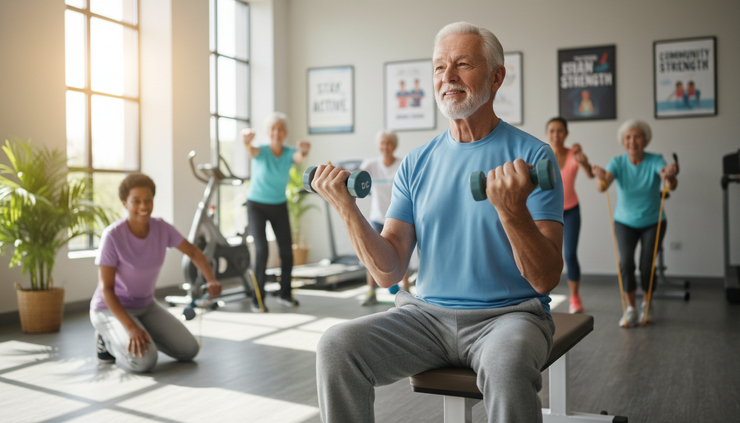
One of the biggest lessons I’ve learned is simple: most seniors don’t exercise enough to get the benefits they want.
Many people count errands, housework, or an occasional walk as their exercise program. Those things matter. Any movement is better than no movement. But for better strength, balance, endurance, and fall prevention, the body needs regular practice.
Think of exercise like brushing your teeth. You don’t brush once a month and expect healthy teeth. You don’t exercise once in a while and expect strong legs, better balance, or more stamina.
The general recommendation for older adults is at least 150 minutes of moderate activity each week, along with a strengthening program at least twice a week. Moderate activity could be brisk walking, water aerobics, cycling on a stationary bike, or a fitness class that gets the heart rate up without leaving you gasping for air.
Strength training can include:
Light dumbbells
Resistance bands
Sit-to-stand exercises
Wall pushups
Step-ups
Heel raises
Balance drills near a sturdy support
That doesn’t mean doing all of this on day one. It means building toward it over time.
Exercise is a lifestyle, not an occasional project
I’ve watched people get excited, exercise hard for two weeks, then disappear. Usually, they tried to do too much too soon.
Healthy aging doesn’t come from a short burst of motivation. It comes from a lifestyle.
That may sound like a big commitment, but it can be very simple. A healthy movement lifestyle might look like this:
Walking most days after breakfast
Doing strength exercises every Monday and Thursday
Practicing balance near the kitchen counter
Taking a class at the senior center
Stretching gently while watching TV
Parking a little farther from the store entrance when it feels safe
The goal isn’t perfection. The goal is to become the kind of person who moves regularly.
That shift matters. When exercise becomes part of the week, it stops feeling like a punishment. It becomes normal. It becomes something you do because you like how you feel afterward.
I’ve heard this many times from seniors I coach:
“I didn’t think I’d enjoy exercise, but I don’t want to stop now because I can feel the difference.”
That’s when the magic starts.
Check with your doctor before you begin
Before starting a new fitness program, check with your doctor, especially if there are heart problems, blood pressure concerns, diabetes, dizziness, recent surgery, joint replacements, balance issues, or a history of falls.
This doesn’t mean exercise is dangerous. It means exercise should match the person.
A doctor or physical therapist can help answer questions like:
Are there movements to avoid right now?
Is it safe to exercise with current medications?
Should blood pressure or blood sugar be monitored?
Would physical therapy be a better starting point?
Are there signs that mean it’s time to stop and rest?
This article is for general information only. It isn’t personal medical advice. The safest plan is the one that fits your health, your history, and your current ability.
Start slowly so you don’t get hurt or discouraged
If I could convince every senior of one thing, it would be this: start easier than you think you need to.
That sounds strange, but it works.
Many people quit because the first workout leaves them sore, exhausted, or frustrated. They think, “I guess exercise isn’t for me.” The problem wasn’t exercise. The problem was the starting point.
The best beginning exercise program should feel doable. Maybe even a little too easy at first.
That might mean:
Walking for 5 to 10 minutes
Doing one set of 8 sit-to-stands
Using 1- to 3-pound weights
Practicing balance while holding the counter
Resting between exercises
Exercising every other day instead of daily
The body adapts when it gets the right challenge. Too little challenge and nothing changes. Too much challenge and pain, fatigue, or fear can take over.
A good rule is to finish a workout feeling like you could have done a little more. That helps build confidence, which is just as important as strength.

Light weights and higher reps often work best at first
A lot of seniors picture strength training as heavy lifting in a gym. That’s one version, but it’s not where most beginners should start.
In my experience, seniors often do better at first with lighter weights and more repetitions. This helps the joints, muscles, and nervous system learn the movement safely. It also builds endurance, which is very useful for daily life.
Daily life takes repeated effort. Getting out of chairs, climbing steps, carrying groceries, standing from the toilet, reaching into cabinets, and walking across a parking lot all require strength and stamina.
A simple beginner strength routine might include:
Sit-to-stand from a sturdy chair
Seated rows with a resistance band
Wall pushups
Standing heel raises
Seated knee extensions
Light dumbbell curls
Side steps near a counter
For many beginners, one or two sets of 10 to 15 repetitions is plenty. The movement should feel controlled. Breathing should stay steady. Pain should not be ignored.
As strength improves, the weights can slowly increase. But the first priority is good form, safe movement, and consistency.
Balance improves when seniors practice it
Balance for seniors is not one single thing. It’s a team effort between your eyes, inner ear, muscles, joints, feet, brain, and reaction time.
That’s why balance can get worse with age, illness, inactivity, nerve problems, vision changes, medication side effects, or weakness. The good news is that balance can often improve with practice.
The key is to train balance safely.
That may include:
Standing with feet closer together
Shifting weight from side to side
Marching in place near a counter
Practicing heel-to-toe standing
Standing on one foot while holding support
Turning the head slowly while standing tall
Stepping over small obstacles with supervision when needed
Balance exercise should never feel like a circus act. If someone is wobbling badly, reaching for furniture, or scared, the exercise is too hard for that moment.
Good balance training builds control. It also builds trust in the body.
Exercise helps with fall prevention
Falls are one of the biggest concerns I hear about from seniors and their families. A fall can change confidence fast. Even when no bone is broken, fear can settle in.
That fear often leads to less movement. Less movement leads to weaker legs and worse balance. Then fall risk can go up even more.
Exercise helps break that cycle.
A strong fall-prevention program usually includes:
Leg strengthening
Balance practice
Walking or endurance work
Core and posture exercises
Flexibility where needed
Practice getting up and down safely
Home safety changes when appropriate
Exercise can’t prevent every fall. Nothing can. But it can improve the things that help people stay upright, catch themselves, and move with more confidence.
I’ve seen seniors go from holding onto every wall to walking into class with their head up. That kind of progress is powerful.
Community makes exercise easier to stick with
One thing I’ve learned again and again is that seniors do better when they don’t feel alone.
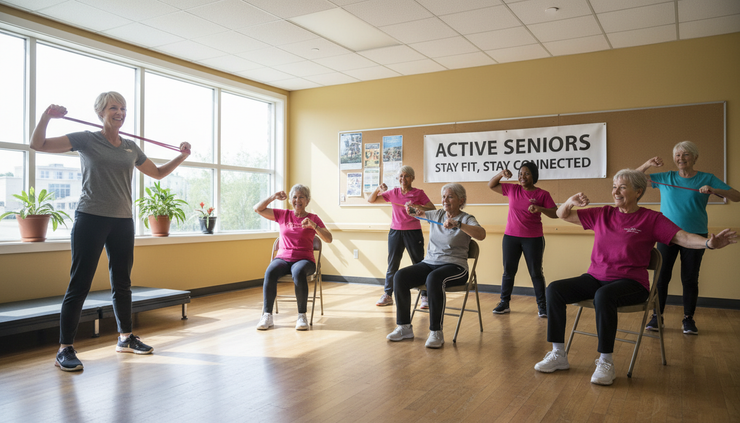
A fitness plan is easier to keep when there’s a community around it. That might be a senior center, a local gym, a walking group, a church group, a water aerobics class, or an online coaching program.
Community helps because it adds:
Encouragement
Accountability
Friendship
Routine
Fun
A reason to show up on tired days
Some people love group classes. Others prefer one-on-one coaching. Some want to exercise at home but still need someone checking in. The best choice is the one that feels comfortable enough to continue.
If walking into a gym feels intimidating, start with a senior center. If a class feels too fast, ask about beginner options. If joint pain is a concern, look into water-based exercise or a physical therapy evaluation.
There’s no prize for doing this the hard way. Support matters.
The real goal is staying able
When I coach seniors, the goal is rarely just “exercise.” The goal is staying able.
Able to get out of a chair without pushing with both hands.
Able to walk through the grocery store.
Able to climb the steps to visit family.
Able to travel, garden, dance, golf, play with grandkids, or live at home with more confidence.
That’s what exercise protects. Independence. Choice. Confidence. Daily life.
This is why consistency matters more than intensity. A simple program done week after week beats a perfect program that only lasts a few days.
A good weekly plan might look like this:
Day | Simple focus |
Monday | Strength training |
Tuesday | Walk or moderate cardio |
Wednesday | Balance practice and gentle mobility |
Thursday | Strength training |
Friday | Walk or fitness class |
Saturday | Light activity, hobbies, or community movement |
Sunday | Rest or easy stretching |
That’s just an example. The real plan should fit energy, health, schedule, and ability.
A simple way to begin this week
If starting feels overwhelming, keep it small. Here’s a safe and simple starting point for many people, assuming a doctor has cleared exercise.
Try this three times this week:
Walk for 5 to 10 minutes at an easy pace.
Do 8 to 10 sit-to-stands from a sturdy chair.
Do 10 wall pushups.
Do 10 heel raises while holding a counter.
Practice standing with feet close together for 15 to 30 seconds near support.
Rest as needed.
If that feels too easy, good. Build slowly. Add a few minutes, a few repetitions, or another day when the body is ready.
If that feels too hard, shorten it. Start with one or two exercises. Success counts when it matches where the body is today.

Ready for more support?
If it’s time to build a safer, more consistent fitness routine, take a look at the coaching options here: view Coach Doug’s senior fitness plans.
FAQ
How much exercise should seniors get each week?
A common goal is at least 150 minutes of moderate activity each week, plus strength training at least twice a week. It’s fine to build up to that slowly.
What is the safest exercise for beginners?
Walking, chair exercises, wall pushups, light resistance bands, and supported balance drills are often good starting points. The safest option depends on health history and current ability.
Can exercise really improve balance?
Yes, balance often improves with practice. Strengthening the legs, improving posture, and doing safe balance drills can all help.
Should seniors lift weights?
Yes, many seniors benefit from strength training. Beginners often do best with light weights, controlled movements, and more repetitions before increasing resistance.
What if exercise causes pain?
Stop the movement and don’t push through sharp, worsening, or unusual pain. Mild muscle effort is normal, but pain is a signal to adjust the exercise or talk with a health professional.
The lesson I keep coming back to
After coaching thousands of seniors, I believe this more than ever: movement changes aging.
Start slowly. Be safe. Check with your doctor. Use light weights if that’s where you need to begin. Build toward 150 minutes of moderate activity each week. Strength train twice weekly. Practice balance. Find a community.
Most of all, keep going.
The body responds to what it does regularly. Give it steady movement, and it often gives back more strength, better balance, and more confidence than people thought was still possible.


Comments