
Why Every Senior Can Become Strong and Stable

A lot of people think strength is something they used to have.
They remember carrying groceries without thinking about it, getting up from the floor without planning the escape route, or walking across a parking lot without worrying about a crack in the pavement. Then time passes. A knee gets cranky. Balance feels less reliable. A fall happens, or almost happens. Little by little, confidence shrinks.
But here’s what I believe with my whole chest: every senior can become stronger and more stable than they are today.
Not younger. Not perfect. Not suddenly pain-free in every joint. Stronger. More steady. More capable. More confident moving through daily life.
That belief isn’t based on wishful thinking. It comes from a simple truth about the human body: it keeps responding to practice, effort, and care much longer than most people realize.

Strong and stable for seniors does not disappear overnight
Most people don’t lose strength all at once. It slips away quietly.
One day the laundry basket feels heavier. Getting out of a low chair takes a push from both hands. Stairs start to feel like a negotiation. None of these changes mean the body is broken. They often mean the muscles haven’t been asked to do enough, often enough.
Muscles are practical. They don’t keep extra strength around “just in case.” If a movement is rarely used, the body stops investing as much energy in it.
That sounds discouraging, but it’s actually good news.
If the body can adapt downward when movement decreases, it can also adapt upward when movement returns. The signal doesn’t have to be extreme. It just has to be clear and repeated.
A few examples:
Standing up from a chair without using the arms
Carrying a small grocery bag from the car
Stepping up onto a curb with control
Lifting light weights or water bottles
Practicing a slow, safe heel raise near a counter
These are not flashy exercises. They’re life exercises. They tell the body, “We still need this.”
And the body listens.
Stability is a skill, not a personality trait
Some people call themselves “clumsy” or “bad at balance” as if it’s part of who they are. I don’t buy that.
Balance is not one thing. It’s a team effort between the eyes, inner ear, feet, ankles, hips, core, and brain. When those systems practice together, stability improves.
That doesn’t mean every person will stand on one foot like a gymnast. That’s not the goal. The real goal is steadiness in normal moments:
Turning around in the kitchen
Getting in and out of the shower
Reaching into a cabinet
Walking on grass
Stepping around a pet
Regaining control after a small trip
Stability is trainable because balance is trainable.
The best balance practice is not reckless. It’s controlled. A kitchen counter, sturdy chair, hallway wall, or railing can turn a risky movement into a safe drill.
For example, standing with feet close together while lightly touching a counter might feel easy at first. Then try turning the head slowly side to side. Then try shifting weight from one foot to the other. Small changes wake up the balance system without creating panic.
That’s how confidence comes back. Not through danger, but through proof.
The “too old” argument falls apart pretty fast
I’ve heard it many times.
“I’m too old to get stronger.”
“I should’ve started years ago.”
“My balance is already gone.”
“I don’t want to hurt myself.”
Those fears make sense. Nobody wants to fall. Nobody wants to flare up an old injury. Nobody wants to feel embarrassed doing something that used to be easy.
But being cautious is different from giving up.
Age changes how we train. It does not erase the ability to improve. A senior body may need a slower warm-up, more recovery, better form, and more attention to pain signals. That’s fine. Smart training respects reality.
What doesn’t help is doing nothing because the starting point feels too small.
A person who stands up from a chair 5 times today may do 6 next week. A person who can only balance for 3 seconds may reach 5 seconds. A person who shuffles may slowly practice longer steps in a safe hallway.
That may not sound dramatic, but it matters. Daily life is built from small physical wins.
Getting up from the toilet is strength. Catching yourself after a wobble is stability. Carrying soup from the microwave to the table is coordination. Walking to the mailbox is endurance, balance, and confidence all working together.
Those skills can be practiced.
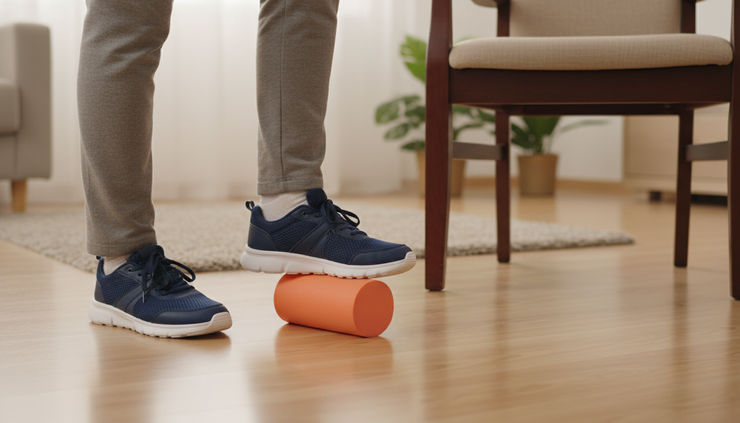
Small progress counts more than hard workouts
A lot of fitness advice is too loud. It makes people think exercise has to be sweaty, painful, or exhausting.
That’s not the kind of training most seniors need to start with.
The best starting point is usually safe, repeatable, and just challenging enough. If something feels impossible, the body braces. If it feels too easy forever, the body has no reason to change. The sweet spot is right in the middle.
A good strength and stability plan often includes a few basics.
Sit-to-stand practice builds real-life leg strength
The chair is one of the best tools around. Sitting down with control and standing back up trains the thighs, hips, and core.
Start with a firm chair that does not roll. Use the arms if needed. Over time, use less help from the hands. The progress may be tiny, and that’s still progress.
Heel raises support ankles and walking
Holding a counter, rise onto the balls of the feet, then lower slowly. This helps the calves and ankles, which play a big role in walking and balance.
The lowering part matters. Control builds strength.
Side steps help with hip stability
Many falls happen during turning, shuffling, or sideways movement. Practicing gentle side steps along a counter can strengthen the hips and improve control.
Keep the toes facing forward. Move slowly. Quality beats speed.
Gentle marching improves coordination
Marching in place near support trains weight shifting. It also reminds the body how to lift the feet instead of sliding them.
This can be especially helpful for anyone who notices more tripping or catching a toe.
Light resistance keeps the upper body useful
Strength is not only about legs. Carrying groceries, pushing a door, lifting a pan, and getting up from the floor all need upper-body strength.
Light dumbbells, resistance bands, or household items can help. The tool matters less than the habit.
Pain and fear deserve respect, not control
Let’s talk about pain, because it’s real.
Some people avoid movement because they’ve been hurt before. Others have arthritis, joint replacements, back pain, neuropathy, or other conditions that make exercise feel complicated.
The answer is not to ignore pain. The answer is to work with the body instead of against it.
A helpful rule is to separate effort from warning signs. Muscle effort can feel like warmth, fatigue, or mild shaking during a safe exercise. Warning signs may include sharp pain, chest pain, dizziness, sudden weakness, or pain that changes your normal walking pattern.
If something feels wrong, stop. If a medical condition affects movement, it’s smart to check with a healthcare professional before starting or changing an exercise plan.
This article is for general information only. It is not medical advice.
Fear also needs care. After a fall, the brain becomes protective. It may treat normal movement like danger. That can lead to less walking, less strength, and even more instability.
The way back is gradual. Practice near support. Use good lighting. Wear steady shoes. Clear clutter. Build trust one movement at a time.
Confidence does not come before practice. Most of the time, confidence comes because of practice.
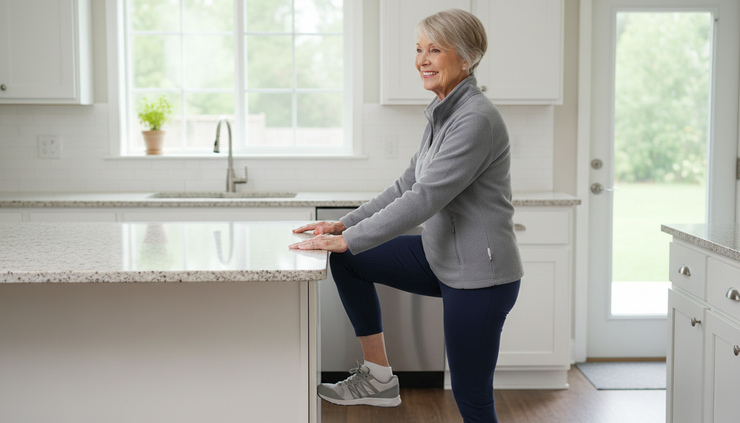
Progress is easier when the plan fits real life
The best plan is not the most impressive one. It’s the one that actually happens.
That means it should fit into normal days. A routine can be short and still work. Ten minutes done most days often beats a long workout that happens twice and then disappears.
Here’s a simple way to think about it:
Pick 3 to 5 movements
Keep support nearby
Move slowly enough to stay in control
Stop before exhaustion
Repeat several days a week
Make one small increase when it feels safe
That small increase could be one more repetition, a slightly slower lowering, a longer walk to the mailbox, or less pressure from the hands on the counter.
Progress should feel like, “I can do a little more than before,” not, “I survived that.”
Daily habits help too. Strength and stability are not only built during exercise time. They’re built in the way someone moves through the day.
Try standing up once during TV commercials. Walk to the kitchen with tall posture. Practice turning slowly instead of pivoting fast. Use the stairs when safe. Carry one grocery bag at a time with good control.
These simple choices add up.
Strong and stable does not mean doing it alone
Some people love exercising alone. Others do much better with guidance.
There’s no prize for figuring everything out by yourself. A good coach, physical therapist, trainer experienced with older adults, or supportive program can make the process safer and less confusing.
The right support can help with questions like:
Which exercises are safe for my knees?
How do I improve balance without risking a fall?
How much should I do at first?
What should I do on tired days?
How do I know when to make it harder?
Guidance also helps with consistency. It’s easier to keep going when someone helps set the path, notice progress, and adjust the plan.
If you’re ready for support that meets you where you are, take a look at senior coaching and fitness plan options.
What becoming stronger really looks like
Strength in later life is not about showing off. It’s about freedom.
It looks like standing up without rocking three times first. It looks like walking into a restaurant without scanning the room for the closest chair. It looks like getting out of the car with less struggle. It looks like trusting your feet a little more.
The wins might be quiet, but they’re powerful.
A senior who improves leg strength may feel safer on stairs. A senior who practices balance may stop grabbing walls as often. A senior who becomes more confident walking may say yes to more invitations.
That’s the part I care about most.
Strength and stability protect more than muscles. They protect choices.
FAQ
Can seniors really build muscle after 70?
Yes. Muscle growth may be slower than it was years ago, but the body can still respond to safe strength training. The key is consistency, good form, enough recovery, and the right level of challenge.
What is the safest exercise to start with?
For many people, sit-to-stand practice from a sturdy chair is a great place to begin. It trains a movement used every day. If balance is a concern, keep a stable surface nearby and start with hand support.
How often should balance be practiced?
Short balance practice can often be done several days a week, as long as it feels safe and controlled. Even a few minutes near a counter can help build awareness and confidence over time.
Should exercise hurt?
No exercise should cause sharp, sudden, or alarming pain. Mild muscle effort can be normal, but pain that feels wrong is a signal to stop. Anyone with medical concerns should ask a healthcare professional for personal guidance.
Is walking enough to improve stability?
Walking helps, but it may not train everything. Most people also benefit from strength work, side-to-side movement, posture practice, and controlled balance drills.

Start with the next safe step
Every senior can become strong and stable because improvement does not require perfection. It requires a starting point, a bit of patience, and movements that match the body in front of you.
Start small. Stand tall. Hold the counter if needed. Rest when needed. Celebrate the little wins, because they’re not little when they give daily life back.
The body may be older, but it is still listening. Give it a clear, kind reason to get stronger.


Comments