
Why Tight Hips and Shoulders Make Everyday Life Harder and How Seniors Can Loosen Up

Ever notice how one stiff spot can make your whole day feel harder?
Tight hips can make it tougher for seniors to stand up from a chair, climb stairs, get in and out of the car, or walk with confidence. Tight shoulders in seniors can make it harder to reach a high shelf, put on a jacket, wash your hair, or sleep comfortably.
The frustrating part is that tightness often sneaks up slowly. One day you’re moving fine. Then little by little, you start turning your whole body to look behind you, holding the handrail tighter on stairs, or avoiding the bottom cabinet because bending feels annoying.
The good news is that most everyday tightness can improve with gentle, consistent movement. You don’t need fancy equipment. You don’t need to “push through.” You just need a simple plan that helps your hips and shoulders remember how to move.
This article is informational and not medical advice. If you have sharp pain, recent surgery, a fall, numbness, dizziness, or a medical condition that affects movement, check with a doctor or physical therapist before starting.

Why hips and shoulders matter so much
Your hips and shoulders are two of the biggest movement hubs in the body.
The hips connect your upper body to your legs. They help you walk, stand, sit, turn, balance, and climb. When they’re stiff, other parts of the body often have to help more than they should.
The shoulders help your arms move in many directions. They work with your upper back, neck, chest, and shoulder blades. When they’re tight, simple reaching can feel like a chore.
Think of your body like a chain. If one link doesn’t move well, the nearby links take extra strain. Tight hips may make your low back work harder. Tight shoulders may pull on your neck. Over time, you may feel tired, achy, or less steady.
For seniors, this matters because movement affects independence. The goal isn’t to become extremely flexible. The goal is much more practical:
Getting out of a chair with less effort
Walking with a longer, smoother stride
Reaching cabinets without strain
Turning while driving or backing up more comfortably
Improving balance and confidence
Reducing the “stuck” feeling after sitting
A little more motion in the right places can make the whole body feel better.
What tight hips can do to everyday movement
Tight hips don’t always feel like hip pain. Sometimes they show up as stiffness in the back, legs, or knees.
When hip muscles lose flexibility, your stride may get shorter. You may shuffle without meaning to. Stairs may feel harder because the hip needs to bend and extend with each step. Getting up from a low chair may take more effort because the hips can’t hinge smoothly.
Common signs of tight hips include:
Feeling stiff after sitting for a while
Trouble standing fully upright at first
Shorter steps when walking
Low back tightness after standing
Difficulty crossing one ankle over the opposite knee
Pulling or tightness in the front of the hips, buttocks, or outer thighs
One common culprit is sitting. Sitting keeps the hips bent for long periods. Over time, the front of the hips can get used to that shortened position. Then standing tall feels harder.
That doesn’t mean sitting is “bad.” It just means your hips need regular reminders to move in other directions too.
The hips and balance connection
Your hips also play a big role in balance. When you step sideways, catch yourself, turn, or shift weight, your hips help control that movement.
If the hips are stiff or weak, balance can feel less reliable. That may lead to smaller steps, slower walking, and more hesitation. Then movement shrinks even more.
This is why gentle hip mobility and light strengthening often go together. Flexibility helps you move. Strength helps you control that movement.
What tight shoulders can do to your neck, back, and daily tasks
Shoulder tightness can be sneaky too. You might first notice it when reaching for a seat belt, putting dishes away, fastening clothing, or reaching behind your back.
Tight shoulders often involve more than the shoulder joint. The chest, upper back, shoulder blades, and neck all join in. If the chest is tight and the upper back is rounded, the shoulders may not glide as well.
Common signs of tight shoulders include:
Difficulty reaching overhead
A pulling feeling across the chest
Neck tension after reading or watching TV
Trouble reaching behind your back
Shoulder discomfort when sleeping on one side
Feeling like the arms are heavy or limited
When shoulders don’t move well, the neck often tries to help. That can lead to tension across the top of the shoulders or headaches for some people.
The fix usually starts gently. You’re not trying to force your arm overhead. You’re teaching the shoulder blade, upper back, and chest to share the work again.
Why tightness gets more common with age
Stiffness is common with age, but that doesn’t mean you’re stuck with it.
Several things can add up over time:
Less movement variety
Many daily routines use the same positions again and again. Sitting, driving, reading, watching TV, and using a phone all tend to fold the body forward.
Protective habits
After pain, injury, or a fall scare, it’s natural to move less or guard certain motions. The body is trying to protect you, but too much guarding can lead to more stiffness.
Loss of strength
Muscles help joints move safely. When muscles weaken, the body may tighten up to feel more stable.
Changes in tissue
Muscles, tendons, and joints change with age. They may need more time, warmth, and repetition before movement feels easy.
Long periods of sitting
Sitting for hours can stiffen hips, back, and shoulders. Even active people can feel tight if they sit in one position too long.
The encouraging part is that the body responds well to gentle consistency. You don’t need extreme stretching. In fact, forcing stretches can irritate tissues and make you feel worse. The sweet spot is mild, steady movement that feels safe.
How to loosen tight hips safely
Start small. A good stretch should feel like a gentle pull, not pain. Keep breathing. Move slowly. Use a wall, chair, or counter for support.
Try these movements a few days a week. If they feel good, you can do them daily.
Seated knee-to-chest stretch
Sit tall in a sturdy chair with both feet on the floor.
Bring one knee toward your chest, using your hands behind the thigh if needed. Hold for 10 to 20 seconds. Lower the foot and switch sides.
This helps the back of the hip and can ease the stiff feeling after sitting.
Keep it gentle. If lifting the knee bothers your hip, bring it up only partway.
Seated figure-four stretch
Sit near the front of a sturdy chair. Place your right ankle over your left thigh, if comfortable. Keep your back tall.
You may already feel a stretch in the right hip. If you need more, lean forward slightly from the hips. Hold for 10 to 20 seconds, then switch sides.
This targets the outer hip and buttock area. It can be helpful for walking, turning, and getting in and out of the car.
If this position bothers your knee, skip it.
Standing hip flexor stretch
Stand near a counter or chair. Step one foot back slightly. Keep both feet pointing forward.
Gently tuck your pelvis under, as if bringing your belt buckle upward. You should feel a mild stretch in the front of the back hip. Hold for 10 to 20 seconds, then switch sides.
Don’t arch your lower back. The movement should be small.
Side steps at the counter
Stand facing a counter with both hands lightly touching it. Take a small step to the right, then bring the other foot in. Take 5 to 10 steps if space allows, then go the other direction.
This adds light hip strength, especially on the sides of the hips. That’s useful for balance.
Keep your toes forward and your steps controlled.
How to loosen tight shoulders without forcing them
Shoulders usually like slow, smooth movement. Don’t yank, bounce, or hold your breath. If a movement causes sharp pain, stop.
Shoulder rolls
Sit or stand tall. Slowly roll your shoulders up, back, and down. Do 5 to 10 circles. Then reverse the direction.
This warms up the area and helps you notice where you’re holding tension.
Try not to rush. Make each circle smooth.
Wall slides
Stand facing a wall. Place your forearms or hands on the wall at a comfortable height.
Slowly slide your hands upward a few inches, then back down. Stay in a pain-free range. Repeat 5 to 10 times.
This helps overhead reaching without making the shoulder carry the full weight of the arm.
If standing at the wall feels awkward, try sliding your hands up a door frame or doing the motion while seated at a table.
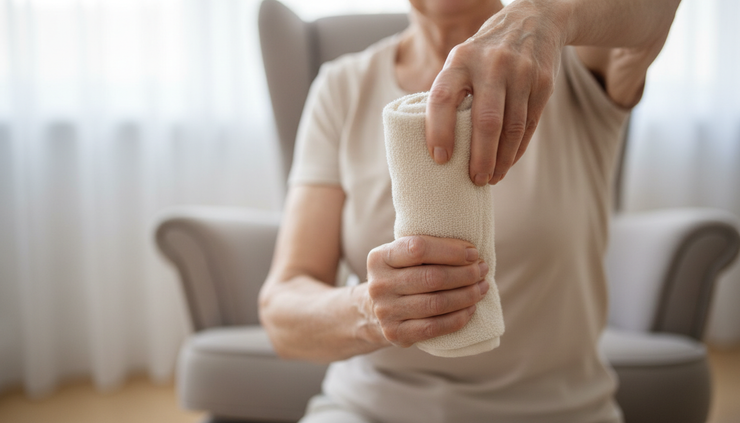
Towel chest opener
Hold a towel with both hands in front of you, hands wider than shoulder-width. Keep your elbows soft.
Gently pull the towel apart as you lift it to chest height. Hold for a few breaths. Lower and repeat 5 times.
This can wake up the upper back and open the chest.
Don’t force the arms behind you. Comfort comes first.
Shoulder blade squeeze
Sit tall with your arms relaxed at your sides. Gently squeeze your shoulder blades toward each other, as if holding a pencil between them. Hold for 2 to 3 seconds, then relax.
Repeat 8 to 10 times.
Keep your shoulders down. Avoid shrugging toward your ears.

A simple daily routine that takes about ten minutes
You don’t need a long workout. A short routine done often can beat a long routine you never feel like doing.
Here’s a simple plan:
Take a short walk around the room
Move for 1 to 2 minutes to warm up.
Do shoulder rolls
Try 5 circles each direction.
Do shoulder blade squeezes
Repeat 8 to 10 times.
Try seated knee-to-chest
Hold each side for 10 to 20 seconds.
Try seated figure-four
Hold each side for 10 to 20 seconds, if it feels comfortable.
Do standing hip flexor stretches
Hold each side for 10 to 20 seconds.
Finish with side steps
Take 5 to 10 steps each direction while holding a counter.
That’s it.
The goal is to finish feeling looser, warmer, and more confident, not worn out. If you feel sore afterward, cut the routine in half next time.
Make daily life part of the fix
Stretching helps, but your regular day matters too. Small movement breaks can keep stiffness from settling in.
Try these simple habits:
Stand up during TV commercials or between episodes
Walk around the house after sitting for 30 to 60 minutes
Reach both arms overhead gently once or twice a day, if comfortable
Keep commonly used items at easy heights, but still practice safe reaching
Use a pillow or lumbar support if sitting makes your back and hips stiff
Take a few slow shoulder rolls before driving
Practice standing tall for a few breaths after getting up from a chair
These tiny breaks tell your body, “We still move this way.” Over time, that message matters.
It also helps to pair movement with something you already do. For example, do hip stretches after breakfast, shoulder rolls before lunch, and side steps before brushing your teeth at night.
When tightness needs extra attention
Most mild stiffness is normal, especially after sitting or sleeping. But some symptoms deserve care.
Check with a healthcare professional if you have:
Sharp or worsening pain
Pain after a fall
New weakness in an arm or leg
Numbness or tingling
Swelling, redness, or warmth around a joint
Pain that wakes you often at night
Trouble walking that changes suddenly
A shoulder or hip that feels unstable
Also get guidance if you’ve had a hip or shoulder replacement, a recent injury, osteoporosis concerns, or a condition that affects balance.
A physical therapist can help identify what’s tight, what’s weak, and which movements are safest for your body.
What progress should feel like
Progress may be quiet at first. You might not wake up one morning feeling completely different. Instead, you may notice small wins:
Standing up feels a little smoother
Your first few steps after sitting feel less stiff
Reaching a shelf feels less awkward
You turn more easily when backing out of a parking space
Your posture feels more natural
You feel steadier during daily tasks
That’s real progress.
Aim for comfort and consistency. If you miss a day, just start again the next day. Tight hips and shoulders usually took time to develop, so give your body time to loosen up.
If you’d like guided support with movement, stretching, and healthy aging habits, take a look at My Senior Coach pricing plans.

FAQ
How often should seniors stretch tight hips and shoulders?
Most people do well with gentle stretching 3 to 5 days a week. Short daily movement can also help, as long as it feels comfortable and doesn’t cause pain.
Should stretching hurt to work?
No. A stretch should feel mild to moderate, never sharp or painful. If you’re holding your breath, clenching your jaw, or bracing, ease up.
Is walking enough to loosen tight hips?
Walking helps, but it may not move the hips through their full range. Gentle hip stretches and side steps can add movements that walking doesn’t cover.
Why do my shoulders feel tight even when I don’t exercise?
Daily posture can play a big role. Reading, using a phone, driving, and sitting can round the upper back and tighten the chest. Gentle shoulder and upper-back movements can help.
Can tight hips and shoulders affect balance?
Yes, they can. Stiff hips may limit stepping and weight shifting. Tight shoulders and upper-back stiffness can affect posture. Better mobility can support steadier movement, especially when paired with strength and balance practice.
The takeaway
Tight hips and shoulders can make ordinary tasks feel bigger than they are. The fix doesn’t have to be complicated.
Move gently. Stretch in a comfortable range. Add a little strength. Break up long sitting. Use support when you need it.
A few minutes a day can help your body feel less stuck, and daily life can start to feel easier again.


Comments