
Build Confidence for seniors at Any Age Through Gentle Movement

Confidence can shrink quietly.
Maybe it starts after a fall, a surgery, a few months of sitting more than usual, or simply noticing that the stairs feel steeper than they used to. One day, a short walk feels like a big decision. Getting up from a low chair takes more thought. Reaching for something on a shelf makes you pause.
That pause is understandable. It’s also not the end of the story.
Gentle movement can help rebuild senior confidence and trust in your body, one small choice at a time. You don’t need a gym membership, fancy shoes, or a “no pain, no gain” attitude. You need movements that feel safe, steady, and repeatable.
This article is for general information only. If you have a medical condition, recent injury, dizziness, chest pain, or new balance concerns, check with your health care provider before starting or changing an exercise routine.

Confidence grows for seniors when movement feels doable
Big goals can sound inspiring, but they can also make movement feel out of reach. “I need to get in shape” is vague and heavy. “I’ll stand up from my chair five times after breakfast” is clear and possible.
That’s where confidence begins.
Gentle movement works because it gives quick feedback. You try something small, your body does it, and your brain gets the message: I can do this. Repeat that often enough, and the message gets stronger.
Movement can also help with the little things that affect daily confidence:
Getting up from a chair
Walking to the mailbox
Turning around in the kitchen
Carrying light groceries
Stepping into the shower
Reaching, bending, and standing with less worry
None of these are dramatic. They’re daily life. And daily life is exactly where confidence matters.
A good movement routine should leave you feeling more capable, not worn out. Mild effort is fine. Sharp pain, dizziness, pressure in the chest, or feeling faint is a signal to stop and get help.
Start with the smallest promise you can keep
A common mistake is starting too big. That can turn movement into another thing to feel bad about.
Instead, start with a promise so small it almost feels too easy.
Try this:
Move for 3 to 5 minutes
Choose one time of day
Use the same space each time
Stop while you still feel good
Repeat tomorrow
That last part matters most. Confidence is built through kept promises.
For example, a simple morning routine might look like this:
Sit tall in a chair and take three slow breaths.
Roll your shoulders gently five times.
March your feet in place while seated for 30 seconds.
Stand up once or twice using the chair arms if needed.
Finish with a short walk around the room.
That’s enough for a beginning. Really.
If you already move often, your starting point may be different. Maybe it’s a 10-minute walk, a gentle yoga class, or light strength training. The same rule still applies: choose something you can repeat without dread.
Choose movements that match real life
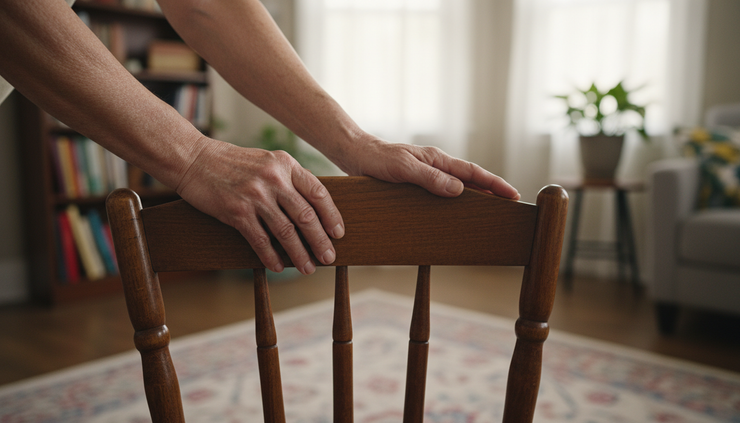
The best movements are the ones that help with what you actually do during the day. Think of movement as practice for living well, not as a performance.
Practice getting up with more ease
Standing from a chair is one of the most useful strength builders around.
Try this:
Sit near the front of a firm chair.
Place both feet flat on the floor.
Lean forward slightly.
Press through your feet and stand.
Sit back down slowly.
Use the chair arms if you need them. If that feels too easy, cross your arms over your chest or slow the movement down.
Start with 3 to 5 repetitions. Add more only when it feels comfortable.
Build balance near something steady
Balance practice should never feel risky. Stand near a counter, sturdy chair, or wall.
Good options include:
Standing with feet hip-width apart
Shifting weight gently from one foot to the other
Lifting one heel at a time
Taking small side steps along a counter
Practicing a slow turn while holding support
The goal is steady practice, not testing your limits.
If balance makes you nervous, start seated. Seated marching, heel raises, and toe taps still wake up the muscles that help you move with control.
Use walking as a confidence builder
Walking is simple, but it can bring up a lot of feelings. Some days, the biggest step is getting started.
Make walking feel safer by choosing an easy route:
A hallway
A driveway
A quiet sidewalk
A local mall
A community center track
A familiar store with wide aisles
Start with a distance that feels almost guaranteed. Walk to the end of the hallway and back. Walk for two minutes. Walk to the mailbox with someone nearby.
When that becomes normal, add a little more.
Make your body feel like an ally again
After illness, injury, or a long inactive stretch, it’s easy to feel like your body has become unreliable. That feeling can make people avoid movement, which often makes the body feel even less trustworthy.
Gentle movement helps rebuild that relationship.
Try paying attention to what your body can do today, not what it used to do years ago. That shift can feel kinder and more useful.
A few helpful signs to notice:
Your breathing settles faster after walking.
You get up from a chair with less effort.
Your steps feel more even.
You feel less stiff after moving.
You trust yourself more in familiar places.
Those small wins count. Write them down if that helps. A simple note like “walked 6 minutes today” or “stood up without pushing as much” gives you proof when motivation dips.

Let fear have a seat, but don’t let it drive
Fear around movement is common, especially after a fall or a close call. It doesn’t mean someone is weak. It means the brain is trying to protect the body.
The trick is to respect the fear without letting it make every decision.
Try asking, “What would make this feel safer?”
The answer might be:
Holding a counter
Wearing better shoes
Moving in better lighting
Clearing throw rugs or clutter
Walking with a friend
Starting seated
Using a cane or walker if prescribed
Taking a class made for older adults
Confidence doesn’t require pretending fear isn’t there. It grows when you prove, bit by bit, that you can move safely.
One useful rule is to keep the challenge low enough that you can breathe normally and think clearly. If you’re gripping the chair, holding your breath, or rushing to finish, make it easier.
Build a simple weekly rhythm
A routine doesn’t need to be complicated. In fact, simple is better.
Here’s a gentle weekly rhythm that can work in many homes:
Day | Gentle movement idea |
Monday | 5 to 10 minutes of walking |
Tuesday | Chair stands and seated marching |
Wednesday | Gentle stretching or range of motion |
Thursday | Balance practice near a counter |
Friday | Light walking or household movement |
Saturday | Favorite activity, like gardening or dancing in the kitchen |
Sunday | Rest, easy stretching, or a short relaxed walk |
You can mix and match. The point is to include a few types of movement each week:
Strength helps with chairs, stairs, and carrying things.
Balance helps with standing, turning, and walking.
Flexibility helps with reaching and comfort.
Endurance helps with errands, visits, and longer walks.
Gentle movement gives each of these areas a little attention without making the day revolve around exercise.
Make movement more enjoyable
Confidence grows faster when movement feels pleasant enough to repeat.
Try pairing movement with something you already like:
Listen to favorite music while stretching.
Walk after morning coffee.
Do seated exercises during a TV show.
Practice balance while waiting for the kettle.
Stretch after a warm shower.
Walk with a neighbor, family member, or pet.
Comfort matters too. Wear shoes that feel secure. Choose clothes that don’t pull or pinch. Keep water nearby. Move in a space that feels calm and uncluttered.
If you miss a day, just begin again. No guilt required. A missed day is not failure. It’s just a missed day.
Know when support would help
Sometimes confidence improves faster with guidance. A coach, trainer, physical therapist, or movement class can help make movement feel safer and more personal.
Support can be especially helpful if:
You’re unsure where to start.
You’ve had a recent fall.
You’re nervous about doing movements wrong.
You want a plan that fits your current ability.
You do better with encouragement and accountability.
If you’d like friendly help building a routine that fits real life, take a look at My Senior Coach pricing plans. A little structure can make it easier to keep going.
FAQ
What is the best gentle movement to start with?
Start with walking, seated marching, shoulder rolls, or standing up from a chair. Pick one movement that feels safe and easy to repeat.
How long should I move each day?
Even 3 to 5 minutes can be a good start. If that feels easy, build toward 10 to 20 minutes over time. The best amount is one you can do regularly.
What if I’m afraid of falling?
Use support. Move near a counter, sturdy chair, or wall. Clear clutter, wear secure shoes, and start with seated exercises if standing feels stressful. If fear is strong or you’ve fallen recently, ask a health professional for guidance.
Should movement hurt?
Gentle effort is normal. Sharp pain, chest pressure, dizziness, or feeling faint is not. Stop if something feels wrong and check with a medical professional.
Can I build confidence if I haven’t exercised in years?
Yes. Start very small and stay consistent. Confidence comes from repeating safe, manageable movement, not from doing a lot all at once.

A steadier next step
Building confidence through movement isn’t about pushing hard. It’s about proving to yourself, again and again, that your body can still learn, adapt, and support you.
Start with one small movement today. Make it safe. Make it repeatable. Then come back to it tomorrow.
That’s how confidence returns, not all at once, but one steady step at a time.


Comments