
Best Exercises for Seniors With Limited Arm Strength
- James Pettenquil

- 13 hours ago
- 8 min read
Weak arms can make exercise feel tricky before you even start. Getting down on the floor, holding weights, pushing through a painful shoulder, none of that sounds inviting. The good news is that a safe, useful workout doesn’t need strong arms.
For many older adults, the best exercises are the ones that build leg strength, balance, posture, grip, and gentle shoulder movement without asking the arms to do too much too soon. A sturdy chair, a wall, a towel, and a little patience can go a long way.
This guide is informational and isn’t a replacement for medical advice. If there’s a recent injury, surgery, stroke, chest pain, dizziness, or a condition that affects movement, it’s smart to check with a doctor or physical therapist first.

Start with exercises that don’t rely on arm strength
Limited arm strength can come from a lot of things, like arthritis, shoulder pain, nerve issues, muscle loss, or just getting out of the habit of using the arms much. That doesn’t mean exercise is off the table.
The key is to build from the ground up.
Strong legs help with getting out of chairs, climbing steps, walking across a parking lot, and staying steady. A stronger core helps posture and balance. Gentle arm work helps everyday tasks like reaching into a cabinet, carrying a light grocery bag, or buttoning a shirt.
A good rule is this: exercise should feel like effort, not punishment.
Try to stay at a level where breathing gets a little heavier, but talking is still possible. Stop right away if there’s sharp pain, chest pressure, faintness, unusual shortness of breath, or sudden weakness.
Set up a safe space before you begin
A few small setup choices can make exercise feel much easier.
Use:
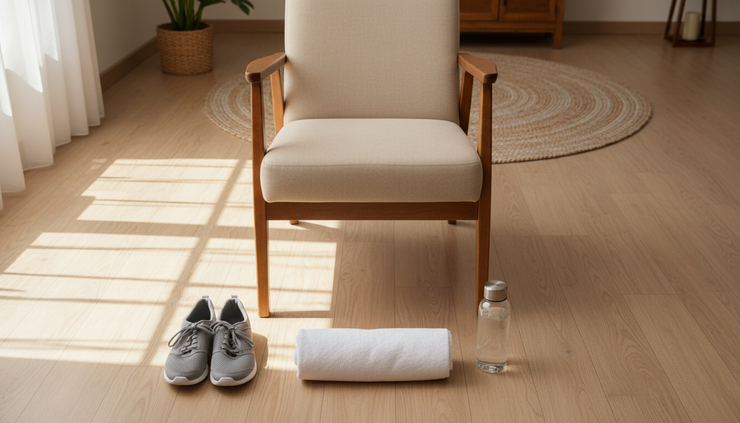
A sturdy chair that doesn’t roll
Supportive shoes with nonslip soles
A clear area without rugs, cords, or clutter
A wall or countertop nearby for balance
A water bottle within easy reach
A towel for light resistance and grip work
Skip heavy dumbbells at first. If the arms are weak, even a soup can may be too much for some movements. It’s fine to start with no weight at all.
If standing feels unsteady, choose seated versions. If a movement bothers the shoulder, make it smaller or stop. Small, pain-free movement counts.
Warm up with gentle seated movement
A warm-up tells the body, “We’re moving now.” It can help stiff joints feel less cranky and make the rest of the workout smoother.
Do these for about 3 to 5 minutes.
Seated marching
Sit tall near the front of the chair, with feet flat on the floor. Hold the sides of the chair only if needed.
Lift one knee a few inches, lower it, then lift the other knee. Keep it slow and steady.
Try 20 to 30 marches total.
This wakes up the hip and thigh muscles without putting weight on the arms.
Ankle circles
Lift one foot slightly off the floor. Make slow circles with the ankle. Go one direction, then the other.
Try 5 circles each way, then switch feet.
This is especially helpful before walking or balance work.
Shoulder rolls
Let the arms rest comfortably at the sides. Roll the shoulders up, back, and down in a small circle.
Try 5 to 8 slow rolls.
Keep the movement easy. Don’t force the shoulders up near the ears.
Gentle head turns
Sit tall and look slowly to the right, then back to center. Look to the left, then back to center.
Try 5 times each way.
This can help loosen the neck, especially for anyone who spends a lot of time sitting.
Build strength with chair-based lower body exercises
Leg strength is one of the biggest helpers for independence. These exercises don’t ask much from the arms, but they can make daily movement feel easier over time.

Sit-to-stand
This is one of the most practical exercises for daily life.
Sit near the front of a sturdy chair. Place feet about hip-width apart. If possible, cross the arms over the chest or keep hands lightly on the thighs. Lean forward slightly and stand up. Slowly sit back down.
Start with 3 to 5 repetitions.
If that’s too hard, use a higher chair or place a firm cushion on the seat. If needed, use the arms a little, but let the legs do as much work as they safely can.
Seated knee extensions
Sit tall with both feet flat. Straighten one knee until the leg is out in front. Hold for a second, then lower the foot.
Try 8 to 10 times on each side.
This strengthens the front of the thigh, which helps with walking, stairs, and standing up.
Heel raises
Stand behind a sturdy chair or at a countertop. Use one or both hands lightly for balance. Rise up onto the balls of the feet, then lower slowly.
Try 8 to 12 repetitions.
If standing is too hard, do the same movement seated. Lift the heels while keeping the toes on the floor.
Seated side steps
Sit tall. Step the right foot out to the side, then bring it back. Do the same with the left foot.
Try 8 to 10 times each side.
This works the outer hips, which help with balance and side-to-side stability.
Add balance work without straining the arms
Balance exercises can feel intimidating, so keep them simple. The goal isn’t to test how brave someone is. The goal is to practice control in a safe setup.
Always work near a counter, wall, or sturdy chair.
Weight shifts
Stand with feet hip-width apart. Hold a counter lightly if needed. Shift weight toward the right foot, then back to center. Shift toward the left foot, then back to center.
Try 10 slow shifts each way.
Keep both feet on the floor. This is a great starter balance move.
Staggered stance
Stand with one foot slightly in front of the other, like taking a small step. Hold the counter or chair if needed.
Stay there for 10 to 20 seconds, then switch feet.
If it feels too easy, loosen the grip. Don’t close the eyes unless a therapist specifically recommends it.
Back taps
Stand tall and hold a chair lightly. Tap one foot behind the body, then bring it back. Switch sides.
Try 8 taps per leg.
Keep the step small. The body should stay upright, not lean forward.
Strengthen the arms gently, without heavy weights
Arm work should match the current strength level. For many seniors with limited arm strength, starting with range of motion, grip, and light resistance is better than jumping into weights.
The goal is smoother, steadier movement.
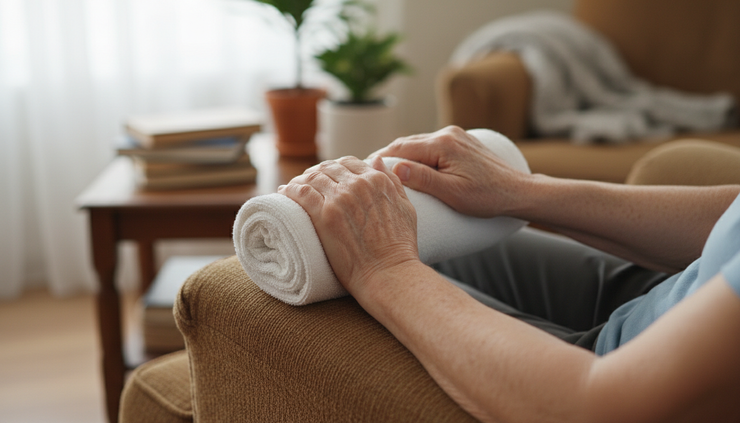
Towel squeezes
Hold a small rolled towel in one hand. Squeeze gently for 2 seconds, then relax.
Try 8 to 10 squeezes per hand.
This can help with grip for jars, utensils, walkers, canes, and everyday objects. Keep it gentle, especially with arthritis.
Table slides
Sit at a table. Place a towel under one hand. Slide the hand forward on the table as far as comfortable, then slide it back.
Try 8 slow slides per arm.
This lets the table support the arm, which can make shoulder movement easier.
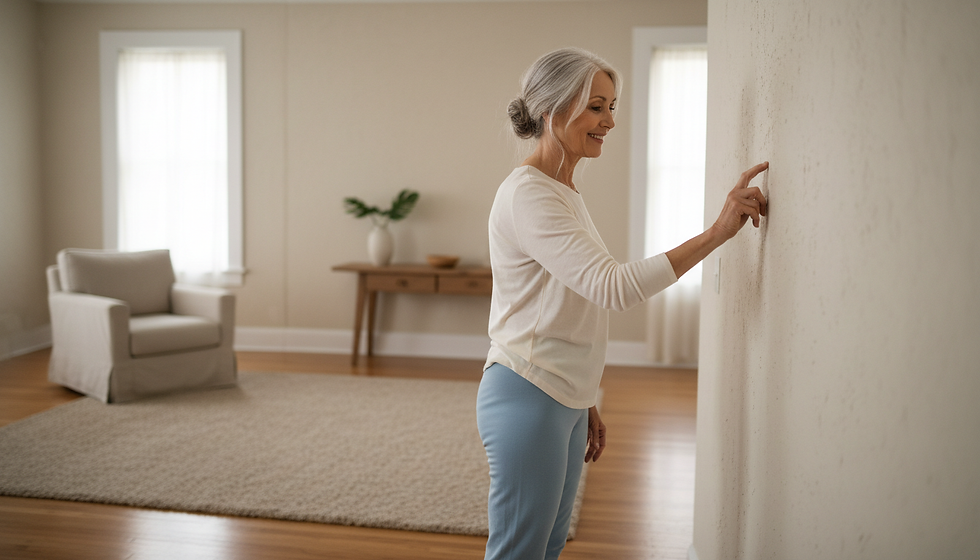
Wall finger walks
Stand or sit facing a wall. Place the fingers of one hand on the wall at a comfortable height. Slowly “walk” the fingers upward a little, then back down.
Try 3 to 5 times per arm.
Stop before pain. The point is gentle mobility, not reaching as high as possible.
Seated biceps curl with no weight
Sit tall with arms at the sides and palms facing up. Bend one elbow, bringing the hand toward the shoulder. Lower slowly.
Try 8 repetitions per arm.
If that feels easy after a week or two, try holding a very light object, like a small water bottle. If form gets sloppy, go back to no weight.
Shoulder blade squeezes
Sit or stand tall. Let the arms rest comfortably. Gently squeeze the shoulder blades back and together, then relax.
Try 8 to 10 repetitions.
This helps posture without requiring the arms to lift.
Try a simple 15-minute routine
This routine is a good starting point. It can be done 2 to 4 days per week, with rest days in between as needed.
Exercise | How much to do | Main benefit |
Seated marching | 30 seconds | Warms up hips and legs |
Ankle circles | 5 each direction | Loosens ankles |
Sit-to-stand | 3 to 8 reps | Builds leg strength |
Seated knee extensions | 8 per leg | Strengthens thighs |
Heel raises | 8 to 12 reps | Supports walking and balance |
Weight shifts | 10 each side | Builds balance confidence |
Towel squeezes | 8 per hand | Improves gentle grip |
Table slides | 8 per arm | Supports shoulder movement |
Shoulder blade squeezes | 8 reps | Helps posture |
Rest whenever needed. A workout with breaks still counts.
If 15 minutes feels like too much, start with 5 minutes. If standing exercises feel unsafe, do the seated ones only. Progress can be as simple as adding one extra repetition or standing a little taller.
Make exercises easier or harder
Some days are better than others. That’s normal. The same routine can be adjusted without quitting.
To make exercises easier:
Use a higher chair for sit-to-stands
Do fewer repetitions
Keep both hands on the chair or counter for balance
Choose seated versions
Move through a smaller range
To make exercises harder:
Add 1 or 2 repetitions
Stand from a slightly lower chair
Hold the balance support with just fingertips
Slow down the lowering part of each movement
Add a very light hand weight only when pain-free
The safest progress is gradual. Comfortable consistency beats one hard workout followed by a week off.
Watch for signs that something needs adjusting
Mild muscle effort is normal. Pain is different.
Back off or stop if there’s:
Sharp or sudden pain
Pain that gets worse with each repetition
Dizziness or feeling faint
Chest pain or pressure
New numbness or tingling
Shortness of breath that feels unusual
Joint swelling after exercise
Soreness the next day can happen, especially when starting again after time off. It should be mild and should fade. If it doesn’t, the routine may need to be lighter.
How to stay consistent without making it a big project
Exercise works best when it fits into regular life. It doesn’t have to feel like a gym class.
Try pairing exercises with something already in the day:
Do ankle circles before getting out of bed
Practice sit-to-stands before lunch
Do towel squeezes while watching TV
Try shoulder blade squeezes after brushing teeth
Do heel raises at the kitchen counter while waiting for coffee
A printed checklist can help too. Put it on the fridge and check off each day. Nothing fancy needed.
If motivation is hard, start with this promise: do one exercise. That’s it. Many times, one exercise turns into a few more.
If having a guided plan would make it easier to stay on track, take a look at My Senior Coach pricing plans for support built around senior wellness and everyday movement.
FAQ
How often should seniors with limited arm strength exercise?
Most people do well with gentle movement most days and strength exercises 2 to 4 days per week. Rest days matter too. If fatigue lasts into the next day, do less next time.
Can arm strength improve without lifting weights?
Yes. No-weight movements, towel squeezes, table slides, and daily tasks can help rebuild strength and control. Light weights can come later if movement feels safe and pain-free.
What if one arm is much weaker than the other?
Work each side separately and let the weaker side set the pace. Don’t force it to match the stronger side. If the weakness is sudden or new, get medical help right away.
Are chair exercises enough?
Chair exercises can be very useful, especially for strength, mobility, and confidence. Standing balance and walking can be added when it feels safe.
Should exercise hurt?
No. Muscles may feel like they’re working, but sharp pain, joint pain, chest pain, or dizziness means it’s time to stop and reassess.
The best routine is the one that feels safe enough to repeat
Limited arm strength doesn’t have to stop exercise. Start with the legs, add balance, keep arm movements gentle, and use a chair or wall whenever needed.
The best exercises are simple, steady, and easy to repeat. A few minutes today can make standing, walking, reaching, and everyday tasks feel a little more manageable over time.


Comments