
Senior Breathing and Relaxation Guide for Better Health and Calm

Some days, calm feels harder to reach than it should. Your shoulders creep up. Your breathing gets shallow. A small worry turns into a whole-body feeling. The good news is that breathing and relaxation skills don’t need to be fancy to help.
A few quiet minutes can settle the body, clear the mind, and make everyday moments feel more manageable. These practices can be done in a chair, in bed, on a walk, or while waiting for an appointment. No special equipment needed.
This guide is informational only and isn’t a substitute for medical care. If a breathing exercise causes chest pain, dizziness, severe shortness of breath, or panic, stop and contact a health professional.
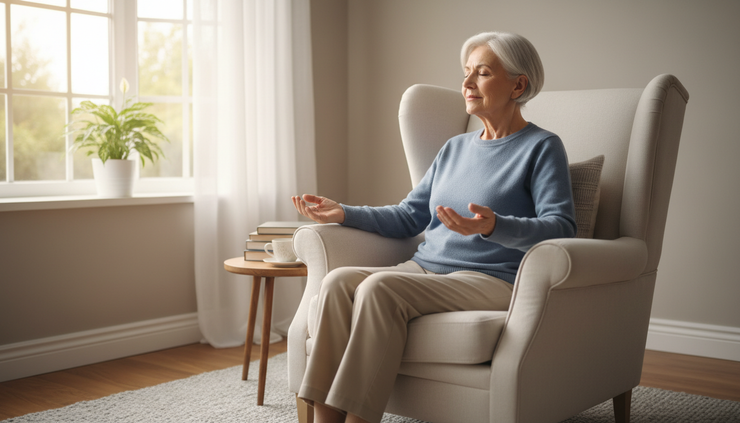
Why breathing practice helps the body calm down
Breathing is one of the few body functions that happens on its own but can also be guided on purpose. That makes it a useful bridge between the body and the mind.
When stress rises, breathing often becomes faster and shallower. The chest tightens. The jaw clenches. The stomach may feel tense. Slow, steady breathing sends the body a different message: you’re safe enough to soften.
Relaxation breathing may help with:
A calmer mood during stressful moments
Less muscle tension in the shoulders, face, and chest
A steadier pace before sleep
Better awareness of breath during light activity
A useful pause before reacting to worry or frustration
It doesn’t need to “fix” everything to be worth doing. Think of it like sipping water when you’re thirsty. Small, steady care adds up.
Set up your senior breathing guide practice so it feels safe
Before trying any technique, get comfortable. The goal is ease, not perfect form.
Sit in a sturdy chair with both feet on the floor if that feels good. Let your hands rest on your thighs or belly. If you’re lying down, place a pillow under your head and maybe under your knees. Loosen tight clothing around the waist.
Keep the room comfortable for your senior breathing guide practice. If silence feels peaceful, enjoy it. If silence makes your thoughts louder, try soft music, a fan, or nature sounds.
A few safety tips help, too:
Breathe gently rather than forcing big breaths.
Keep your face, shoulders, and hands relaxed.
Stop if you feel lightheaded, strained, or uncomfortable.
If you use oxygen, inhalers, or breathing equipment, follow your care team’s instructions.
If you have COPD, asthma, heart disease, anxiety attacks, or recent surgery, ask your clinician which exercises are right for you.
A helpful rule is simple: calm breathing should feel kind, not like a workout.
Try simple breathing exercises that are easy to remember
You don’t need a long routine. Start with one exercise that feels natural. Practice for 1 to 3 minutes at first. If that goes well, slowly build from there.
Practice pursed-lip breathing
Pursed-lip breathing is often used to slow breathing down. It can be especially helpful when you feel winded after climbing stairs, walking, or doing chores.
Here’s how to do it:
Sit comfortably and relax your shoulders.
Inhale through your nose for about 2 counts.
Purse your lips like you’re gently cooling soup.
Exhale slowly through your lips for about 4 counts.
Repeat for several rounds.
Don’t push air out hard. Let the exhale feel smooth and easy.
This technique can make the breath feel more controlled. Many people like it because it gives the mouth something simple to do, which helps focus the mind.
Use belly breathing to soften tension
Belly breathing, also called diaphragmatic breathing, encourages the lower ribs and belly to move with the breath. It may feel odd at first if you’re used to breathing mostly in the chest.
Try this:
Place one hand on your chest and one hand on your belly.
Breathe in through your nose and notice if your belly gently rises.
Breathe out slowly and let your belly soften.
Keep the chest relaxed rather than lifted.
Repeat for 5 to 10 breaths.
You don’t need to make your belly move a lot. Even a small amount is fine.
If lying down feels better, practice in bed. If sitting feels better, use a chair. Comfort wins.

Try the longer exhale breath
A longer exhale can be very soothing. It gives the nervous system a slow rhythm to follow.
Start here:
Inhale gently for 3 counts.
Exhale gently for 4 or 5 counts.
Pause naturally if your body wants to.
Repeat for 1 minute.
If counting makes you tense, skip the numbers. Think, “Breathe in gently. Breathe out slowly.”
This is a nice choice before bed, after a difficult phone call, or anytime your thoughts feel busy.
Use box breathing carefully
Box breathing uses equal counts for each part of the breath. Some people love it. Others find breath-holding uncomfortable. If the holds don’t feel good, choose a different exercise.
The pattern is:
Inhale for 4 counts.
Hold softly for 4 counts.
Exhale for 4 counts.
Hold softly for 4 counts.
Try only a few rounds. Keep it gentle. If holding your breath causes discomfort, skip the holds and use the longer exhale breath instead.
Match the exercise to the moment
Different situations call for different tools. Here’s a simple guide.
Situation | Helpful practice | Why it fits |
Feeling short of breath after light activity | Pursed-lip breathing | It can slow the breath and bring back a sense of control |
Feeling tense in the shoulders or jaw | Belly breathing | It encourages the body to soften |
Trying to settle before sleep | Longer exhale breathing | It creates a quiet, steady rhythm |
Feeling worried or scattered | Counting breaths | It gives the mind one simple place to rest |
Needing a quick reset | Three slow breaths | It’s easy to do anywhere |
The best technique is the one you’ll actually use. If one exercise annoys you, that’s useful information. Pick another.
Add relaxation to help the whole body unwind
Breathing works even better when the rest of the body gets the message, too. Relaxation practices can help you notice where tension lives and let it go bit by bit.
Relax your muscles from head to toe
Progressive muscle relaxation is a simple practice. You gently tense one area, then release it. The release is the main point.
Try this seated or lying down:
Curl your toes gently, then relax them.
Tighten your calves lightly, then let go.
Press your knees together softly, then release.
Squeeze your hands into loose fists, then open them.
Lift your shoulders toward your ears, then drop them.
Scrunch your face gently, then smooth it out.
Use light effort. Skip any area that hurts or cramps.
After each release, notice the difference between tense and relaxed. That noticing is part of the practice.
Use humming to lengthen the exhale
Humming can feel surprisingly calming. It naturally stretches the exhale and gives the body a soft vibration.
Try this:
Inhale through your nose.
Exhale with a gentle hum.
Keep your lips closed and your jaw loose.
Repeat for 3 to 5 breaths.
Choose a quiet hum, not a performance. If it tickles your throat or feels irritating, stop.
Picture a place that feels peaceful
Guided imagery can help when the mind won’t settle. You can do this with breathing or on its own.
Imagine a place where you feel safe and comfortable. It might be a porch, a beach, a garden, a favorite chair, or a quiet chapel. Add details slowly.
What do you see? What sounds are there? Is the air warm or cool? What does your body feel like in that place?
Pair the image with slow breathing. Each exhale can feel like settling deeper into that peaceful scene.

Build a routine that doesn’t feel like homework
A breathing habit works best when it fits into life as it already is. You don’t need a full meditation corner or a strict schedule.
Try linking breathing to something you already do:
After brushing your teeth
Before morning coffee
After taking medication, if that’s part of your day
Before turning on the TV
Once you get into bed
After sitting down from a walk
Start tiny. One minute counts. Three breaths count. A short practice done often is better than a long practice you avoid.
Here’s an easy daily rhythm:
Time of day | Practice | Time needed |
Morning | Three belly breaths before standing up | Less than 1 minute |
Afternoon | Pursed-lip breathing after activity | 1 to 2 minutes |
Evening | Longer exhale breathing in a chair or bed | 3 to 5 minutes |
If you forget, don’t scold yourself. Just begin again the next time you remember.
That’s how habits are built, not by being perfect, but by returning.
Use breathing during common stressful moments
Breathing skills aren’t only for quiet rooms. They’re most useful when real life gets bumpy.
Before a medical appointment
Waiting rooms can stir up worry. Try resting both feet on the floor and taking five slow breaths. Let the exhale be longer than the inhale. If your mind races, quietly count each exhale.
During a moment of frustration
Pause before speaking. Relax your jaw. Take one slow breath in and one slower breath out. Even one breath can create enough space to choose your next words with care.
When sleep won’t come
Lying awake can turn into a loop. Instead of trying to force sleep, try longer exhales.
Breathe in gently. Breathe out slowly. Let the bed hold your body. If thoughts show up, treat them like background noise and come back to the next exhale.
While walking
You can pair breath with steps. For example, breathe in for two steps and breathe out for three steps. Adjust the rhythm so it feels easy. Don’t use a pattern that makes you short of breath.
Know when to get extra support
Breathing and relaxation can be helpful, but they’re not meant to replace medical care. Call a health professional if shortness of breath is new, worsening, or happening at rest. Get urgent help for chest pain, fainting, blue lips, confusion, or severe trouble breathing.
Also ask for support if anxiety feels overwhelming or keeps you from daily life. Breathing can be part of a bigger care plan, and that plan may include counseling, medication, physical therapy, pulmonary rehab, or other help.
If you’d like ongoing support with healthy routines, relaxation habits, and day-to-day wellness, you can explore My Senior Coach pricing plans.
FAQ
How long should a breathing exercise last?
Start with 1 to 3 minutes. If it feels good, build up to 5 or 10 minutes. Short practices still count.
What if breathing exercises make me dizzy?
Stop right away and return to normal breathing. Dizziness can happen if you breathe too deeply or too quickly. Try gentler breaths next time, and ask a clinician if it keeps happening.
Is it better to breathe through the nose or mouth?
Nose breathing is often comfortable for slow practice, but mouth breathing is fine when needed. Pursed-lip breathing uses the nose for the inhale and the mouth for the exhale.
Can I do these exercises in bed?
Yes. Many people find breathing practice easier in bed, especially before sleep. Use pillows so your neck, back, and knees feel supported.
How often should I practice?
Daily practice helps the most, even if it’s brief. A few calm breaths several times a day can be easier than one long session.
A calm breath is a practical tool
Breathing won’t erase every worry or cure every health problem. But it can give you a steady place to return to. That matters.
Pick one exercise from this guide and try it today. Keep it gentle. Keep it short. Let the breath be something you work with, not something you force.
A few slow breaths can turn a hard moment into a softer one, and that’s a very good place to start.


Comments