
Safe Lifting Tips for Seniors to Carry and Move Objects with Ease
- Lila Sanderson

- 13 hours ago
- 8 min read
A grocery bag, a laundry basket, a box of holiday decorations, a grandchild’s toy bin. None of these seems like a big deal until one awkward twist makes your back, shoulder, or knee complain for the rest of the day.
The good news is that safer lifting isn’t about being young or unusually strong. It’s about using your body in a smarter way, setting up the task before you start, and knowing when to ask for help or use a tool.
This guide is informational only and isn’t a substitute for medical advice. If you’ve had a recent surgery, a fall, dizziness, severe arthritis, heart concerns, or unexplained pain, check with a doctor or physical therapist before changing your activity routine.
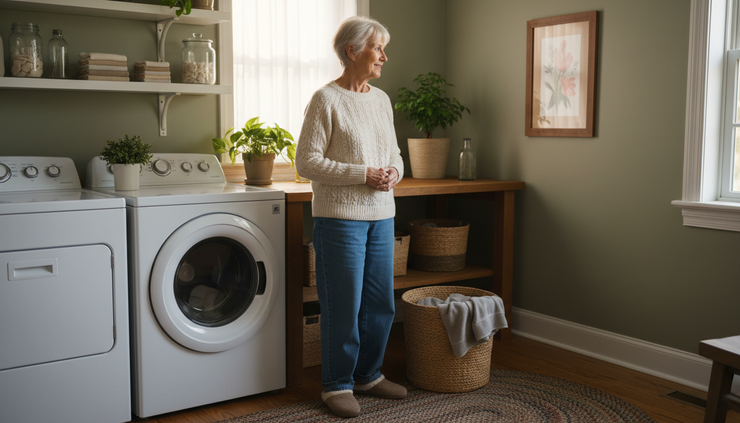
Start with the simple safe lifting rule for seniors that keeps you safer
Before lifting anything, pause for a few seconds and ask yourself three questions.
How heavy is it?
Try nudging it with your foot or sliding it slightly with your hands before picking it up.
Where am I taking it?
Look for rugs, cords, pets, clutter, steps, wet spots, or tight corners.
Can I make this easier?
Split the load, use a cart, move it in stages, or ask someone to help.
That short pause matters. Many strains happen because the body gets surprised. The box is heavier than expected. The floor is uneven. The item blocks your view. The shelf is higher than it looked.
A safer lift starts before your hands ever touch the object.
Set up your body before you lift
Think of lifting as a small routine. The same basic steps work whether you’re picking up a grocery bag, a plant pot, a small suitcase, or a basket of towels.
Stand close to the object
The farther an item is from your body, the harder your back and shoulders have to work.
Get close enough that the object is near your feet. If you have to reach forward, move your feet closer first. Reaching and lifting at the same time is a common way to strain the lower back.
Place your feet for balance
Stand with your feet about shoulder-width apart. One foot can be slightly ahead of the other, almost like you’re about to take a step.
This gives you a steadier base. It also makes it easier to move without twisting.
Bend at the hips and knees
Try not to fold only from the waist. Instead, bend your hips and knees so your legs help with the work.
You don’t need to do a deep squat. Many people with knee or hip stiffness can’t, and that’s okay. The goal is to avoid rounding your back and yanking upward.
Keep your chest lifted as much as comfort allows.
Tighten your belly gently
Before you lift, gently firm your belly as if you’re about to cough. Don’t hold your breath.
This helps support your trunk. It should feel steady, not forced.
Lift smoothly
Use your legs, hips, and arms together. Avoid jerking. A sudden pull can be harder on joints than the weight itself.
If the item doesn’t move easily, stop. That’s useful information. It may be too heavy, stuck, or awkwardly shaped.
Carry items in a way that protects your back and shoulders
Lifting is only half the job. Carrying can be just as challenging, especially if the load is uneven or blocks your view.

Keep the load close
Hold the object near your body, between your waist and chest if possible. This gives you more control and lowers strain on your back.
A laundry basket pressed lightly against your torso is usually easier to carry than one held out in front of you with straight arms.
Use two hands when you can
Two hands spread the work more evenly. This is especially helpful for items like:
Mixing bowls
Small boxes
Plant pots
Laundry baskets
Trash bags
Pet food containers
If you need one hand for a railing or cane, make the load lighter before you move.
Avoid twisting while holding weight
Twisting with a load is one of the biggest troublemakers. Instead of turning your upper body, move your feet.
Think, “nose and toes face the same direction.”
If you’re taking a pot from the counter to the sink, step and turn your whole body. Don’t plant your feet and rotate through your spine.
Take smaller steps
Long strides can throw off your balance. Shorter steps give you more control, especially when carrying something heavy or awkward.
If the object blocks your view, don’t carry it that way. Use a smaller container or make two trips.
Make common household tasks easier
A lot of daily lifting happens at home. Small changes can reduce the effort without making life feel complicated.
Groceries
Carry fewer bags at a time, even if it means making more trips. Better yet, use a small rolling cart, especially from the car to the kitchen.
Place heavier items, like milk or canned goods, in their own bag. Don’t let one bag become a surprise weight.
When unloading, set bags on a counter or sturdy chair instead of the floor. That way, you don’t have to bend repeatedly.
Laundry
Wet laundry can be much heavier than it looks. Instead of carrying a full basket, divide the load.
If your washer or dryer is low, use a small stool or kneeling pad only if you can get up safely. A reacher tool can also help pull socks or towels from the back of the machine.
Laundry baskets with side handles are often easier than tall hampers with one handle.
Trash
Don’t pack trash bags so full that they become hard to lift. Tie the bag while it’s still manageable.
If you live in a home where outdoor bins sit far away, use a wheeled bin or cart. Dragging a heavy bag can strain your shoulders and may tear the bag open.
Pots, pans, and dishes
Use two hands for heavy pans. Slide pots along the counter when you can, rather than lifting them across the kitchen.
For hot liquids, fill the pot less full. A half-full pot is easier to control and less likely to spill.
Build strength for everyday lifting
You don’t need a gym routine to get better at moving objects safely. A few simple moves can help maintain the muscles you use for daily life.
Start slowly. Use a countertop, sturdy chair, or wall for support. Stop if you feel sharp pain, chest pain, shortness of breath that feels unusual, or dizziness.
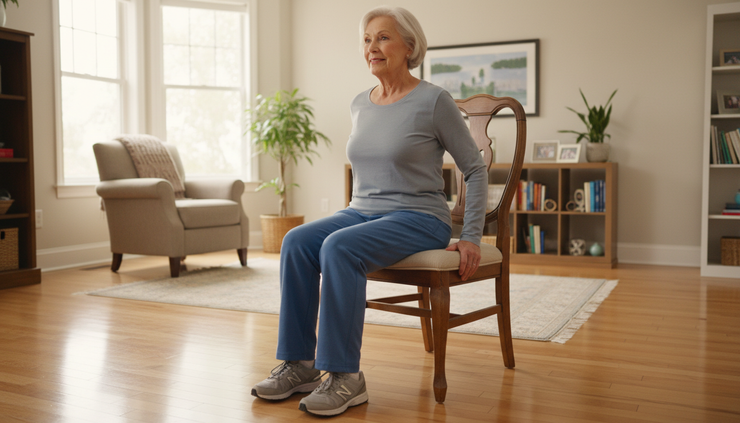
Sit-to-stand
This helps strengthen the legs and hips, which are key for lifting.
How to do it:
Sit near the front of a sturdy chair.
Place your feet flat on the floor.
Lean forward slightly from the hips.
Stand up slowly.
Sit back down with control.
Try a few repetitions. Use your hands on the chair if needed.
Wall push-ups
This supports the chest, shoulders, and arms.
How to do it:
Stand facing a wall.
Place your hands on the wall at chest height.
Step your feet back a little.
Bend your elbows and bring your chest toward the wall.
Push back to the starting position.
Keep the movement smooth.
Heel raises
This helps with ankle strength and balance.
How to do it:
Stand behind a sturdy chair or counter.
Hold on lightly.
Rise onto your toes.
Lower slowly.
This can make walking while carrying small items feel steadier.
Light carry practice
Use a light object, such as an empty laundry basket or a small bag with a towel inside.
Walk a short distance while keeping the item close to your body. Practice turning by moving your feet, not twisting your back.
This is one of the most practical safe lifting tips for seniors because it trains the same movement used around the house.
Use tools without feeling bad about it
Tools aren’t a sign of weakness. They’re a smart way to save energy and reduce strain.
Helpful options include:
Rolling cart
Great for groceries, laundry, books, or supplies.
Reacher grabber
Useful for light items on the floor or items just out of reach.
Backpack or crossbody bag
Helps carry light items while keeping hands free.
Storage bins with handles
Easier to grip than slippery cardboard boxes.
Step stool with a handle
Safer than standing on a chair, but only use one if balance is good.
Furniture sliders
Helpful for moving small furniture without lifting it.
If an item is heavy, bulky, or high overhead, don’t force it. Asking for help is often the safest tool of all.
Know when not to lift something
Sometimes the safest lift is the one you skip.
Don’t lift the item by yourself if:
It blocks your view
You can’t hold it close to your body
It feels heavier than expected
You need to twist to move it
The path includes stairs and no railing
You feel dizzy, weak, or unsteady
You’re already in pain
The item is above shoulder height
Overhead lifting is especially tricky. It puts more demand on the shoulders, neck, and back. Use a step stool only when it’s safe, or ask someone else to bring the item down.
Make your home easier to move through
A safer home setup makes lifting and carrying much easier.
Keep frequently used items between shoulder and knee height. That includes pots, cleaning supplies, pantry staples, towels, and small appliances.
Try to avoid storing heavier things on top shelves or deep in low cabinets. If you use something often, it deserves an easy-to-reach spot.
A few helpful changes:
Clear walkways between rooms
Secure loose rugs or remove them
Improve lighting in hallways and closets
Keep a small table near the door for bags
Store heavy items in smaller containers
Keep pet bowls, shoes, and cords out of common paths
The goal is simple. Make the easy choice the safe choice.
FAQ
What is the safest way to pick something up from the floor?
Stand close to the item, place your feet apart, bend at your hips and knees, and keep the item close as you lift. If it’s small and light, a reacher tool may be safer than bending.
Should I wear a back brace when lifting?
A back brace may help some people in certain situations, but it’s not a fix for poor lifting habits. Ask a doctor or physical therapist if a brace makes sense for your body and health history.
Is it better to push or pull heavy objects?
Pushing is often easier to control than pulling, especially with carts or lightweight furniture. Keep your back straight, use your legs, and avoid sudden movements.
How heavy is too heavy to lift?
There’s no single safe number for everyone. Strength, balance, pain, joint health, and the shape of the object all matter. If you have to strain, hold your breath, twist, or rush, it’s too heavy for that moment.
What should I do if I hurt myself while lifting?
Stop the activity. Rest in a safe position and avoid lifting more. If pain is severe, doesn’t improve, causes numbness or weakness, or follows a fall, contact a healthcare professional.
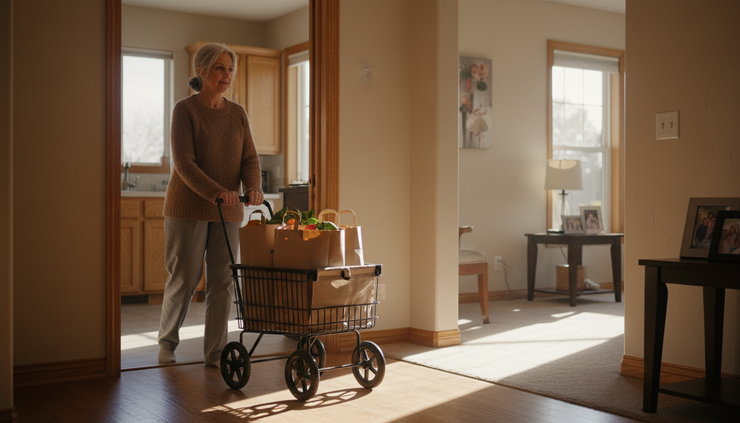
Keep moving with confidence
Safe lifting is really about planning, balance, and patience. Get close to the object. Keep it near your body. Turn with your feet. Split heavy loads. Use tools when they help.
Small habits add up, and they can make daily chores feel less risky and more manageable.
If you’d like more support with healthy aging, daily movement, and practical routines, take a look at My Senior Coach pricing plans. A little guidance can make it easier to stay active, safe, and confident at home.


Comments