
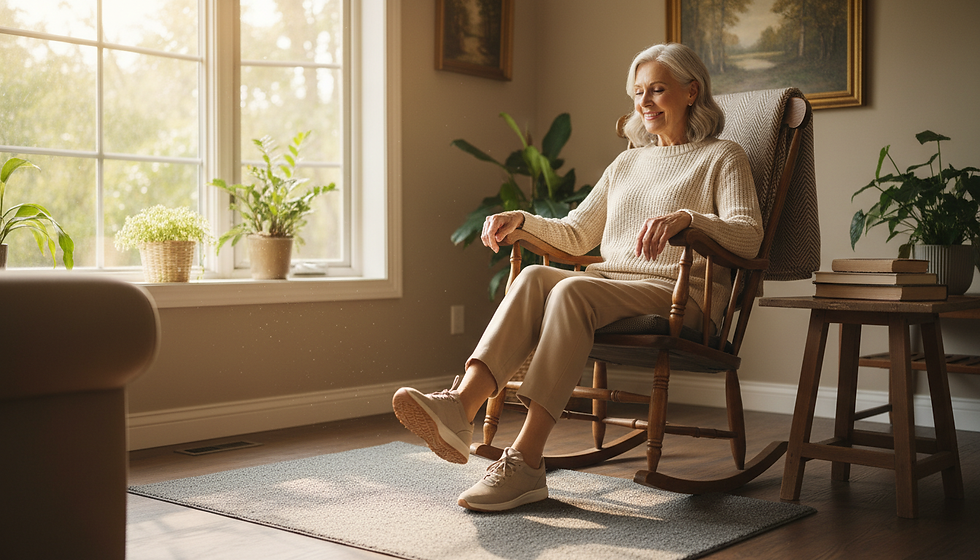
Gentle stretching for seniors works best when the body feels warm and supported.

Stretching for seniors gets talked about like it’s always good, always safe, and always the answer for stiff joints. The truth is a little more useful than that.
The right kind of stretching can help you move more comfortably, stand taller, reach overhead, turn your head while driving, and get out of a chair with less effort. The wrong kind can irritate joints, strain muscles, or make you feel less steady on your feet.
So let’s clear it up. Stretching isn’t about forcing your body into positions from decades ago. It’s about keeping the movement you use every day, safely and consistently.
This article is for general information only and isn’t medical advice. If you’ve had surgery, a fall, severe pain, osteoporosis, joint replacement, nerve symptoms, or a heart condition, check with your doctor or physical therapist before starting a new routine.

What stretching can actually do
Stretching helps most when it supports real-life movement.
That means bending to tie shoes, looking over your shoulder, reaching into a cabinet, stepping into the shower, or walking with an easy stride. It’s less about touching your toes and more about moving through the day with less stiffness.
A good stretching habit may help with:
Flexibility
Muscles and tendons may feel less tight over time.
Joint range of motion
Shoulders, hips, ankles, and the spine often benefit from gentle movement.
Posture
Stretching tight chest, hip, and calf muscles can make upright posture feel easier.
Comfort after activity
Light stretching after a walk or exercise class may reduce that “tight” feeling.
Body awareness
Slow stretching helps you notice what feels normal and what doesn’t.
Stretching does have limits. It won’t rebuild strength by itself. It won’t fix every ache. It won’t replace balance training, walking, or resistance exercise. Think of it as one part of your movement toolbox, not the whole toolbox.
The best time to stretch is not always before exercise
A common mistake is doing long, deep stretches before the body is warmed up.
Cold muscles don’t love being pulled. They respond better when blood flow has already increased a bit. That’s why a short warmup usually comes first.
Before a walk, fitness class, or strength workout, start with gentle movement:
March in place
Roll the shoulders slowly
Swing the arms gently
Do a few easy sit-to-stands
Walk around the room for a couple of minutes
After that, the body is usually more ready.
Use dynamic stretching before activity
Dynamic stretching means moving in and out of a comfortable range. You don’t hold the stretch for long. You keep it easy and controlled.
Good examples include:
Gentle leg swings while holding a counter
Shoulder circles
Ankle circles
Slow side steps
Arm reaches overhead
Marching with relaxed posture
These movements help prepare the body without making the muscles feel sleepy or overstretched.
Use static stretching after activity
Static stretching means holding a position. This works best after a walk, after exercise, or later in the day when the body feels warm.
A comfortable static stretch might last 15 to 30 seconds. You should feel mild tension, not pain.
If a stretch makes you grit your teeth, hold your breath, or pull away, it’s too much.

What seniors should do when stretching
The best stretching routine is simple enough to repeat. Five to ten minutes most days can be more helpful than one long session you dread.
Here are the habits that matter most.
Move slowly
Fast movements can surprise the muscles and joints. Slow movement gives your body time to respond.
Ease into the stretch. Pause when you feel gentle tension. Stay there and breathe.
Keep breathing
Holding your breath can increase tension and make stretching feel harder.
Try this instead:
Breathe in before you move.
Breathe out as you ease into the stretch.
Keep breathing while you hold it.
If you can’t breathe normally, back off.
Use support
There’s no prize for stretching without holding on.
A sturdy chair, wall, counter, railing, or bed can make stretching safer. Support is especially helpful for standing calf stretches, hip stretches, and balance-based movements.
Avoid rolling chairs, towel racks, wobbly tables, or anything that can slide.
Stretch both sides
It’s common for one hip, shoulder, or calf to feel tighter than the other. That’s fine. Still stretch both sides.
Start with the tighter side if you like, but don’t force it to “catch up” in one session. Bodies aren’t perfectly even.
Stay in a comfortable range
A stretch should feel like a gentle pull. It should not feel sharp, burning, electric, or pinching.
Use this simple guide:
Feeling | What it means | What to do |
Mild pull | Normal stretch sensation | Keep breathing and hold gently |
Strong discomfort | Too much tension | Ease out slightly |
Sharp pain | Possible irritation or strain | Stop the stretch |
Tingling or numbness | Possible nerve involvement | Stop and get guidance |
Joint pinching | Poor position or too much range | Adjust or skip it |
Focus on useful areas
Some areas tend to get stiff with age, sitting, driving, or less activity.
A practical routine often includes:
Neck and upper back
Chest and shoulders
Hips
Hamstrings
Calves
Ankles
You don’t need fancy positions. Simple, supported movements often work best.
What to avoid when stretching
Stretching should help you feel better, not leave you sore or nervous. These are the habits to skip.
Don’t bounce
Bouncing at the end of a stretch can strain muscles and tendons. It also makes it harder to control the movement.
Instead, move into the stretch slowly and hold steady. Think “gentle and steady,” not “push and pulse.”
Don’t force a painful joint
Muscle tension and joint pain are not the same thing.
A mild pull in the back of the thigh during a hamstring stretch is one thing. A sharp pinch inside the hip or knee is another. If the joint hurts, stop and change the position.
Don’t copy extreme stretches
Some stretching videos show deep lunges, floor poses, or twisting positions that aren’t right for every body.
If getting into the stretch feels harder than the stretch itself, choose a different option. A chair version or standing version can be just as useful.
Don’t stretch through dizziness
If stretching makes you lightheaded, dizzy, short of breath, or unsteady, stop. Sit down and breathe normally.
This can happen when you bend forward too quickly, stand up too fast, or hold your breath. It’s also a reason to ask a health professional what’s safe for you.
Don’t crank on the neck
The neck deserves care. Avoid fast neck circles or pulling hard on the head with your hands.
Try gentle movements instead:
Look right and left slowly
Tilt one ear toward one shoulder
Nod slightly up and down
Keep the range small and smooth
Stop if you feel dizziness, pain, or tingling.

A simple stretching routine that covers the basics
This routine can be done after a short walk, after a warm shower, or after a few minutes of easy movement. Keep a chair or counter nearby.
Aim for 15 to 30 seconds per stretch. Do each one once or twice per side.
Neck turn
Sit or stand tall. Slowly turn your head to the right as if looking over your shoulder. Keep the movement gentle. Return to center, then turn left.
This helps with driving, conversation, and everyday posture.
Chest opener
Stand near a doorway. Place one forearm on the doorframe with your elbow around shoulder height. Step forward slightly until you feel a gentle stretch across the chest.
Keep the shoulder relaxed. Don’t arch the low back.
This is helpful if you spend time reading, using a tablet, knitting, driving, or sitting.
Shoulder reach
Reach one arm across your chest. Use the other hand to support the upper arm, not the elbow joint. Hold gently.
This can help with reaching, dressing, and shoulder comfort.
Seated hamstring stretch
Sit near the front of a sturdy chair. Extend one leg forward with the heel on the floor and toes pointing up. Keep your back long and hinge slightly from the hips.
You should feel a stretch in the back of the thigh. Don’t round your back or force your chest toward the knee.
Calf stretch
Stand facing a wall or counter. Step one foot back. Keep the back heel down and the toes pointing forward. Bend the front knee slightly.
You should feel the stretch in the calf of the back leg.
Calf flexibility helps with walking, stairs, and balance.
Ankle circles
Sit in a chair. Lift one foot slightly and make slow circles with the ankle. Go both directions.
This is simple, but it matters. Ankles help with balance and walking on uneven ground.
Hip flexor stretch
Stand beside a counter for support. Step one foot back into a small split stance. Tuck the pelvis slightly, as if bringing the front of the hips upward. Bend the front knee a little.
You may feel a stretch in the front of the back hip.
Keep it small. This one should never feel like a deep backbend.
Stretching should match your body and your health
Some conditions need extra care.
If you have osteoporosis, avoid forceful forward bending and twisting unless a clinician has cleared it. If you’ve had a hip or knee replacement, follow the movement rules your surgical team gave you. If you have arthritis, gentle range-of-motion work may feel better than long holds during a flare.
If you have nerve pain, sciatica, numbness, or tingling, be careful with strong hamstring stretches. Nerves don’t respond well to being yanked. A physical therapist can show you safer options.
And if you’ve had a recent fall, stretching alone won’t solve the bigger issue. Balance training and strengthening are usually part of the plan.
A good routine should leave you feeling looser, calmer, and more confident. It should not leave you limping, sore for days, or afraid to move.
How stretching fits with strength and balance
Stretching feels good, but strength keeps you steady.
For healthy aging, stretching works best alongside:
Walking or other cardio
Light strength training
Balance practice
Daily movement breaks
Good sleep and hydration
For example, stretching tight calves may help your walking stride. Strengthening the hips and legs helps you use that stride with more control. Practicing balance helps you recover if you trip.
That mix matters more than doing one perfect stretch.
If you want help building a safe plan that fits your life, you can explore My Senior Coach pricing plans and choose the support level that works for you.

FAQ
Should seniors stretch every day?
Daily gentle stretching is usually fine for many people, especially if it feels good and doesn’t cause pain. You can also stretch several days a week. Consistency matters more than doing a long routine.
Is it better to stretch in the morning or at night?
Either can work. Morning stretching may need to be extra gentle because the body can feel stiff. Evening stretching often feels easier because you’ve been moving during the day.
How long should a stretch be held?
A comfortable hold of 15 to 30 seconds is a good starting point. Longer isn’t always better. Stop sooner if the stretch becomes painful or your form changes.
Should stretching hurt to work?
No. Stretching should not hurt. Mild tension is normal. Sharp pain, burning, tingling, numbness, or joint pinching means you should stop or adjust.
What if one side is much tighter than the other?
That’s common. Stretch both sides gently, and don’t force the tighter side. If the difference is sudden, painful, or affects walking, ask a health professional for guidance.
The real truth about stretching
Stretching can be a great habit, but only when it respects your body.
Warm up first. Move slowly. Use support. Breathe. Skip bouncing, forcing, and painful positions. Choose stretches that help with real life, like walking, reaching, turning, and standing tall.
The goal isn’t to become flexible like someone in a fitness video. The goal is to feel a little more comfortable and capable in the body you use every day.


Comments