
Coach Doug's Favorite Strength Exercises for Senior Beginners

Getting stronger after 60 doesn’t have to mean heavy weights, loud gyms, or complicated routines. In fact, Coach Doug’s first rule for beginners is pretty simple: start with movements you already use every day, then make them a little more intentional.
After 30 years as a physical therapist and senior fitness coach, Coach Doug has seen the same thing over and over. The best strength exercises are usually the ones that help with real life: getting out of a chair, climbing stairs, carrying groceries, standing tall, and feeling steady on your feet.
This guide walks through Coach Doug’s favorite beginner-friendly exercises, how to do them safely, and how to build them into a simple routine at home.
This article is for general fitness education only. If you have pain, dizziness, recent surgery, heart concerns, balance issues, or a medical condition, check with your health care provider before starting.

Why strength training matters more than most people think
Strength is more than muscle. It’s independence.
When leg strength drops, standing up from a low chair gets harder. When grip strength fades, opening jars or carrying a laundry basket can feel like a project. When the hips and core get weaker, balance often takes a hit.
The good news is that strength responds well to practice, even when someone is starting later in life. You don’t need to train like an athlete. You just need the right moves, done consistently, with good form.
For seniors who are brand new to exercise, Coach Doug usually looks for exercises that meet three standards:
They feel familiar.
They can be adjusted easily.
They support daily movement.
That’s why this list doesn’t start with fancy machines or intense floor workouts. It starts with the basics that carry over into everyday life.
Coach Doug’s safety rules before you start
Before the exercises, let’s set the ground rules. These matter.
Use a sturdy chair or countertop for support. A dining chair with a firm seat and a back works well. Avoid chairs with wheels.
Move slowly. Rushing usually leads to sloppy form. Slow movement builds control.
Breathe while you move. Try exhaling during the effort, like when you stand up or push yourself away from a wall.
Stay in a comfortable range. Mild muscle effort is fine. Sharp pain, joint pain, chest pain, or dizziness is not.
Stop before form falls apart. If you can’t do another rep with control, that set is done.
A simple effort scale helps. On a 1 to 10 scale, aim for about a 5 or 6 when starting. That means the exercise feels like work, but you’re still in control and could do a few more reps if needed.
The best beginner exercises for real-life strength
These are Coach Doug’s go-to moves for senior beginners because they train the body in ways that actually show up during the day.
Exercise | What it helps with | Beginner goal |
Sit-to-stand | Chairs, toilets, car seats | 5 to 10 controlled reps |
Wall push-up | Pushing doors, getting up from surfaces | 8 to 12 reps |
Seated band row | Posture, shoulder strength, pulling motions | 8 to 12 reps |
Heel raise | Walking, balance, ankle strength | 8 to 15 reps |
Standing hip abduction | Side balance, hip stability | 6 to 10 reps each side |
Step-up | Stairs, curbs, leg confidence | 5 to 8 reps each side |
Farmer carry | Groceries, grip, posture | 20 to 40 seconds |
Seated march | Hip strength, walking mechanics | 10 to 20 total marches |
Sit-to-stand builds the strength you use all day
If Coach Doug had to pick one exercise for a senior beginner, this would be it.
The sit-to-stand trains the thighs, hips, and core. More than that, it practices one of the most important daily skills: getting up from a chair without struggling.
How to do it
Sit near the front half of a sturdy chair. Place both feet flat on the floor, about hip-width apart. Lean your chest slightly forward, press through your feet, and stand up tall.
Pause for a moment at the top. Then slowly sit back down with control.
Try not to drop into the chair. That lowering part is where a lot of strength gets built.
Make it easier
Use your hands on the chair arms or on your thighs. You can also place a firm cushion on the seat to make the chair higher.
Make it harder
Cross your arms over your chest or slow the lowering phase to a count of three.
Coach Doug’s favorite cue is simple: nose over toes, then stand. That little forward lean helps your body use the legs instead of yanking with the back.

Wall push-ups strengthen the upper body without getting on the floor
Push-ups are great, but floor push-ups aren’t the right starting point for many beginners. Wall push-ups offer the same basic movement in a safer, more approachable way.
They strengthen the chest, shoulders, arms, and core. They also help with pushing tasks, like opening a heavy door or rising from a surface.
How to do it
Stand facing a wall. Place your hands on the wall at about shoulder height and shoulder-width apart. Step your feet back slightly so your body forms a gentle angle.
Bend your elbows and bring your chest toward the wall. Keep your body long. Then press the wall away and return to the starting position.
Keep the movement smooth. Don’t let your head poke forward.
Make it easier
Stand closer to the wall.
Make it harder
Stand farther from the wall or use a sturdy countertop instead of a wall. The lower the surface, the more challenging the exercise becomes.
A good starting point is 1 or 2 sets of 8 to 12 reps.
Seated band rows help posture and shoulder strength
A lot of daily life happens in front of us. Reading, cooking, driving, phones, and computers all tend to pull the body forward. Seated rows help strengthen the muscles that support upright posture.
You’ll need a light resistance band. If you don’t have one, skip this exercise for now and start with the others.
How to do it
Sit tall in a sturdy chair. Hold one end of the band in each hand. Anchor the middle of the band around your feet, or use a safe, sturdy anchor point if you’ve been taught how.
Start with your arms long in front of you. Pull your elbows back close to your sides, as if you’re gently squeezing your shoulder blades together. Pause, then slowly return.
Keep your shoulders relaxed. Don’t shrug.
Make it easier
Use a lighter band or reduce the range of motion.
Make it harder
Use a slightly stronger band or pause for two seconds when your elbows are back.
This is one of those quiet exercises that can pay off in a big way. Better back and shoulder strength often makes standing tall feel more natural.
Heel raises train the calves and ankles
Heel raises look simple, but don’t underestimate them. The calves and ankles play a big role in walking, balance, and stair climbing.
How to do it
Stand behind a sturdy chair or near a countertop. Hold on lightly for balance. Rise up onto the balls of your feet, lifting your heels off the floor.
Pause at the top. Lower slowly.
Try to keep your weight even through both feet. Don’t roll out to the little toes.
Make it easier
Use both hands for support and keep the lift small.
Make it harder
Use a slower tempo or hold the top position for two seconds.
Start with 8 to 15 reps. If your calves feel tired afterward, that’s normal. If you feel cramping or foot pain, reduce the range or stop.
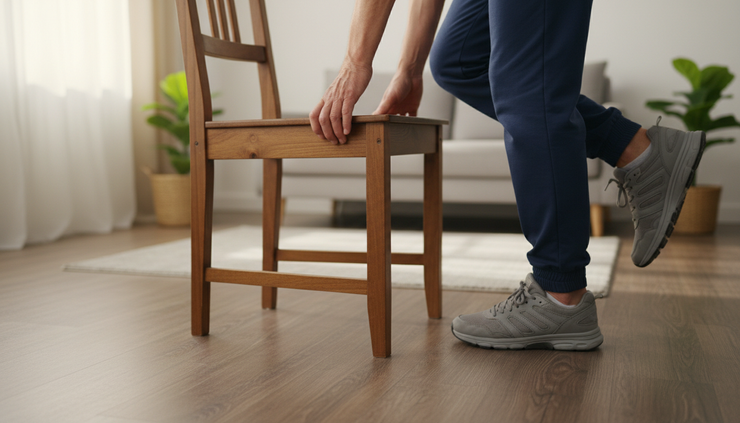
Standing hip abduction supports side-to-side balance
The hip muscles on the outside of the leg help keep the pelvis steady when walking. They also help with side balance, which matters when stepping around a pet, moving through a crowded store aisle, or catching yourself after a small stumble.
How to do it
Stand behind a chair and hold the back for support. Keep your toes pointing forward. Slowly move one leg out to the side, then bring it back in.
Keep your upper body tall. Avoid leaning away from the moving leg.
Make it easier
Lift the leg only a few inches.
Make it harder
Pause at the top or use a light ankle weight if your form is solid and you’ve been cleared for it.
Try 6 to 10 reps per side.
This move should be felt around the outer hip, not in the low back. If your back starts working too hard, make the motion smaller.
Step-ups build confidence for stairs and curbs
Stairs can become a confidence issue. Step-ups help rebuild that confidence in a controlled way.
Use a low step, such as the bottom stair in your home. Make sure there’s a railing or stable support nearby.
How to do it
Place one foot fully on the step. Press through that foot and step up. Bring the other foot up to meet it. Then step back down with control.
Do all reps on one side, then switch, or alternate sides if that feels better.
Make it easier
Use a very low step and hold the railing.
Make it harder
Slow down the lowering part or increase the number of reps slightly.
The key is control. If you have to launch yourself up or drop down quickly, the step is probably too high for now.
Farmer carries train grip, posture, and full-body strength
The farmer carry is just walking while holding weight. That may sound too simple, but it’s one of Coach Doug’s favorites because it trains several useful things at once.
It helps grip strength, shoulder stability, posture, core control, and walking confidence.
How to do it
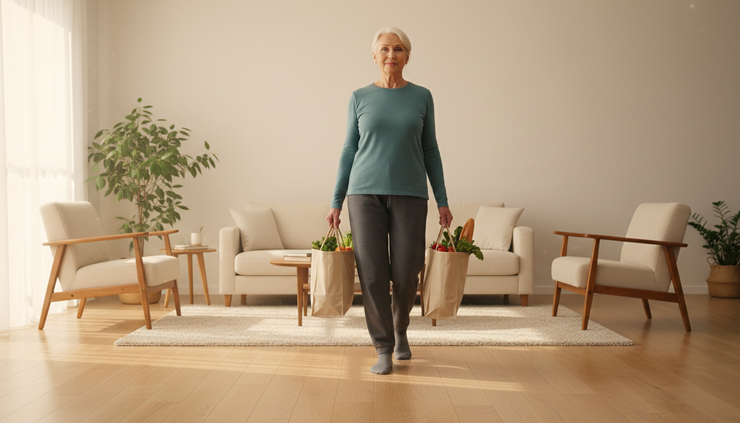
Hold one light weight in each hand. You can use dumbbells, water bottles, or small grocery bags with equal weight.
Stand tall. Keep your shoulders relaxed and your eyes forward. Walk slowly for 20 to 40 seconds, then set the weights down carefully.
Make it easier
Use lighter items or walk a shorter distance.
Make it harder
Increase the time slightly or use a little more weight, but only if posture stays tall.
This should feel steady, not rushed. Think “quiet steps and tall spine.”
Seated marches wake up the hips and core
Seated marches are a nice choice for beginners who need a lower-intensity move. They train hip flexors, posture, and gentle core control.
How to do it
Sit tall near the front of a sturdy chair. Hold the sides of the chair if needed. Lift one knee a few inches, lower it, then lift the other knee.
Move like you’re marching in place while seated.
Make it easier
Lift only slightly.
Make it harder
Sit taller without using your hands, or slow each lift down.
Try 10 to 20 total marches.
A simple beginner routine Coach Doug would actually use
You don’t need to do every exercise on the list every day. Start small and build.
Here’s a good first routine for many beginners:
Sit-to-stand
5 to 10 reps
Wall push-up
8 to 12 reps
Seated band row
8 to 12 reps
Heel raise
8 to 15 reps
Standing hip abduction
6 to 10 reps each side
Seated march
10 to 20 total marches
Do this routine 2 or 3 days per week, with a rest day between sessions. One round is enough when you’re starting. After a couple of weeks, you can add a second round if you feel good and your form stays clean.
Step-ups and farmer carries can be added once the basics feel comfortable. Add one at a time rather than piling everything on at once.
A good session does not need to leave you exhausted. The goal is to finish feeling like you did useful work and could come back again in a day or two.
How to know you’re making progress
Progress isn’t always dramatic. Sometimes it shows up in small moments.
You may notice:
Getting out of a chair feels smoother.
Stairs feel less intimidating.
You stand taller during the day.
Carrying groceries feels easier.
Balance feels a bit steadier.
You recover faster after a walk.
Those are real wins.
Coach Doug often reminds beginners that strength is built through repetition, not perfection. Missed a day? Just restart. Need fewer reps today? Fine. The body responds best to steady practice over time.
Common mistakes to avoid
The biggest mistake is doing too much too soon. That’s how soreness, frustration, and setbacks happen.
Watch for these:
Holding your breath
Keep breathing through each rep. If you catch yourself bracing hard and holding air, slow down.
Using momentum
Swinging through an exercise usually means the muscles aren’t doing the work. Slow down and control the movement.
Ignoring pain
Muscle effort is okay. Sharp pain is a stop sign.
Skipping support
Using a chair or countertop isn’t cheating. It’s smart training.
Changing too many things at once
Add reps, add weight, or add a new exercise. Don’t do all three in the same week.
When to ask for help
A coach, physical therapist, or qualified fitness professional can help if you’re unsure about form, worried about balance, or returning after illness, injury, or surgery.
Getting guidance early can save a lot of guesswork. It can also help you choose the right starting point instead of forcing exercises that don’t fit your body yet.
If you’d like a guided senior fitness plan with Coach Doug’s support, you can view the coaching options here.
FAQ
How many days per week should a senior beginner do strength exercises?
Two or three nonconsecutive days per week is a good starting point for many people. Rest days give the muscles time to recover and adapt.
Do I need dumbbells to start?
No. A sturdy chair, a wall, and maybe a light resistance band are enough for the first stage. Household items like water bottles can work for light carrying exercises.
Should strength exercises hurt?
No. You may feel muscle effort or mild soreness later, but sharp pain, joint pain, chest pain, dizziness, or unusual shortness of breath means you should stop and get medical guidance.
Is it too late to start strength training after 70 or 80?
It’s usually not too late to begin with safe, appropriate exercises. The key is starting at the right level and progressing slowly.
What if balance is a concern?
Use a stable chair, countertop, or railing for support. Avoid unsupported standing exercises until you feel steady or have help from a qualified professional.
Start with the exercises you’ll actually keep doing
The best beginner strength plan is the one that feels safe enough to repeat. Start with sit-to-stands, wall push-ups, rows, heel raises, hip work, and a little marching. Keep the reps comfortable. Use support when needed. Build slowly.
Strength doesn’t have to be dramatic to be powerful. A few good movements, practiced a few times each week, can make daily life feel easier, steadier, and more confident.


Comments