
Gentle Exercise Modifications for Seniors with Arthritis Back Pain or Weakness

Exercise shouldn’t feel like a test you have to pass. If your knees ache, your back gets cranky, or your legs feel weaker than they used to, the answer usually isn’t “stop moving.” More often, it’s “change the way you move.”
Small changes can make exercise safer, calmer, and a lot more doable. A chair, a wall, a slower pace, or a smaller range of motion can turn a painful move into one that helps you build strength without feeling beat up afterward.
This guide is informational and isn’t a substitute for medical care. Check with your doctor, physical therapist, or other qualified health professional before starting or changing exercise, especially if you have a new injury, severe pain, dizziness, chest pain, or recent surgery.

Start with the rule that keeps exercise for seniors gentle for back pain
The best modification is the one that lets you move with control, comfort, and confidence.
That means you don’t need to force a deep squat, stretch until something burns, or keep up with a video made for someone else’s body. A helpful exercise should feel manageable while you’re doing it, and your body should settle down afterward.
A simple pain guide can help:
During exercise | What to do |
No pain or mild discomfort | Keep going slowly and watch your form |
Pain that climbs or changes your movement | Make the move smaller or easier |
Sharp, shooting, or sudden pain | Stop the exercise |
Pain that lasts into the next day | Do less next time and ask for guidance if it continues |
Think of exercise like adjusting the volume on a radio. You’re not turning it off. You’re turning it to the level that works today.
A good starting point is:
Move for 5 to 10 minutes at a time
Use a chair, wall, counter, or rail for support
Rest before you feel wiped out
Breathe normally instead of holding your breath
Choose smooth movements over fast ones
If you’re having a low-energy day, that still counts. A few gentle seated marches, shoulder circles, or ankle pumps are better than skipping movement completely.
How to modify exercises for arthritis
Arthritis can make joints feel stiff, swollen, sore, or unpredictable. Some days may feel easy. Other days, the same exercise may feel like too much.
The goal is to keep joints moving without irritating them.
Use a smaller range of motion
You don’t have to bend as far as a picture or instructor shows.
For example, if a squat bothers your knees, try a mini squat while holding the kitchen counter. Bend only a few inches, then stand tall again. If shoulder raises hurt, lift your arms only to chest height instead of overhead.
This keeps the joint moving but avoids the painful end range.
Warm up longer before strength work
Arthritic joints often prefer a slower start. Before doing strength exercises, spend a few minutes with easy movement:
March in place while holding a chair
Roll your shoulders gently
Open and close your hands
Do ankle circles
Take a short indoor walk
Warm joints usually move better than cold joints.
Choose joint-friendly positions
Some exercises feel better when you change your position.
If this bothers you | Try this instead |
Floor exercises | Do them on a bed or seated in a chair |
Full squats | Do sit-to-stands from a chair |
Push-ups on the floor | Do wall push-ups |
Lunges | Do side steps while holding a counter |
Gripping weights | Use wrist weights or resistance bands with handles |
For hands with arthritis, don’t squeeze equipment harder than needed. A larger handle, soft grip, or light resistance band may feel more comfortable than small dumbbells.
Respect swollen or hot joints
If a joint is swollen, warm, or more painful than usual, don’t push heavy exercise through it. Gentle range-of-motion moves may still be useful, but hard strength work can wait.
That doesn’t mean the whole day is lost. If your hands are flaring, you might walk. If your knees are sore, you might do seated upper-body exercises.

How to modify exercises for back pain
Back pain can make exercise feel scary. That’s understandable. The key is to avoid sudden strain and practice movements that help your back feel supported.
For many people, gentle walking, core control, hip strength, and better posture can help. But back pain has many causes, so new, severe, or spreading pain should be checked by a professional.
Keep your spine in a neutral position
A neutral spine means your back keeps its natural curves. You’re not slumping hard, arching aggressively, or twisting quickly.
Try this during standing exercises:
Stand tall with feet about hip-width apart.
Soften your knees.
Imagine your ribs stacked over your hips.
Lightly tighten your belly as if bracing before a cough.
Keep breathing.
That light belly brace can make moves like side steps, heel raises, and wall push-ups feel steadier.
Swap bending for hinging
Many back flare-ups happen when people round forward to pick something up or exercise.
Instead of bending from the waist, practice a hip hinge:
Stand with hands on your thighs
Push your hips back slightly
Keep your chest lifted
Bend your knees a little
Return to standing
This is useful for daily life too, like loading laundry or reaching for a low shelf.
Make core exercises back-friendly
You don’t need crunches to strengthen your core. In fact, crunches bother many backs.
Try these instead:
Seated belly bracing
Sit tall. Gently tighten your belly for 3 to 5 seconds. Breathe. Relax.
Seated marching
Sit tall and lift one knee a few inches. Lower it slowly. Switch sides.
Wall plank
Place your hands on a wall, step your feet back slightly, and hold your body long for 10 to 20 seconds.
Heel slides on a bed
Lie on your back with knees bent. Slide one heel away, then bring it back. Keep the movement slow.
The point is not to make your abs burn. The point is to teach your trunk to support you while you move.
Avoid fast twisting
Golf-style twists, fast toe touches, and quick side bends may aggravate some backs. Slow rotation can be useful, but keep it gentle.
A safer version is a seated upper-back turn. Sit tall, cross your arms loosely over your chest, and turn a small amount to one side. Come back to center. Repeat on the other side.
How to modify exercises for weakness or low stamina
Weakness can show up in different ways. Maybe standing from a chair is harder. Maybe your legs tire on stairs. Maybe you feel unsteady after a few minutes.
The right plan starts small and builds gradually. Gentle Exercise Modifications for Seniors with Arthritis Back Pain or Weakness should help you feel more capable, not worn out.
Use support without feeling bad about it
Holding a counter, wall, or chair is smart. It lets you practice the movement safely while your strength catches up.
Good support options include:
Kitchen counter
Sturdy dining chair
Wall
Stair rail
Walker, if prescribed or recommended
Avoid holding rolling chairs, towel racks, or anything that can slide.
Try seated versions first
Seated exercise can build strength, improve circulation, and help you gain confidence.
Here are simple seated options:
March your feet in place
Straighten one knee, then lower it
Raise your heels and toes
Squeeze your shoulder blades gently
Press your palms into your thighs for light arm effort
Lift one arm at a time
If standing exercise feels too tiring, do one seated round first. Then stand for one or two supported exercises if you feel steady.
Break exercise into tiny sets
You don’t have to do 30 minutes at once. Many people do better with short sessions spread across the day.
Try this pattern:
Morning
5 minutes of gentle mobility
Afternoon
5 minutes of strength or balance
Evening
5 minutes of stretching or easy walking
This approach works well when energy changes from day to day.

Easy modifications for common exercises
A few small swaps can make familiar exercises much friendlier.
Squats
Try sit-to-stands instead.
Use a sturdy chair. Scoot forward slightly. Place your feet under your knees. Lean forward a little, stand up, then sit down slowly.
Make it easier by using your hands on the chair arms. Make it harder by using less hand support or choosing a slightly lower chair, if safe.
Push-ups
Try wall push-ups.
Stand facing a wall. Place your hands at chest height. Bend your elbows and bring your chest toward the wall. Push back.
To make it easier, stand closer to the wall. To make it harder, step farther back.
Lunges
Try supported backward toe taps.
Hold a counter. Step one foot back and tap your toes. Bring it forward. Switch sides.
This trains balance and hip strength without dropping into a deep lunge.
Standing balance
Try supported weight shifts.
Hold the counter with both hands. Slowly shift weight from one foot to the other. Keep both feet on the floor.
When that feels easy, hold with one hand. Only try no hands if you feel safe and steady.
Overhead presses
Try front presses or low diagonal lifts.
If overhead movement bothers your shoulders or neck, press forward at chest level with a light band or no weight. You can also lift your hands diagonally only as high as comfortable.
Floor bridges
Try seated glute squeezes.
Sit tall and gently squeeze your buttock muscles for 3 to 5 seconds. Relax. Repeat.
This is less intense than a bridge, but it still wakes up the muscles that help with standing and walking.
A gentle sample routine
Here’s a simple routine you can adjust. Stop if you feel sharp pain, dizziness, chest discomfort, or unusual shortness of breath.
Exercise | How to do it | Easy version |
Seated march | Lift one knee, then the other | Make each lift smaller |
Shoulder rolls | Roll shoulders slowly backward | Do one shoulder at a time |
Sit-to-stand | Stand from a chair and sit slowly | Use hands or a higher chair |
Wall push-up | Bend elbows toward the wall | Stand closer to the wall |
Heel raises | Hold a counter and lift heels | Lift just a little |
Side steps | Step side to side at a counter | Tap instead of stepping |
Seated belly brace | Tighten belly gently while breathing | Hold for 2 seconds |
Start with 5 repetitions of each. If that feels good, build toward 8 to 10. Rest whenever you need to.
A helpful goal is to finish thinking, “I could do a little more,” rather than, “I overdid it.”
When to stop and get help
Exercise should not make you feel unsafe. Stop and seek medical guidance if you notice:
Chest pain or pressure
Fainting, severe dizziness, or sudden confusion
New weakness on one side of the body
Sudden severe headache
Loss of bladder or bowel control
Sharp pain that doesn’t ease after stopping
New numbness, tingling, or pain traveling down the leg
A joint that becomes very swollen, hot, or red
For regular soreness, use common sense. Mild muscle tiredness can happen when you try something new. Joint pain, nerve symptoms, or pain that keeps increasing is different.
If you’d like more personal support choosing exercises that fit your body and your goals, you can review senior coaching options here.
FAQ
What is the best exercise for seniors with arthritis?
There isn’t one best exercise for everyone. Walking, water exercise, seated strength work, gentle cycling, and range-of-motion exercises are common joint-friendly choices. The best option is the one you can do consistently without flaring pain.
Should I exercise when my back hurts?
Sometimes gentle movement helps, but it depends on the pain. Easy walking, supported stretching, or seated core work may feel good. Stop if pain gets sharp, travels down your leg, or comes with numbness or weakness.
How often should I exercise if I feel weak?
Start with short sessions, even 5 minutes. Try gentle movement most days, with strength exercises 2 to 3 days a week if your doctor says it’s safe. Build slowly.
Is it okay to use a chair during exercise?
Yes. A chair is one of the best tools for safer exercise. It can support balance, reduce strain, and make strength moves more comfortable.
How do I know if I’m doing too much?
Warning signs include pain that gets worse as you continue, unusual fatigue, soreness that lasts more than a day or two, or feeling unsteady after exercise. Do less next time and ask for help if symptoms continue.
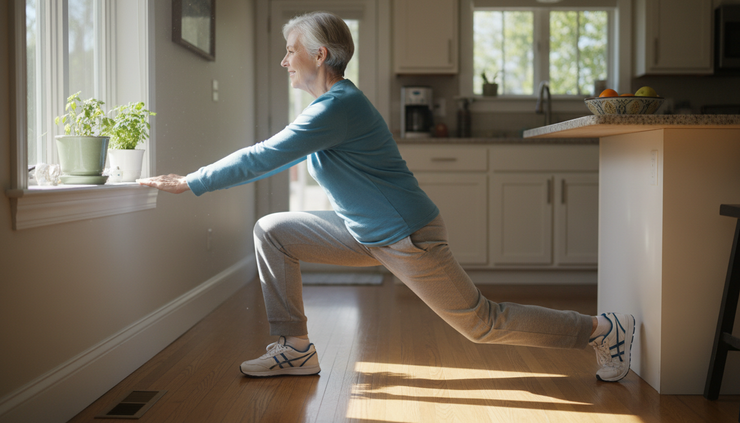
Keep the goal simple
The goal isn’t to exercise perfectly. It’s to keep moving in a way your body can accept.
Use a chair. Shorten the movement. Slow down. Rest sooner. Choose the version that feels safe today, then build from there.
Those small choices add up. Over time, gentle movement can help daily tasks feel steadier, less tiring, and more within reach.



Comments