
How Seniors Can Overcome Fear of Falling and Move with Confidence

One small stumble can change how you feel about your body. Maybe nothing even happened, but now you notice every curb, every throw rug, every shiny floor at the grocery store. You walk more slowly. You hold the railing tighter. You say no to things you used to enjoy because you’re worried about falling.
That fear makes sense. Falling can be serious, and being careful is wise. But fear can also shrink your world. When you move less, your legs can get weaker, your balance can get shakier, and everyday tasks can start to feel harder.
The good news is that confidence can be rebuilt. Not all at once. Not by “pushing through.” You build it with small, steady steps that help your body and brain trust movement again.
This guide is informational only and isn’t a substitute for medical care. If you’ve had a recent fall, new dizziness, fainting, sudden weakness, or changes in vision, talk with your doctor before starting new exercises.

Fear of falling is common in seniors, and it’s not a character flaw
Fear of falling in seniors can sneak in after one scary moment. It can also build slowly after a surgery, illness, medication change, or a season of being less active.
Some people feel anxious only in certain places, like stairs, parking lots, bathrooms, or crowded stores. Others feel unsure almost everywhere, even at home.
That doesn’t mean you’re weak. It means your brain is trying to protect you. The problem is that the brain sometimes overprotects. It may act like every step is dangerous, even when the real risk is manageable.
A helpful first step is to get specific. Instead of saying, “I’m afraid of falling,” try finishing this sentence:
“I feel least steady when I…”
Your answer might be:
Walking on uneven sidewalks
Getting up from a low chair
Turning too quickly
Stepping into the shower
Carrying laundry
Walking in low light
Getting out of bed at night
Walking without holding onto something
Once you name the situation, you can make a plan for that exact moment. Fear feels bigger when it stays vague.
Check the things that can quietly raise your fall risk
Before working on confidence, look at the basics. A few simple fixes can make movement feel safer right away.
Review medications and health changes
Some medications can make you feel sleepy, lightheaded, or unsteady. Blood pressure changes, dehydration, inner ear problems, foot pain, and vision changes can also affect balance.
Ask your doctor or pharmacist to review your medications if you’ve noticed:
Dizziness when standing up
Feeling foggy or sleepy during the day
New balance problems
More trips or near-falls
Trouble seeing steps, curbs, or uneven ground
Don’t stop a medication on your own. Just ask whether anything could be affecting your steadiness.
Get vision and hearing checked
Clear vision helps your brain judge depth, distance, and obstacles. Hearing also helps with awareness of your surroundings. If glasses are outdated or hearing has changed, your balance system may have to work harder.
If stairs look blurry, floors seem uneven, or bright light causes glare, bring it up at your next eye exam.
Take foot pain seriously
Pain changes how you walk. Bunions, numbness, poor footwear, weak ankles, or foot wounds can all affect balance.
Good shoes matter more than most people think. Look for shoes that:
Fit snugly without squeezing
Have non-slip soles
Stay secure on the foot
Have a low, stable heel
Don’t flop, slide, or twist easily
Slippers can be cozy, but many aren’t safe for walking. If you love slippers, choose a pair with a closed back and a grippy sole.
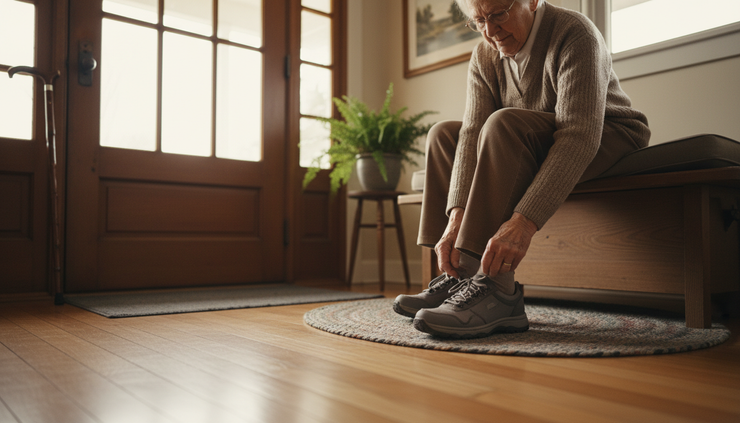
Make your home easier to move through
A safer home doesn’t have to feel like a hospital room. Think of it as clearing the path so your body has fewer surprises.
Start with your most-used routes:
Bed to bathroom
Bedroom to kitchen
Kitchen to favorite chair
Front door to car
Laundry area
Shower or tub area
Walk those paths slowly during the day and look for anything that could catch a foot or make you hesitate.
Remove small hazards first
The easiest fixes often help the most.
Pick up or secure:
Loose throw rugs
Electrical cords across walkways
Clutter near stairs
Shoes left by the door
Pet toys
Low footstools
Wobbly furniture
Keep the things you use every day within easy reach. Stretching high or bending low can throw off balance, especially if you’re already nervous.
Improve lighting
Low light makes the brain guess. That’s risky, especially at night.
Try these simple changes:
Use night-lights from bedroom to bathroom
Keep a lamp within reach of the bed
Add brighter bulbs in hallways
Turn on lights before walking through a room
Use motion-sensor lights if getting to a switch is difficult
If glare bothers you, choose softer bulbs or shaded lamps.
Add support where it helps
Grab bars, railings, and sturdy chairs aren’t signs of defeat. They’re tools. Athletes use equipment to perform better. Support at home works the same way.
Helpful supports may include:
Grab bars near the toilet and shower
A shower chair
Non-slip shower strips or mats
Railings on both sides of stairs
A raised toilet seat
A sturdy chair with arms for easier standing
If you use a cane or walker, make sure it fits your height and the tips aren’t worn out. A physical therapist can help adjust it and show you how to use it safely.
Rebuild strength with small daily movements
Fear often improves when the body feels more reliable. Strengthening your legs, hips, ankles, and core can make walking, standing, and turning feel easier.
You don’t need fancy equipment. Short sessions count. Even a few minutes a day can help if you’re consistent.
Start near a counter, sturdy chair, or wall. Move slowly. Stop if you feel chest pain, severe shortness of breath, sharp pain, faintness, or sudden dizziness.
Practice standing up from a chair
This is one of the most useful exercises because it matches real life.
Try this:
Sit in a sturdy chair with arms if needed.
Place both feet flat on the floor.
Lean slightly forward.
Push through your feet and stand up.
Sit back down slowly.
Start with 3 to 5 repetitions. Rest. Build up over time.
If it feels too hard, use your hands on the chair arms. If it feels too easy, try using less help from your hands.
Build balance near support
Balance improves with practice, but safety comes first. Always practice where you can hold on.
Try these simple options:
Stand with feet close together while holding the counter
March slowly in place
Shift weight from one foot to the other
Step sideways along the kitchen counter
Rise onto your toes, then lower slowly
Practice gentle heel-to-toe walking while holding a wall or counter
Keep movements slow. Fast movements can trigger more fear.
Walk a little more, but make it planned
If walking has become scary, don’t start with a long walk outside. Start with a route that feels safe.
You might walk:
From the bedroom to the kitchen and back
Down the hallway twice
Around the inside of the house
To the mailbox with someone nearby
In a store while holding a cart
A good goal is a walk that feels a little challenging but not overwhelming. Confidence grows when the brain has repeated proof that movement can go well.

Teach your brain that movement can be safe again
Physical strength matters, but fear also lives in the nervous system. If your body tenses every time you stand up, your balance may feel worse. Tight shoulders, shallow breathing, and rushing can make movement clumsy.
The goal is to send your brain a calm message before and during movement.
Use a pause before you move
Before standing or walking, take a few seconds.
Try this simple routine:
Put both feet on the floor.
Take one slow breath.
Look where you’re going.
Stand up slowly.
Pause again before stepping.
That tiny pause helps prevent rushing, dizziness, and panic. It also gives your body time to adjust.
Turn in small steps
Many falls happen during turns. A quick pivot can throw off balance.
Instead, think “small steps.” Turn your whole body gradually. Move your feet rather than twisting from the waist.
If you use a walker, keep it close and turn with it. Don’t leave it behind and reach back for it.
Break tasks into smaller pieces
A task can feel risky when you try to do too much at once.
For example, instead of carrying a full laundry basket while walking down a hallway, try:
Use a smaller basket
Carry fewer items
Slide the basket along a counter first
Ask for help with stairs
Use a rolling cart if it’s safe in your space
The point isn’t to give up tasks. It’s to do them in a way that protects your balance.
Ask for the right kind of help
You don’t have to solve fear of falling alone. The right support can speed up progress and make practice safer.
A physical therapist can check strength, balance, walking pattern, and assistive device fit. They can also teach exercises that match your current ability.
An occupational therapist can help with home setup, bathroom safety, and everyday tasks like dressing, cooking, and bathing.
A doctor can look for medical causes of falls or unsteadiness. That may include blood pressure changes, medication side effects, vision changes, nerve issues, or dizziness disorders.
A trusted friend or family member can help you practice walking, attend appointments, or make home changes. Be clear about what helps. For example, “Please walk beside me, but don’t grab my arm unless I ask.” Sudden grabbing can actually make balance worse.
If you’re looking for personal support with building safer routines, movement goals, and confidence, you can explore senior coaching options here.
Create a confidence plan you can actually follow
A good plan is simple. It should fit into real life, not require a complete personality change.
Try this weekly rhythm:
Daily
A few times a week
Once a week
As needed
Do 5 minutes of safe movement practice near support.
Take a short planned walk in a safe place.
Check one area of the home for fall hazards.
Ask for help with tasks that feel unsafe right now.
Keep track of small wins. Write them down if that helps.
Examples:
“I stood from the chair 5 times.”
“I walked to the mailbox.”
“I used the shower chair and felt steadier.”
“I turned more slowly in the kitchen.”
“I went to the store with a cart and felt okay.”
Small wins matter because fear often only remembers close calls. Give your brain fresh evidence.
FAQ
Is fear of falling normal as you get older?
Yes, it’s common, especially after a fall, illness, surgery, or a period of less activity. The goal isn’t to ignore the fear. The goal is to respond to it with safer habits, strength practice, and support.
Should I use a cane or walker if I’m afraid of falling?
Maybe. A cane or walker can help, but only if it fits well and you know how to use it. Ask a physical therapist or healthcare provider to check the height, condition, and best type for your needs.
What exercises help most with balance?
Gentle strength and balance exercises often help, such as sit-to-stand practice, side steps, toe raises, marching in place, and weight shifts. Tai chi may also help some people with balance and confidence. Start near sturdy support.
What if I feel dizzy when I stand up?
Pause before walking and tell your doctor, especially if it happens often. Dizziness can come from many causes, including medications, dehydration, blood pressure changes, or inner ear problems.
How long does it take to feel confident again?
It varies. Some people feel better after small home changes and a few weeks of practice. Others need more time, especially after a serious fall. Consistency matters more than speed.

Take the next steady step
Overcoming fear of falling doesn’t mean pretending nothing could happen. It means giving yourself safer surroundings, stronger muscles, calmer habits, and the right help when you need it.
Start with one small step today. Clear one walkway. Practice standing from a chair a few times. Turn on a night-light. Ask your doctor about dizziness. Take a short walk with someone you trust.
Confidence usually comes back in pieces. Let those pieces count.


Comments