
New Year New Strength for Seniors Start Fresh at Any Age

A fresh start doesn’t have to mean a total life makeover. Sometimes it looks like standing up from a chair without pushing off, walking to the mailbox with steadier steps, or waking up with a little more energy than yesterday.
The new year is a nice marker, but strength doesn’t care what the calendar says. You can begin at 60, 75, 90, or anywhere in between. You can begin after a long break. You can begin if you’ve never thought of yourself as “active.” You can begin with stiff knees, a busy schedule, low motivation, or a little nervousness.
The goal is simple: build a body and routine that help daily life feel easier.
This guide is about starting fresh in a way that feels realistic, not punishing. Think gentle strength, better balance, smarter habits, and small wins that stack up.

Start with the kind of strength that matters most
When people hear “strength training,” they often picture heavy weights and noisy gyms. That’s one version, but it’s not the only one.
For everyday life, strength means:
Getting out of a chair with more ease
Carrying groceries without feeling worn out
Climbing stairs with better control
Reaching into a cabinet safely
Keeping balance when stepping off a curb
Feeling more confident in your own body
That’s why New Year New Strength for Seniors Start Fresh at Any Age is really about practical strength. The kind you use all day without thinking about it.
You don’t need fancy equipment to begin. A sturdy chair, a wall, a set of light hand weights, a resistance band, or even two soup cans can help. Body weight is enough at first for many people.
Before starting a new exercise plan, especially with heart concerns, joint pain, recent surgery, dizziness, or a chronic condition, check with a doctor or physical therapist. This article is for general information and shouldn’t replace personal medical advice.
Let the first goal be showing up
Here’s where many new year plans go wrong. The first goal is too big.
Someone decides they’ll exercise for an hour every day, overhaul every meal, drink more water, sleep perfectly, and never skip a walk. That sounds exciting on January 1. By January 12, it can feel like a job.
A better first goal is this:
Show up for ten minutes, three times a week, and make it easy enough to repeat.
That may sound too small. It isn’t. Starting small teaches the body and brain, “We do this now.” Once the habit feels normal, you can add more.
Try this gentle starter rhythm:
Day | Simple plan |
Monday | 10 minutes of chair-based strength |
Wednesday | 10 to 15 minutes of walking |
Friday | 10 minutes of balance and stretching |
Weekend | Optional light movement, such as gardening or a relaxed walk |
The best plan is one you can do even on an average day. Not your perfect day. Not the day when you slept great and have nothing else going on. Your real day.
Use the chair as your first strength tool
A sturdy chair is one of the best places to begin. It gives support, helps with balance, and makes movement feel less intimidating.
Make sure the chair doesn’t roll. Place it on a flat surface. Wear shoes with good grip or go barefoot if that feels safer at home.
Try these beginner-friendly moves.
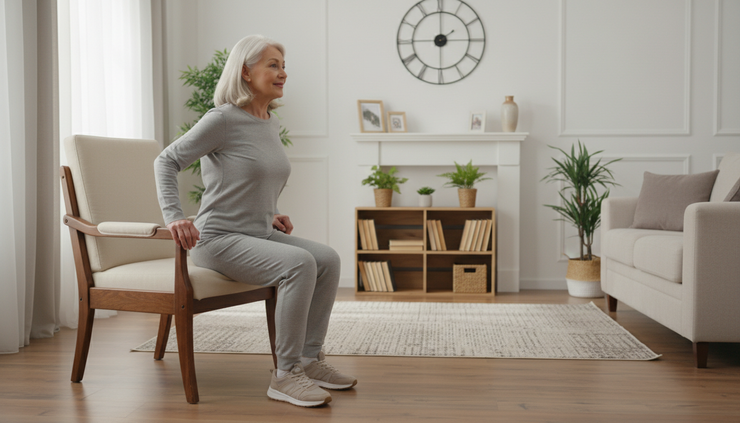
Sit-to-stand practice
Sit near the front of the chair, feet flat on the floor. Lean forward slightly and stand up. Sit back down slowly.
Start with 3 to 5 repetitions. Rest. Try another small set if it feels good.
This movement builds the muscles used for rising from chairs, cars, and toilets. It’s one of the most useful strength exercises you can do.
If needed, use your hands on the chair arms. Over time, you might use your hands less.
Seated knee lifts
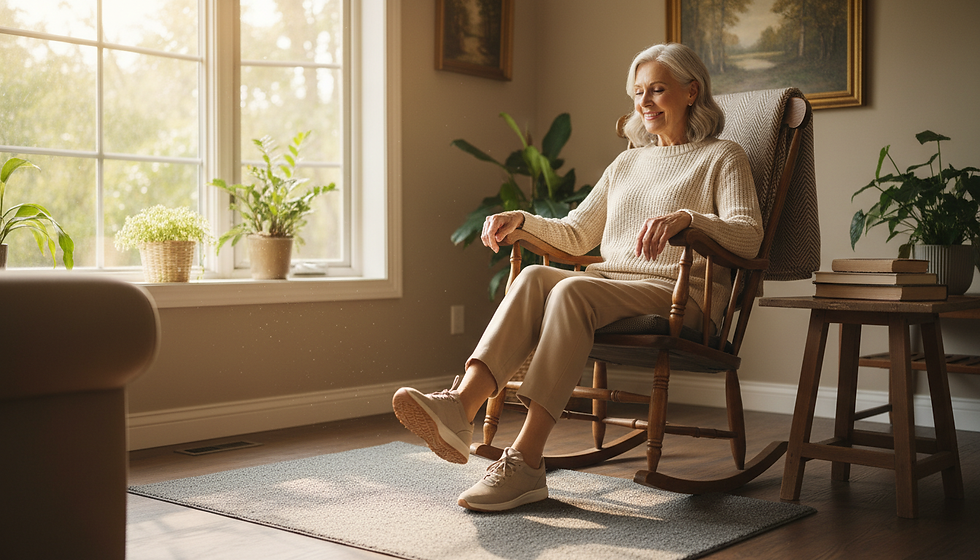
Sit tall. Hold the sides of the chair. Lift one knee a few inches, lower it, then switch sides.
Do 5 to 10 on each side.
This helps the hip muscles that support walking, stairs, and getting in and out of a car.
Wall push-ups
Stand facing a wall, about an arm’s length away. Place your hands on the wall at shoulder height. Bend your elbows and bring your chest closer to the wall, then push back.
Try 5 to 10 repetitions.
This is a gentle way to strengthen the chest, shoulders, and arms without getting on the floor.
Add balance before you think you need it
Balance is easy to ignore until it becomes a worry. The good news is that balance can often improve with steady practice.
Start near a counter, wall, or sturdy chair so support is right there.
Heel-to-toe standing
Stand tall and place one foot slightly in front of the other, as if standing on a line. Hold the counter if needed. Try to stay steady for 10 seconds, then switch feet.
If that feels too hard, widen your stance. If it feels easy, use a lighter touch on the counter.
Side steps
Stand behind a chair or near a counter. Step to the right, bring the other foot in, then step back to the left.
Move slowly. Keep your toes facing forward.
Side steps strengthen the hips, which play a big role in steady walking.
Marching in place
Hold the counter lightly. Lift one knee, lower it, then lift the other.
Start with 10 total marches. Keep the movement controlled.
Balance practice doesn’t have to be dramatic. In fact, it shouldn’t be. The goal is to challenge yourself a little while staying safe.
Make walking work for you
Walking may seem basic, but it’s one of the most useful ways to build stamina. It supports heart health, mood, joint movement, and independence.
Start where you are. If five minutes is your current limit, five minutes is a great beginning.
A simple walking plan might look like this:
Walk for 5 minutes at an easy pace
Rest if needed
Add 1 or 2 minutes after a week or two
Keep the pace comfortable enough to talk
Choose safe places with even ground and good lighting
If outdoor walking doesn’t feel safe because of weather, uneven sidewalks, or traffic, try indoor options. Walk in a mall, community center, grocery store, hallway, or around the house.
Some people like using a step counter. Others find it annoying. Both are fine. The point is to move more often, not turn every step into a score.
Keep food simple and strength-friendly
Strength isn’t built only during exercise. The body also needs fuel, fluids, and rest.
You don’t need a complicated diet. A few basics go a long way.
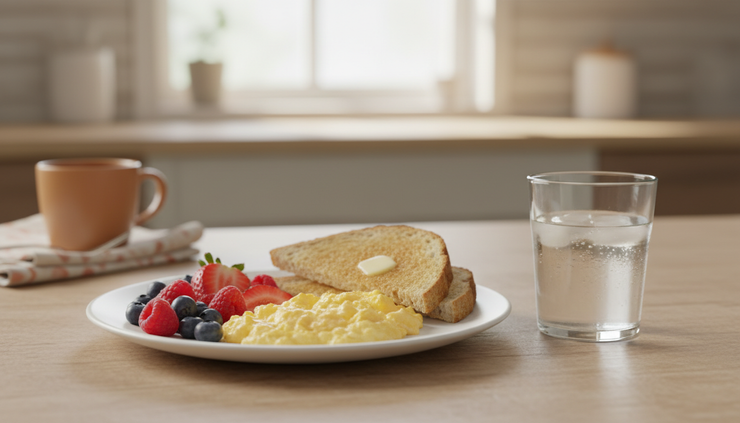
Try to include protein at meals, since protein helps maintain muscle. Common options include eggs, Greek yogurt, beans, poultry, fish, tofu, cottage cheese, nuts, and lean meats.
Add colorful fruits and vegetables when you can. Frozen produce counts. Canned produce counts too, especially if you choose lower-sodium options or rinse them.
Drink water regularly. Thirst can become less obvious with age, so it helps to keep water nearby.
A simple plate might include:
A protein food
A vegetable or fruit
A grain or starchy food, such as oatmeal, rice, potatoes, or whole-grain bread
A healthy fat, such as olive oil, avocado, or nuts
Food doesn’t need to be perfect to support strength. It just needs to help your body recover and keep going.
Plan around real life instead of perfect motivation
Motivation is nice when it shows up. But it won’t show up every day.
That’s why routines matter.
Pick a time that already has a natural opening. After breakfast. Before the afternoon news. Right after brushing your teeth. After feeding the pet. Attach the new habit to something that already happens.
Here are a few ways to make follow-through easier:
Keep shoes by the door
Place a resistance band near your favorite chair
Set a gentle phone reminder
Write exercise days on a calendar
Keep sessions short enough that they don’t feel like a burden
Celebrate finishing, even if the workout was tiny
The word “celebrate” may sound silly, but it helps. Mark a check on the calendar. Say, “Done.” Text a friend. The brain likes completion.
Missed a day? No drama. Start again the next day.
A missed day doesn’t erase progress. A missed week doesn’t either. The only real problem is deciding that one setback means the whole plan failed.
Build confidence with support
Starting fresh can feel easier with another person in your corner.
That support might come from:
A walking buddy
A family member who checks in
A local senior center class
A physical therapist
A health coach
A faith community group
An online program designed for older adults
The right support should feel respectful, not pushy. It should meet you where you are and help you build from there.
If you’d like guided help creating a plan that fits your life, you can explore senior coaching plans and support options.
Watch for signs that you’re getting stronger
Progress isn’t always loud. It often shows up in ordinary moments.
You might notice:
Standing up feels smoother
You feel steadier in the shower
Grocery bags feel less awkward
You recover faster after a walk
You sleep a little better
Your mood feels lighter after movement
You feel less nervous about trying things
These wins matter. Write them down. They remind you that your effort is working, even when the scale, step count, or mirror doesn’t tell the whole story.
Strength also includes trust. Trust that your body can still learn. Trust that small steps count. Trust that age doesn’t cancel the chance to feel better.
FAQ
How often should seniors do strength exercises?
Two or three days a week is a common starting point for many older adults, with rest days between sessions. Start light and focus on good form. If you have medical concerns, ask a healthcare professional what’s safe for you.
What if I have arthritis or joint pain?
Choose gentle, controlled movements and avoid pushing through sharp pain. Chair exercises, water exercise, and short walks may feel better for some people. A physical therapist can help adjust movements for painful joints.
Is it too late to start exercising after 70?
No. Many people start later in life and still build strength, balance, and stamina. The key is to begin slowly, stay consistent, and choose movements that match your current ability.
Do I need weights to get stronger?
Not at first. Body weight, a chair, a wall, and light household items can work well. Later, resistance bands or light dumbbells can add challenge.
What’s the best first step if I feel out of shape?
Start with 5 to 10 minutes of easy movement. Try a short walk, sit-to-stand practice, or gentle stretching. The first step is building the habit, not proving anything.

Let this year be steady, not stressful
A strong start doesn’t need to be intense. It needs to be repeatable.
Choose one small action today. Stand from a chair five times. Walk to the end of the block. Drink a glass of water. Stretch your calves at the kitchen counter. Put tomorrow’s shoes by the door.
That’s how fresh starts really happen. One doable choice, then another.
This year doesn’t have to be about chasing a younger version of yourself. It can be about caring for the person you are now, with patience, humor, and a plan that fits real life.


Comments