
Senior Balance Training Guide for Better Stability and Confidence

A small stumble can shake your confidence more than you’d expect. One missed step on a curb, one awkward turn in the kitchen, and suddenly you’re thinking twice about things that used to feel automatic.
The good news is that balance can be trained. It’s not just something you “have” or “lose.” Your body uses your eyes, inner ears, muscles, joints, feet, and brain to keep you steady. With the right practice, those systems can work together better.
This guide walks through safe, simple balance training for older adults, with exercises you can do at home and ways to make them easier or harder. This is general fitness information, not medical advice. If falls, dizziness, neuropathy, recent surgery, or a medical condition are part of the picture, check with a healthcare professional before starting.

Why senior balance changes with age and needs training
Senior balance changes for a lot of normal reasons and requires training. Muscles lose some strength when they aren’t challenged. Ankles and hips may get stiffer. Vision changes. Some medications can affect steadiness. Fear of falling can also make the body tense up, which can actually make movement feel less smooth.
That doesn’t mean falling is unavoidable. It means balance deserves regular attention, the same way strength, walking, and flexibility do.
A good balance routine helps with everyday moments like:
Getting out of a chair
Turning around in a hallway
Reaching into a cabinet
Walking on grass or uneven pavement
Stepping over a pet, rug edge, or threshold
Regaining control after a small trip
The goal isn’t to stand on one foot like a gymnast. The goal is to feel steadier during real life.
Start with safety before you start exercising
Before trying any balance exercise, set up the space so it helps you succeed.
Choose a spot near something solid. A kitchen counter, heavy table, or wall works well. Avoid using a rolling chair, towel bar, or lightweight furniture. Wear shoes with good traction, or go barefoot if that feels safer and your feet tolerate it well.
Clear away anything that can catch a foot:
Loose rugs
Pet toys
Electrical cords
Clutter near walkways
Slippery socks or slippers
Keep a phone nearby. If dizziness, chest pain, sudden weakness, severe shortness of breath, or unusual pain shows up, stop right away and get medical help if needed.
Here’s a simple rule that keeps training safe:
Balance practice should feel challenging, not scary.
A little wobble is fine. Grabbing the counter every few seconds or holding your breath means the exercise is too hard for now.
Build balance from the ground up
Steady movement starts with three basics: feet, posture, and breathing.
Place your feet with purpose
Your feet send a lot of information to your brain. During balance work, think about spreading your weight across the whole foot. Avoid gripping the floor with your toes. That can make your legs tense.
A helpful cue is to feel three points:
The heel
The base of the big toe
The base of the little toe
This creates a stable “tripod” under each foot.
Stand tall without getting stiff
Good posture doesn’t mean military posture. It means your head, ribs, hips, knees, and ankles are stacked in a way that lets you react.
Try this:
Stand near a counter.
Soften your knees.
Lift your chest gently.
Let your shoulders relax.
Look straight ahead.
If you look down the whole time, your body may depend too much on vision. For safety, glance down when you need to, then bring your eyes back up.
Keep breathing
People often hold their breath when balance gets tricky. That can make the whole body tighten.
Use slow breathing during each exercise. If you can’t breathe comfortably, make the movement easier.

Try these beginner balance exercises
Do these exercises near a counter or wall. Start with 5 to 10 minutes, 3 to 5 days per week. Rest whenever needed.
If an exercise feels too hard, use both hands for support. Then try one hand. Later, try fingertips. Progress slowly.
Stand with feet together
This is a simple place to begin.
Stand tall near a counter.
Bring your feet close together.
Hold the position for 10 to 30 seconds.
Keep your eyes forward.
Repeat 2 to 4 times.
Make it easier by widening your feet slightly. Make it harder by turning your head slowly from side to side.
Shift your weight side to side
Weight shifting teaches your body how to move without losing control.
Stand with feet hip-width apart.
Shift weight onto the right foot.
Keep both feet on the floor.
Shift weight onto the left foot.
Repeat 10 times each side.
This helps with walking, turning, and stepping sideways.
Practice heel raises
Heel raises strengthen calves and ankles, which help you push off when walking.
Hold the counter lightly.
Rise onto the balls of your feet.
Pause for 1 second.
Lower slowly.
Repeat 8 to 12 times.
Keep the movement smooth. Don’t bounce.
Try toe raises
Toe raises help the muscles at the front of your lower legs. These muscles help clear the foot when walking.
Stand tall and hold the counter.
Keep heels on the floor.
Lift your toes toward your shins.
Lower slowly.
Repeat 8 to 12 times.
This one may feel small, but it matters.
Step forward and back
This trains controlled stepping, which is useful if you trip or need to change direction.
Stand near a counter.
Step one foot forward.
Bring it back to the start.
Repeat 8 times.
Switch sides.
Once that feels easy, step slightly farther. Keep the step quiet and controlled.
Add strength because balance needs muscle
Balance isn’t only a “standing still” skill. Strong legs and hips help you recover when something unexpected happens.
The best balance plans include strength work. You don’t need a gym. A chair and your body weight are enough.
Exercise | Why it helps | Starting point |
Sit-to-stand | Builds thigh and hip strength for getting up and sitting down | 5 to 8 reps |
Standing hip abduction | Strengthens side hips for steadier walking | 8 reps per side |
Mini squats | Trains legs to bend and support you | 5 to 10 reps |
Marching in place | Builds hip control and single-leg support | 10 slow marches |
Step taps | Improves foot placement and coordination | 8 taps per side |
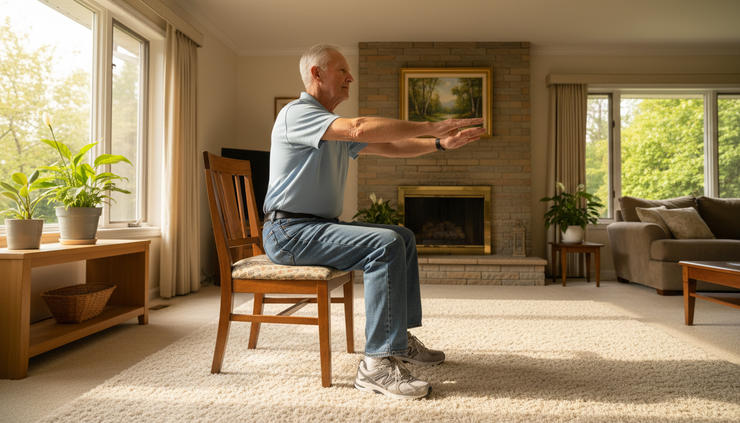
Make sit-to-stands your anchor exercise
Sit-to-stands are one of the most useful moves for daily life.
Sit near the front of a sturdy chair.
Place feet flat, about hip-width apart.
Lean forward slightly from the hips.
Stand up.
Sit back down with control.
Use your hands if needed. Over time, try using less arm support.
A good goal is smooth movement. Speed doesn’t matter.
Train balance for real-life movement
Standing still is helpful, but daily life rarely happens in one position. Once the basics feel comfortable, add gentle movement.
Practice turns
Many falls happen during turns, especially when people pivot quickly.
Try this near a counter:
Stand tall.
Take small steps to turn halfway around.
Pause.
Take small steps to turn back.
Repeat 3 to 5 times each direction.
Avoid twisting your feet while your body turns. Step your way around instead.
Walk heel to toe with support nearby
This exercise narrows your base of support, which makes balance more challenging.
Stand beside a counter or hallway wall.
Place one foot in front of the other.
Let the heel of the front foot land near the toes of the back foot.
Take 5 to 10 slow steps.
Turn safely and repeat.
If heel-to-toe walking feels too hard, leave a small gap between your feet.
Step over a low object
This helps with thresholds, curbs, and small obstacles.
Use something low and soft, like a folded towel.
Stand near support.
Step over the towel with one foot.
Bring the other foot over.
Step back again.
Repeat slowly.
Don’t rush. Focus on lifting the foot clearly.
Know when to progress and when to pause
Progress should feel gradual. Your body learns balance through repetition, not big jumps.
Move to a harder version when you can do the current exercise:
Without grabbing support
Without holding your breath
Without feeling panicked
With smooth, controlled movement
On at least a few different days
To make an exercise harder, change only one thing at a time.
Try one of these options:
Use lighter hand support
Increase the hold by 5 to 10 seconds
Add slow head turns
Narrow your foot position
Add gentle stepping
Practice on a slightly different safe surface, like firm carpet
Avoid doing balance exercises when you’re very tired, rushed, or lightheaded. That’s when form gets sloppy.
Make balance training a habit that sticks
The best routine is the one that actually happens. Keep it short, familiar, and tied to something you already do.
You could practice:
After brushing your teeth
Before your morning walk
While waiting for coffee
After lunch
During a TV commercial break
A simple weekly plan might look like this:
Day | Focus |
Monday | Feet together, weight shifts, sit-to-stands |
Tuesday | Heel raises, toe raises, marching |
Wednesday | Rest or short walk |
Thursday | Step forward and back, turns, mini squats |
Friday | Sit-to-stands, side steps, step taps |
Saturday | Easy walk and gentle stretching |
Sunday | Rest or repeat favorite exercises |
Keep a small notebook or calendar nearby. Mark each day you practice. Seeing the habit build can be surprisingly motivating.
Common mistakes that make balance training harder
A few small habits can get in the way.
Practicing exercises that are too hard
Harder doesn’t always mean better. If you’re grabbing, stumbling, or feeling tense, back up a level. Confidence grows when the challenge feels manageable.
Skipping strength work
Balance needs muscle. If the legs and hips fatigue quickly, steadiness drops. Add simple strength moves a few days each week.
Looking at the floor the whole time
It’s normal to check foot placement, but try not to stare down. Looking ahead helps train posture and real-world balance.
Moving too fast
Slow training gives your brain and body time to learn. Fast, jerky movement can hide weaknesses instead of improving them.
Practicing only once in a while
Balance improves best with regular practice. Even 5 minutes most days beats one long session now and then.
When extra help makes sense
Home practice can help a lot, but some situations call for more support. Talk with a doctor, physical therapist, or qualified exercise professional if there has been a recent fall, sudden balance change, dizziness, foot numbness, or fear that limits normal activity.
Personal coaching can also help turn “I should work on balance” into a safe plan that fits real life. If you’d like structured support, you can explore senior coaching plan options and choose the level of guidance that feels right.
FAQ
How often should older adults do balance exercises?
Most people do well with short balance sessions 3 to 5 days per week. Even 5 to 10 minutes can help when the practice is consistent and safe.
Is it normal to wobble during balance training?
Yes, a little wobble is normal. That’s part of the body learning. The exercise is too hard if the wobble feels scary, you need to grab support often, or you can’t breathe comfortably.
Should balance exercises be done with shoes on?
Supportive shoes are usually a good choice, especially if foot pain, numbness, or slippery floors are concerns. Some people like barefoot practice for foot awareness, but safety comes first.
Can walking replace balance training?
Walking is great, but it doesn’t train every balance skill. Balance exercises add practice with stepping, turning, weight shifting, and controlled movement.
What’s the best first exercise for balance?
Weight shifts are a great starting point. They’re simple, useful, and easy to adjust. Stand near a counter and slowly shift weight from one foot to the other.

Keep the goal simple
Balance training doesn’t need to be fancy. Start near support, practice a few basic moves, add leg strength, and build slowly. The right amount of challenge should leave you thinking, “I can do this again tomorrow.”
That’s the real win. More steady moments. More trust in your body. More confidence moving through the day.


Comments