
Senior Flexibility and Stretching Guide for Better Mobility

Stiffness can sneak up quietly. One day it takes a little longer to get out of a chair. Reaching the top shelf feels harder. Turning to look behind you in the car takes your whole body instead of just your neck and shoulders.
The good news is that flexibility is trainable at any age. You don’t need to fold yourself into a pretzel, buy fancy gear, or spend an hour stretching every morning. A few gentle, consistent movements can help your joints feel less cranky and make everyday tasks easier.
This Senior Flexibility and Stretching Guide is built around simple, safe stretches that support better mobility, balance, posture, and comfort. Keep it gentle, listen to your body, and check with a healthcare professional before starting if you’ve had a recent surgery, a fall, severe pain, dizziness, or a medical condition that affects movement.
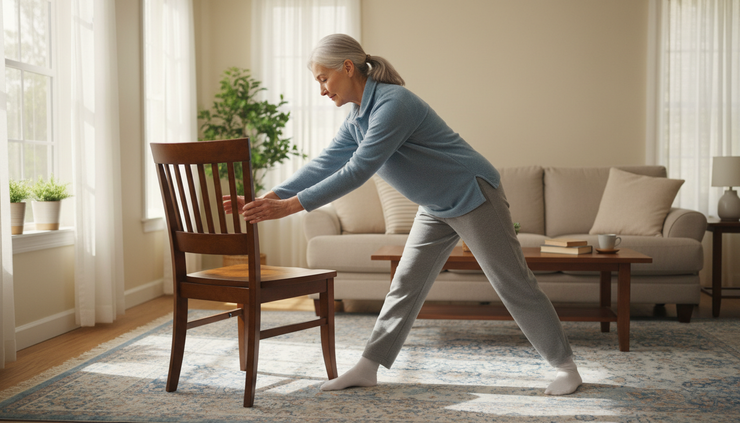
Why senior flexibility guide matters more than most people think
Flexibility isn’t just about touching your toes. It helps your body move through daily life with less effort.
When muscles and joints move well, it can be easier to:
Stand up from a chair
Walk with a smoother stride
Reach into cabinets
Bend to tie shoes
Turn your head while driving
Step in and out of the shower
Get comfortable in bed
Stretching also helps you notice how your body feels. That matters. If your left hip feels tighter than your right, or your shoulders feel tense after sitting, gentle stretching gives you useful feedback.
The goal isn’t perfection. The goal is more comfortable movement.
Start with safety before you stretch
Stretching should feel calm, not risky. A good stretch may feel mildly tight, but it should never feel sharp, burning, or electric.
Use these simple safety rules:
Warm up first
Walk around the room, march in place, or do shoulder rolls for 3 to 5 minutes.
Move slowly
Ease into each stretch. Don’t bounce or force the movement.
Breathe normally
Holding your breath can make your body tense up.
Use support
A chair, countertop, wall, or bed can help you feel steady.
Stop if pain shows up
Pain is a signal to back off. Stretching should not make symptoms worse.
Choose stable surfaces
Skip slippery floors, loose rugs, and wobbly chairs.
If balance is a concern, do most stretches seated or next to a counter. There’s no prize for doing a stretch while standing if sitting works better.
A safe stretch feels like gentle tension, not a test of willpower.
Build a simple stretching routine that sticks
The best routine is the one you’ll actually do. Ten minutes most days beats one long session once in a while.
A simple routine can look like this:
Stretching habit | What to do |
Morning reset | 5 to 8 minutes of seated stretches after getting dressed |
Midday movement | Gentle standing stretches after lunch or a short walk |
Evening unwind | Slow neck, shoulder, hip, and calf stretches before bed |
Try holding each stretch for 15 to 30 seconds. Repeat once or twice if it feels good.
For best results, stretch when your muscles are warm. After a walk, shower, or light housework is a great time. Cold muscles tend to feel tighter, so give your body a few minutes to wake up before asking it to lengthen.
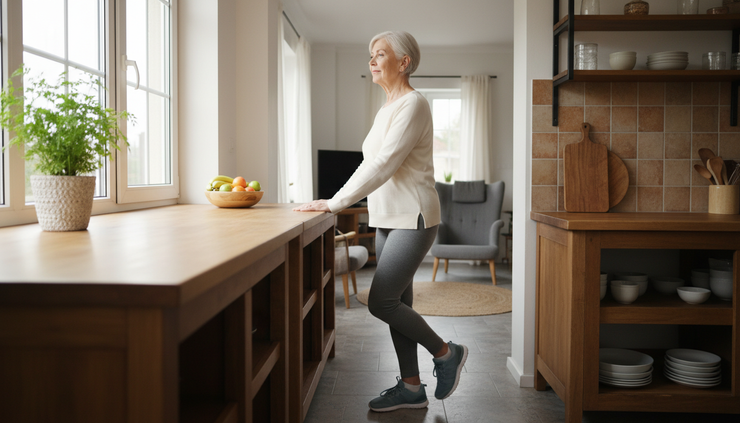
Gentle stretches for the neck and shoulders
Neck and shoulder tightness often comes from reading, watching TV, using a phone, or sitting for long periods. These stretches are small, but they can make a big difference.
Neck side stretch
Sit tall in a chair with both feet flat on the floor.
Let your right ear move gently toward your right shoulder.
Keep both shoulders relaxed.
Hold for 15 to 20 seconds.
Return to center and switch sides.
Don’t pull on your head. Let gravity do the work.
Shoulder rolls
Sit or stand tall.
Lift both shoulders toward your ears.
Roll them back slowly.
Let them drop down.
Repeat 5 to 10 times.
Then reverse the direction. This is especially helpful after sitting.
Chest opener
Stand near a doorway or sit tall in a chair.
Bring your hands behind your back if comfortable.
Gently draw your shoulder blades toward each other.
Lift your chest slightly.
Hold for 15 to 30 seconds.
If reaching behind your back is uncomfortable, place your hands on your hips instead.
Stretches for the back and hips
The back and hips do a lot of work. They help you stand, walk, bend, twist, and stay balanced. When they’re tight, the whole body can feel stiff.
Seated back stretch
Sit near the front of a sturdy chair.
Place your feet flat on the floor.
Rest your hands on your thighs.
Slowly round your upper back, like you’re making a gentle C shape.
Hold for 10 to 15 seconds.
Sit tall again.
Move slowly. This stretch should feel soothing, not strained.
Seated spinal turn
Sit tall with feet flat.
Place your right hand on the outside of your left thigh.
Turn your chest gently to the left.
Keep your hips facing forward.
Hold for 15 seconds.
Switch sides.
This can help with turning movements, like looking behind you or reaching beside your chair.
Seated hip stretch
Sit tall in a chair.
Cross your right ankle over your left thigh, if comfortable.
Keep your right foot gently flexed.
Sit tall or lean forward slightly from your hips.
Hold for 15 to 30 seconds.
Switch sides.
If crossing your ankle over your thigh feels too intense, place your right ankle slightly forward on the floor instead and lean forward a little.
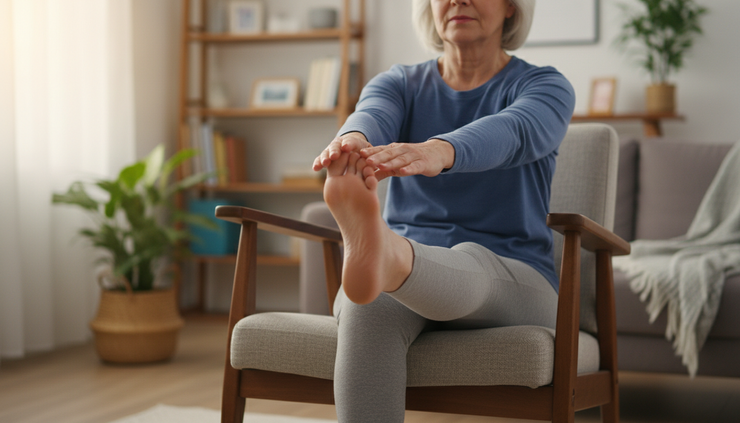
Stretches for legs, calves, and ankles
Leg flexibility supports walking, climbing stairs, and balance. Tight calves and hamstrings can also make steps feel shorter and less steady.
Seated hamstring stretch
Sit toward the edge of a chair.
Extend your right leg forward with your heel on the floor.
Keep your toes pointing up.
Sit tall, then lean forward slightly from your hips.
Hold for 15 to 30 seconds.
Switch legs.
Keep your back long instead of rounding down toward your knee.
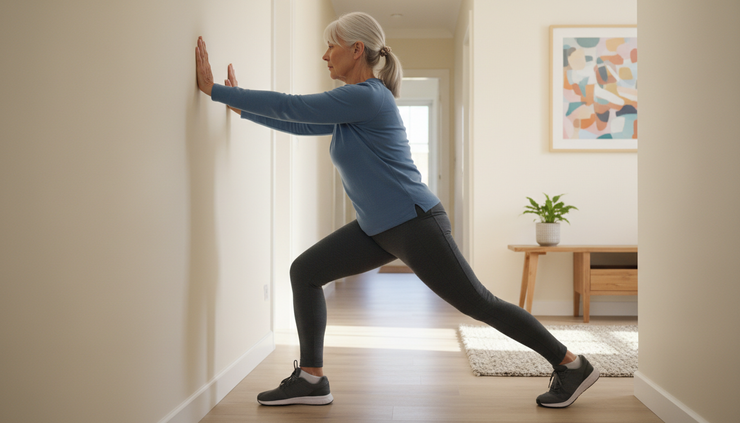
Calf stretch at the wall
Stand facing a wall with both hands on it.
Step your right foot back.
Keep your right heel on the floor.
Bend your left knee slightly.
Hold for 15 to 30 seconds.
Switch sides.
You should feel the stretch in the back of the lower leg.
Ankle circles
Sit in a chair.
Lift one foot slightly off the floor.
Circle your ankle slowly 5 times in one direction.
Circle 5 times in the other direction.
Switch feet.
Ankle mobility helps with walking, balance, and stepping over small obstacles.
Make stretching easier with small changes
A stretch doesn’t have to look a certain way to count. The right version is the one your body can do safely.
Try these adjustments:
Use a towel or strap to help reach your foot.
Stretch on a bed if getting onto the floor is difficult.
Keep one hand on a wall during standing stretches.
Reduce the range of motion when joints feel sensitive.
Stretch for a shorter time and repeat later.
Pair stretching with an existing habit, like brushing your teeth or watching the evening news.
Some days your body will feel looser than others. That’s normal. Sleep, hydration, stress, activity, and joint conditions can all affect how flexible you feel.
A 10-minute senior stretching routine
Here’s a simple routine you can use most days. Do it seated, standing with support, or as a mix of both.
Warm up with easy movement
March in place or walk around the room for 2 minutes.
Loosen the neck and shoulders
Do neck side stretches, shoulder rolls, and a chest opener.
Move the spine gently
Try seated back stretches and seated spinal turns.
Stretch the hips
Use the seated hip stretch on each side.
Stretch the legs
Do seated hamstring stretches and wall calf stretches.
Finish with ankles
Do slow ankle circles on each side.
If 10 minutes feels like too much, start with 3 minutes. A few gentle stretches done regularly can still help.
Common mistakes to avoid
Stretching is simple, but a few habits can get in the way.
Pushing too hard
More intensity doesn’t mean better results. If your body tenses up, you’ve gone too far. Back off until the stretch feels manageable.
Skipping warmups
Cold muscles don’t stretch as comfortably. Even a short walk around the house helps.
Holding your breath
Slow breathing tells your body it’s safe to relax. Try breathing in through your nose and out through your mouth.
Comparing yourself to someone else
Flexibility varies from person to person. Your stretch may look different from another person’s, and that’s fine.
Stretching through pain
Pain is not the goal. If a stretch causes pain, stop and choose a gentler version.
When to get extra guidance
It’s smart to ask for help if stiffness limits daily life or if stretching feels confusing. A physical therapist, doctor, certified fitness professional, or trained senior wellness coach can help you choose safe movements for your body.
Get professional guidance if you notice:
New or sharp pain
Numbness or tingling
Dizziness during movement
Swelling after stretching
Trouble walking or standing
A recent fall
Pain that keeps getting worse
This article is for general information and isn’t a medical diagnosis or treatment plan. Personal advice matters, especially if you’re managing arthritis, osteoporosis, joint replacement, balance problems, or another health condition.
Looking for support building a routine that fits your day and comfort level? You can explore My Senior Coach pricing plans and find an option that works for you.
FAQ
How often should seniors stretch?
Most people do well with gentle stretching most days of the week. Even 5 to 10 minutes can help when done consistently. If you’re sore or tired, keep it lighter.
Is it better to stretch in the morning or at night?
Both can work. Morning stretching can help with stiffness after sleep. Evening stretching can help the body unwind. The best time is the time you’ll stick with.
Should stretching hurt?
No. Stretching may feel mildly tight, but it shouldn’t hurt. Sharp pain, burning, tingling, or joint pain means you should stop.
Can I stretch if I have arthritis?
Many people with arthritis benefit from gentle movement, but the right approach depends on the joint and symptoms. Keep stretches mild and ask a healthcare professional for personal guidance.
Do I need equipment?
No special equipment is required. A sturdy chair, wall, towel, or countertop is usually enough.
Keep it gentle and keep going
Better mobility comes from small choices repeated over time. Start with a few stretches that feel safe, keep them comfortable, and build from there.
You don’t have to stretch perfectly. You just have to begin, pay attention, and give your body steady chances to move a little better.


Comments