
Simple Daily Movement Tips to Keep Seniors Heart Healthy

A healthy heart doesn’t need a fancy gym routine. Most days, it just needs you to move a little more, a little more often.
That’s good news if long workouts feel hard, boring, or out of reach. Simple movement for seniors like walking to the mailbox, standing up during TV commercials, stretching after breakfast, or doing a few gentle steps in the kitchen can all help your heart work better over time.
The key is consistency. You don’t have to do everything at once. You can build heart-friendly movement into the day you already have.
This post is for general information only and isn’t medical advice. If you have heart disease, chest pain, shortness of breath, dizziness, diabetes, balance problems, or you’re starting after a long break, check with your healthcare provider before changing your activity routine.

Why small movements matter for your heart
Your heart is a muscle. Like other muscles, it responds well to regular use. Gentle movement can help support blood flow, stamina, balance, mood, and everyday energy.
That doesn’t mean every activity has to make you sweat. Light and moderate movement both count. A few minutes here and there can make the day less sedentary, which matters because long sitting spells can leave the body feeling stiff and sluggish.
Think of movement like adding coins to a jar. A five-minute walk after lunch, two minutes of marching in place, and a few sit-to-stands from a chair may not look like much alone. Together, they build a stronger daily habit.
A good goal for many adults is to work toward about 150 minutes of moderate activity each week, if a healthcare provider says that’s appropriate. But if that number feels too big right now, start smaller. Five minutes is a real start. So is one minute.
The best routine is the one you’ll actually do.
Use the talk test to find a safe pace
You don’t need a heart rate monitor to know whether you’re moving at a reasonable pace. Try the talk test.
During moderate activity, you should be able to talk in short sentences, but singing would feel hard. If you’re gasping, dizzy, or unable to speak, slow down or stop.
Use this simple scale:
Effort level | What it feels like | Good examples |
Easy | You can talk comfortably | Slow walking, light stretching, tidy-up chores |
Moderate | You can talk, but you’re working | Brisk walking, marching in place, active housework |
Too hard | You feel strained or breathless | Pushing through pain, racing up stairs, moving past dizziness |
For heart health, steady and comfortable often wins. There’s no prize for overdoing it.
Stop moving and seek medical help right away if you have chest pressure, faintness, unusual shortness of breath, pain spreading to the arm or jaw, sudden weakness, or a racing heartbeat that doesn’t settle.
Start with walking, even if it’s only for a few minutes
Walking is simple, familiar, and easy to adjust. It also fits almost anywhere, indoors or outdoors.
If a 30-minute walk sounds like too much, don’t make that the starting line. Try this instead:
Walk for 5 minutes after breakfast
Walk to the mailbox and back
Do one slow lap around the house
Walk the hallway during a phone call
Park a little farther from the entrance when it feels safe
Walk indoors at a store during bad weather
If balance is a concern, use a cane, walker, rail, or walking partner if that’s part of your usual safety plan. Choose flat, well-lit areas. Wear shoes that fit well and don’t slide.
A helpful weekly goal is to add time slowly. If 5 minutes feels fine for several days, try 6 or 7 minutes. Small increases are easier on the body and easier to keep.
Make walks feel less like a chore
A walk doesn’t have to be a workout event. Pair it with something pleasant.
Try walking:
After morning coffee
While listening to music or an audiobook
With a neighbor or family member
During the first few minutes of a favorite show, if walking indoors
Around the yard while checking plants or bird feeders
When movement connects to something you enjoy, it’s much more likely to stick.

Break up sitting with easy movement snacks
Long periods of sitting can sneak up on anyone. A movie, a puzzle, a book, or an afternoon of phone calls can turn into hours in the same chair.
Movement snacks are short bursts of activity, usually one to five minutes. They’re great because they don’t require a change of clothes or a big plan.
Try one of these every hour or two:
Stand up and sit down 5 times
March in place for 30 seconds
Walk to the kitchen for a glass of water
Do 10 gentle shoulder rolls
Rise onto your toes while holding the counter
Step side to side during a TV commercial
Take one lap around the room
These short breaks can help loosen stiff joints and remind the body to keep circulating blood. They also make daily movement feel less overwhelming.
The chair routine you can do during TV time
Use a sturdy chair that doesn’t roll. Sit tall, with feet flat on the floor.
Try this gentle round:
Seated march
Lift one knee, then the other, like slow marching. Keep breathing. Do 20 steps.
Heel taps
Tap one heel forward, bring it back, then switch sides. Do 10 on each side.
Shoulder rolls
Roll shoulders back slowly 10 times.
Sit-to-stand
Stand up from the chair, then sit back down with control. Use the armrests if needed. Try 3 to 8 repetitions.
Ankle circles
Lift one foot slightly and circle the ankle. Switch sides.
Rest whenever you need to. If anything hurts in a sharp or unusual way, skip it.
Add strength moves that help daily life
A stronger body makes heart-friendly movement easier. It helps with climbing steps, getting out of chairs, carrying groceries, and staying steady on your feet.
You don’t need heavy weights. Body weight, soup cans, or resistance bands can work well.
Here are a few simple choices:
Movement | How to do it | Why it helps |
Sit-to-stand | Stand from a chair and sit back down slowly | Builds leg strength for daily tasks |
Wall push-up | Place hands on a wall and bend elbows gently | Supports arms, chest, and shoulders |
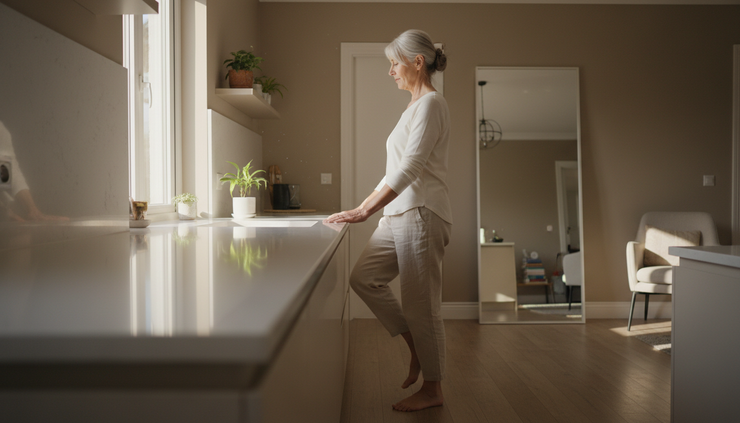
Counter heel raise | Hold the counter and rise onto your toes | Strengthens calves and supports balance |
Side leg lift | Hold a chair and lift one leg gently to the side | Helps hip strength and steadiness |
Light carry | Carry a small bag across the room | Builds useful strength for errands |
Aim for slow, smooth movement. Don’t hold your breath. A simple rule is to exhale during the effort, like when standing up or pushing away from the wall.
Two or three short strength sessions a week can be plenty for many people. Keep them brief. A few good repetitions beat a long session that leaves you sore for days.
Make everyday chores count
Household tasks can be real movement. Sweeping, folding laundry, watering plants, making the bed, and putting away groceries all get the body working.
The trick is to treat chores as useful activity without rushing. Move with care, especially when bending, reaching, or carrying.
Try these heart-friendly chore habits:
Put on comfortable shoes before housework
Stand while folding a few pieces of laundry
Carry smaller loads instead of one heavy load
Take two trips instead of pushing your balance
Play a favorite song and move gently while tidying
Keep often-used items within easy reach
Rest between tasks before you feel worn out
Yardwork can count too, but be careful with heat, uneven ground, and heavy lifting. On hot or humid days, move indoors, drink water, and save outdoor tasks for cooler times.
Build a routine that fits your real day
The best plan is simple enough to remember. If you need a chart, an app, and perfect weather, it may not last.
Start with a daily rhythm you already have. Add movement right next to it.
For example:
After brushing your teeth, do 5 counter heel raises
After breakfast, walk for 5 minutes
During lunch cleanup, take one extra lap through the house
During the evening news, do seated marches
Before bed, stretch your calves and shoulders gently
This is called habit stacking, though you don’t need to call it anything fancy. You’re just attaching a new habit to an old one.
Try a gentle one-day movement plan
Here’s an easy sample day. Adjust it to match your energy, health, and schedule.
Time of day | Simple movement |
Morning | Walk 5 to 10 minutes or march in place |
Late morning | Stand up from a chair 5 times |
Afternoon | Do light chores or walk one indoor lap |
Evening | Try seated marches, heel taps, and shoulder rolls |
Before bed | Stretch gently and breathe slowly |
If that feels like too much, cut it in half. If it feels too easy, add a minute or two. Your body gets a vote.
Keep it safe, comfortable, and enjoyable
Heart healthy movement should leave you feeling awake, warm, and more mobile, not wiped out.
A few safety habits make a big difference:
Warm up with slower movement for a few minutes
Drink water, especially in warm weather
Avoid icy, dark, or uneven walking areas
Keep a phone nearby if you walk alone
Use supportive shoes
Move near a rail, wall, or counter if balance is tricky
Take medications as directed and follow your care plan
Keep breathing during strength moves
Also, give yourself permission to have lighter days. Poor sleep, stress, weather, pain, or a medical appointment can change what feels doable. On those days, gentle stretching or a few walks around the room still count.
If you’d like help building a simple plan that fits your health, energy, and routine, take a look at My Senior Coach pricing plans.
FAQ
How much daily movement do seniors need for heart health?
Many adults aim for about 150 minutes of moderate activity per week, but it’s fine to build up slowly. Even 5 to 10 minutes at a time can help you create a steady habit.
Is walking enough to support heart health?
Walking is a great choice. For many people, it’s one of the easiest ways to move regularly. Adding gentle strength and balance exercises can make walking and daily tasks even easier.
What if I get tired quickly?
Start with very short sessions. Try 1 to 3 minutes, then rest. Over time, you may be able to add a little more. If tiredness feels sudden, unusual, or severe, talk with your healthcare provider.
Can chair exercises help my heart?
Yes, chair exercises can raise your activity level, especially if standing movement is hard. Seated marching, heel taps, arm movements, and gentle sit-to-stands can all be useful.
When should I stop exercising?
Stop right away if you feel chest pain, pressure, dizziness, faintness, unusual shortness of breath, or pain that spreads to your arm, back, neck, or jaw. Get medical help if symptoms are serious or don’t go away.

A simple next step for tomorrow
Pick one movement you can do tomorrow without rearranging your life.
Maybe it’s a 5-minute walk after breakfast. Maybe it’s standing up during every TV commercial. Maybe it’s seated marching while the coffee brews.
Start there. Keep it easy. Repeat it for a few days. Then add a little more when you’re ready.
Your heart doesn’t need perfection. It needs regular, gentle reminders that you’re still moving through life, one steady step at a time.



Comments