
Staying Active on Long Car Trips and Travel Days for Seniors

A long travel day can make anyone feel stiff, but it can hit harder when joints are already cranky, balance feels a little less steady, or sitting too long leaves legs feeling heavy. The good news is that you don’t need a gym, fancy gear, or a big workout plan to stay comfortable on the road.
Small movements, done often, can help keep your body looser and your energy steadier. Think of it as sprinkling activity into the day instead of trying to “exercise” during a trip.
This guide is for car rides, bus tours, train trips, airport days, and those long stretches when you’re sitting more than usual. Use what fits your body, skip what doesn’t, and check with your doctor if you have circulation problems, recent surgery, heart concerns, severe arthritis, or any condition that makes movement risky.
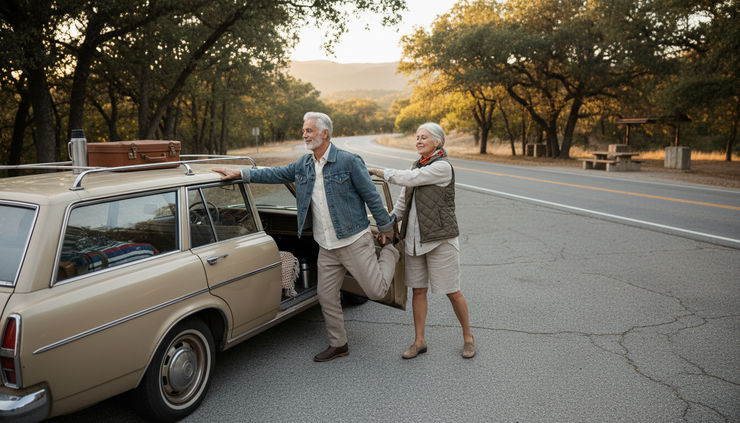
Start moving before you feel stiff will help seniors staying active
The easiest time to prevent stiffness is before it settles in. If you wait until your back aches or your knees feel locked up, it takes more effort to recover.
Before you leave, give yourself five gentle minutes. Nothing intense. Just wake up the joints.
Try this simple pre-trip routine:
Shoulder rolls
Roll your shoulders up, back, and down 5 to 10 times.
Marching in place
Hold a counter or chair if needed. March slowly for 30 to 60 seconds.
Ankle circles
Lift one foot slightly and circle the ankle both ways. Switch sides.
Gentle side bends
Reach one hand down the side of your leg, then return upright. Keep it small and easy.
Sit-to-stands
Stand up from a chair and sit back down a few times, using your hands if you need support.
This helps your body start the day with some circulation and range of motion. It also gives you a quick check-in. If something feels unusually painful before the trip, you’ll know to adjust plans, add support, or take more breaks.
A small cushion, lumbar roll, or folded towel can also help. Place it behind the lower back if the car seat feels too deep. Good posture doesn’t mean sitting perfectly straight for hours. It means giving your spine support so it doesn’t have to work so hard.
Build breaks into the day instead of hoping they happen
On long car trips, breaks are easy to postpone. Someone says, “Let’s keep going another hour,” and before you know it, three hours have passed.
For many older adults, that’s too long to sit still.
A good rule of thumb is to stop about every 1 to 2 hours when possible. If that doesn’t fit the route, aim for short movement breaks whenever you stop for gas, food, restrooms, or sightseeing.
During each break, try to do three things:
Stand tall for a moment
Let your hips and knees straighten fully. Take a few slow breaths.
Walk a short distance
Even a few laps around the car can help. If you use a cane or walker, use it. This isn’t a race.
Move the ankles and calves
Heel raises, toe taps, and ankle circles are great after sitting.
If walking isn’t safe because of traffic, weather, uneven pavement, or fatigue, stay close to the car and hold on for balance. You can still shift weight from one foot to the other, do a few gentle knee bends, or stand and stretch your arms.
For travel days that don’t involve driving, the same idea applies. At airports, walk the terminal slowly before boarding if you have time. On trains, stand and stretch when it’s safe. On bus tours, use scheduled stops as movement time instead of spending the whole stop sitting again.

Use simple seated exercises when you can’t get up
Sometimes you can’t stop. Maybe you’re in the passenger seat on a busy highway, waiting at an airport gate, or sitting on a train with limited space. That’s when seated movement helps.
These exercises are gentle, compact, and easy to do without drawing attention.
Move your feet and ankles
Your feet and calves do a lot of work for circulation. When they stay still too long, legs can feel swollen or heavy.
Try these while seated:
Toe taps
Keep your heels down and tap your toes 10 to 20 times.
Heel lifts
Keep your toes down and lift both heels 10 to 20 times.
Ankle circles
Lift one foot slightly and draw slow circles with your toes. Switch directions, then switch feet.
Foot pumps
Point your toes forward, then pull them back toward your shins.
These are especially helpful during flights or long periods when standing isn’t allowed.
Loosen your upper body
Shoulders and necks can get tight from seat belts, armrests, and looking down at phones or books.
Try this:
Gently squeeze your shoulder blades together, then relax.
Roll your shoulders back a few times.
Turn your head slowly to one side, return to center, then turn to the other side.
Reach one arm forward and open your fingers wide, then relax.
Keep neck stretches slow and small. Don’t pull on your head or force the range.
Wake up your core and hips
You can also move the middle of your body without leaving the seat.
Sit tall and gently tighten your belly as if bracing before a cough. Hold for a few seconds, then relax.
Shift your weight slightly to one hip, then the other.
If there’s room, lift one knee a few inches, lower it, and switch sides.
If any movement causes sharp pain, dizziness, shortness of breath, or unusual symptoms, stop. The goal is comfort and steadiness, not pushing through.
Pack for movement and comfort
A little planning can make staying active much easier. You don’t need a suitcase full of exercise gear. Just bring items that help you move safely.
Helpful travel items include:
Comfortable walking shoes with good grip
A refillable water bottle
A light sweater or wrap so cold air doesn’t tighten muscles
Compression socks if your clinician has recommended them
A cane, walking stick, or walker if you normally use one
A small pillow, cushion, or rolled towel for back support
Any medications you may need during the day, packed where you can reach them
Hydration matters too. Some travelers avoid drinking water because they don’t want extra restroom stops. That’s understandable, but getting dehydrated can leave you feeling tired, lightheaded, or achy.
Try steady sips instead of drinking a lot at once. Pair water breaks with planned movement breaks. That way, restroom stops become part of the plan rather than an inconvenience.
Snacks can help as well. Pack simple options like nuts, fruit, whole-grain crackers, cheese sticks, or a sandwich if that fits your diet. Long gaps between meals can make fatigue worse, and fatigue makes movement harder.

Make rest stops safer and more useful
A rest stop is a great chance to move, but safety comes first. Choose well-lit, busy areas when possible. Park close to the building or walkway if mobility is limited. Watch for curbs, gravel, wet pavement, and uneven sidewalks.
Once you’re out of the car, keep the routine simple.
Here’s an easy 5-minute rest stop plan:
Walk slowly for 2 minutes.
Hold the car or a railing and do 10 heel raises.
Roll your shoulders 5 times.
Take 3 slow breaths while standing tall.
Walk back to the car at an easy pace.
If you feel tired, cut it in half. If you feel good, add another minute or two of walking.
For anyone traveling with a companion, this can become a shared habit. One person can pump gas while the other walks nearby. If both people need movement, take turns. The point is to make activity normal, not a big production.
On very hot or cold days, movement breaks may need to be shorter. In summer, walk inside a large travel center if it’s safe and available. In winter, use extra caution around ice and slush. A few careful steps indoors are better than risking a fall outside.
Keep joints happy during the ride
Sitting in one position for too long is tough on hips, knees, neck, and low back. Small position changes can help.
Try to adjust every 20 to 30 minutes, even if you don’t get out of the seat. Shift your hips, change the angle of the seat slightly, move your shoulders, or stretch your fingers.
If you’re the passenger, you have more freedom. You can recline slightly, sit upright again, move your feet, or use a small cushion. If you’re the driver, keep safety first. Adjust posture only when it’s safe, and save bigger stretches for stops.
Seat belt comfort matters too. The belt should fit properly across the chest and low across the hips. Don’t tuck it behind your back or under your arm. If it rubs, look for approved comfort pads or adjust your clothing layer, but keep the belt positioned correctly.
For knee stiffness, avoid letting your legs stay bent tightly for hours. When parked, step out and straighten the knees fully. If you have room as a passenger, gently extend one leg at a time, then relax.
For hand stiffness, open and close your hands, touch each fingertip to your thumb, and roll your wrists. This helps after gripping a steering wheel or holding a book, phone, or tablet.
Know when to slow down or get help
Most travel stiffness is normal and improves once you move around. Still, some symptoms deserve attention.
Get medical help right away if you notice chest pain, severe shortness of breath, fainting, sudden weakness, confusion, or signs of a stroke.
Also pay attention to leg symptoms after long sitting. Call a clinician promptly if one leg becomes very swollen, painful, red, or warm, especially in the calf. These symptoms can have serious causes and shouldn’t be ignored.
Travel activity should feel gentle. Mild stretching sensations are fine. Sharp pain, dizziness, or feeling unsteady means it’s time to stop and rest.
If you’re planning a long trip and haven’t been active lately, ease in before travel day. A few short walks in the week before leaving can make the trip feel easier.
Make activity part of the fun
Movement doesn’t have to feel like a chore. It can be part of enjoying the day.
At a scenic overlook, walk to the railing and take in the view. At a small town stop, stroll through a shop or around a park. At a hotel, walk the hallway after check-in before settling into the room.
If you’re visiting family, invite someone to take a short walk with you after arrival. Keep it casual. Ten minutes around the block can loosen up the body after hours in a car.
For extra support with healthy routines during travel, you can also explore senior coaching plans that fit your goals. A little guidance can make it easier to stay consistent without overdoing it.

Frequently Asked Questions
How often should seniors stop during a long car trip?
If possible, stop every 1 to 2 hours for a short walk and stretch. Even five minutes can help reduce stiffness. If the route doesn’t allow frequent stops, do seated ankle pumps, shoulder rolls, and posture shifts between breaks.
What are the best exercises to do while sitting in a car?
Ankle circles, heel lifts, toe taps, shoulder rolls, gentle neck turns, and hand open-and-close movements are good choices. Keep them small and controlled, especially if space is limited.
Is it safe to exercise at a rest stop?
Yes, if the area is safe and you stay aware of your surroundings. Choose flat ground, avoid traffic, watch for curbs, and hold the car or a railing if balance is a concern.
What should I do if my legs swell during travel?
Mild swelling can happen after sitting, but don’t ignore swelling that is painful, sudden, or much worse on one side. Move gently, drink water, and contact a healthcare professional if symptoms concern you.
Can I stay active on travel days if I use a cane or walker?
Yes. Use your mobility aid just as you normally would. Short, safe walks with support are often better than trying to move without help. Choose smooth, well-lit areas and take your time.
The best travel exercise is the one you’ll actually do
Long trips don’t have to leave you stiff and worn out. Start with a few gentle movements before leaving, take short breaks when you can, and use seated exercises when you can’t get up.
Keep it simple. Move your ankles. Stand tall. Walk a little. Stretch what feels tight. Drink some water. Then get back to enjoying the trip.
That steady, low-pressure approach is what makes staying active on long car trips and travel days for seniors realistic. It doesn’t need to be perfect. It just needs to happen often enough to help your body feel cared for along the way.


Comments