
The Best Morning Routine for Seniors to Stay Active Every Day
- Clara Whitcombe

- 4 days ago
- 10 min read
A good morning can make the whole day feel easier. Not perfect. Not packed. Just easier.
For staying active, the goal isn’t to bounce out of bed and rush into a workout. The goal is to wake up gently, loosen stiff joints, build a little strength, get steady on your feet, and set the day in motion without wearing yourself out before breakfast.
This routine is designed to be simple, safe, and flexible. You can do it at home, in an apartment, on a porch, or with a short walk around the block. Some days you’ll do the full version. Other days, the “bare minimum” version is plenty. That still counts.
Before starting any new exercise routine, especially with heart conditions, balance issues, joint pain, dizziness, diabetes, or recent surgery, check with a healthcare professional. This article is for general information and isn’t medical advice.

Start before you even stand up
Mornings can be stiff. That’s normal, especially after a night of lying still. A smart routine starts right in bed, before your feet hit the floor.
Give yourself a minute or two. Don’t pop up quickly. Sudden standing can make some people feel lightheaded, especially if blood pressure tends to run low in the morning.
Try this simple wake-up sequence:
Take five slow breaths
Breathe in through your nose if that feels comfortable, then breathe out slowly. Let your shoulders drop.
Move your ankles
Point and flex your feet 10 times. Then make small circles with each ankle.
Open and close your hands
Make gentle fists, then spread your fingers wide. Do this 10 times.
Bend your knees one at a time
Slide one heel toward you, then straighten the leg. Switch sides.
Sit up slowly
Roll to one side, use your arms, and sit on the edge of the bed. Pause for a few breaths before standing.
That pause matters. It gives your body time to adjust. If you feel dizzy, sit back down and wait. If dizziness happens often, bring it up with your doctor.
A good morning routine for seniors starts with one simple idea: move first, but move gently.
Drink water before coffee
Coffee can wait a few minutes. A glass of water is a better first step.
After sleeping, the body is often a little low on fluids. Even mild dehydration can make you feel sluggish, foggy, or less steady. Keep a glass or bottle of water by the bed or near the bathroom sink so it’s easy to remember.
If plain water doesn’t sound good, try:
Water with a slice of lemon
Warm water
Herbal tea
Water with breakfast
If a doctor has told you to limit fluids because of a medical condition, follow that advice.
This is also a good time to take medications exactly as directed, if any are part of the morning routine. Some medicines need food. Some need to be taken alone. When in doubt, ask a pharmacist or doctor to help make the schedule clear.
Do a quick body check
Before stretching or walking, take 30 seconds to notice how the body feels.
Ask yourself:
Do I feel dizzy or unusually weak?
Is there chest discomfort or shortness of breath that feels new?
Is one knee, hip, or ankle acting up today?
Did I sleep poorly?
Do I feel steady on my feet?
This isn’t about looking for problems. It’s about choosing the right level for the day.
Green light morning
You feel steady, alert, and close to normal. Do the full routine if you want.
Red light morning
You feel dizzy, have chest pain, feel faint, or have unusual shortness of breath. Skip exercise and seek medical guidance if needed.
Yellow light morning
You feel tired, stiff, or a little sore. Do the lighter version and take more breaks.
Pain flare morning
Choose chair movements, gentle range of motion, or a short walk inside. Don’t push through sharp pain.
This one habit helps you stay active more consistently because you’re not treating every day like the same day.
Loosen up with gentle mobility
Now comes the part that makes walking, bending, and reaching feel easier.
Mobility work is different from intense stretching. You’re not forcing anything. You’re moving joints through a comfortable range so the body warms up.
Try this five-minute sequence near a sturdy chair, kitchen counter, or wall.
Roll your shoulders
Sit or stand tall. Roll your shoulders up, back, and down 10 times. Then reverse the direction.
Keep it slow. If the neck feels tense, make the circles smaller.
Turn your head gently
Look to the right, then back to center. Look to the left, then back to center. Do this 5 times each way.
Don’t tilt your head far back. Keep the movement easy.
Reach overhead if it feels good
Raise both arms toward the ceiling, or raise one arm at a time. Stop at a comfortable point.
If shoulders are tight, reach forward instead of overhead.
March in place
Hold the back of a chair or place one hand on a counter. Lift one knee, lower it, then lift the other. Try 20 slow marches.
This wakes up the hips and legs without much strain.
Make small hip circles
Stand holding a counter. Imagine drawing a small circle with one knee, then the other. Keep the circle small and controlled.
This can feel especially nice before a morning walk.

Add balance practice while you’re fresh
Balance is one of the best things to practice in the morning because you’re paying attention and haven’t spent the day getting tired yet.
Keep it safe. Stand near a counter, heavy table, or the back of a sturdy chair. Don’t practice balance in the middle of the room unless a professional has told you it’s safe.
Try one or two of these:
Stand with feet close together
Place your hands lightly on the counter. Bring your feet a bit closer than hip-width apart. Hold for 10 to 20 seconds.
If that feels easy, hover one hand above the counter instead of holding on.
Shift your weight side to side
Stand tall and slowly shift more weight into your right foot, then your left. Keep both feet on the floor.
This helps with everyday movements like stepping around a rug or turning in the kitchen.
Practice heel raises
Hold the counter. Rise onto the balls of your feet, then lower slowly. Try 8 to 12 times.
This strengthens the calves, which help with walking and stability.
Try a supported single-leg stand
Hold the counter with both hands. Lift one foot just an inch off the floor. Hold for 5 to 10 seconds, then switch.
Tiny counts. You don’t need to lift the knee high.
Balance work shouldn’t feel scary. If it does, make it easier. The safest exercise is the one you can repeat with confidence.
Build strength in small doses
Strength keeps daily life easier. Getting out of a chair, carrying groceries, climbing stairs, gardening, and standing up from the toilet all use muscle.
You don’t need a gym. You don’t even need dumbbells to start.
Do these movements slowly, with rest as needed.
Sit to stand
Sit in a sturdy chair with feet flat on the floor. Scoot toward the front edge. Lean forward slightly and stand up. Sit back down with control.
Try 5 repetitions. Use the chair arms if needed.
This is one of the most useful exercises because it matches real life.
Wall pushups
Stand facing a wall. Place your hands on the wall at chest height. Bend your elbows and bring your chest toward the wall. Push back to the start.
Try 8 to 10 repetitions.
Step closer to the wall to make it easier. Step farther away to make it harder.
Seated knee extensions
Sit tall in a chair. Straighten one knee and hold for a second. Lower it slowly. Switch legs.
Try 8 on each side.
This wakes up the front of the thighs and can help prepare the legs for walking.
Counter side steps
Stand facing a counter and hold on lightly. Take 3 small steps to the right, then 3 small steps to the left.
Repeat 3 to 5 times.
This works the hips, which play a big role in balance.
The key is to stop before exhaustion. Leave a little energy in the tank.
For seniors to stay active take a short walk or get light cardio
Once the body is warm, a short walk can be the best part of the morning.
Walking supports heart health, joint movement, mood, and endurance. It also gets you out of the chair early, which makes it easier to stay active later.
A good starting point for seniors to stay active might be 5 to 10 minutes. If that feels too easy, add a few minutes over time. If it feels like too much, walk inside the home for 2 minutes and call that the start.
Good morning walking options include:
Around the block
Down the hallway
Around a backyard or patio
Inside a mall or community center
On a treadmill at a comfortable pace
Through the house during bad weather
Use supportive shoes. Bring a phone if walking outside. If balance is a concern, use the cane, walker, or walking poles that have been recommended.
And yes, slow walking counts. The goal is regular movement, not speed.

Eat a breakfast that supports movement
After movement, breakfast helps refill the tank.
A balanced breakfast doesn’t need to be fancy. Aim for protein, fiber, and fluids. Protein helps maintain muscle, and fiber supports steady energy.
Simple breakfast ideas:
Scrambled eggs with whole-grain toast
Greek yogurt with berries and nuts
Oatmeal with peanut butter and sliced banana
Cottage cheese with fruit
Whole-grain toast with avocado and an egg
A smoothie with yogurt, fruit, and spinach
Leftovers from dinner if that sounds better
If appetite is low in the morning, start small. Half a yogurt, a boiled egg, or a piece of toast can still help.
For people managing diabetes, kidney disease, heart conditions, or other health needs, breakfast choices should match the plan from a healthcare professional.
Make the routine fit real life
The best routine is the one that actually happens. If it’s too long or too complicated, it won’t last.
So keep two versions: a full version and a short version.
The full morning routine
This takes about 30 to 45 minutes.
Time | Activity |
2 minutes | Wake up slowly with breathing and ankle movement |
5 minutes | Water, bathroom, medication routine if needed |
5 minutes | Gentle mobility |
5 minutes | Balance practice |
5 to 10 minutes | Strength exercises |
10 to 20 minutes | Walk or light cardio |
10 minutes | Breakfast |
The short morning routine
This takes about 10 minutes.
Time | Activity |
2 minutes | Slow wake-up and breathing |
2 minutes | Water and body check |
3 minutes | Chair or counter mobility |
3 minutes | Marching in place or a short indoor walk |
The short version is not a failure. It’s the routine doing its job on a busy, tired, rainy, or stiff day.
Keep mornings safer with a few small habits
A good routine should reduce risk, not add to it.
Here are a few simple safety habits that make a real difference:
Keep floors clear of loose cords, shoes, and clutter.
Use night lights for early bathroom trips.
Wear shoes or non-slip slippers instead of walking in socks.
Keep a sturdy chair nearby during exercise.
Avoid rushing to answer the phone or door.
Warm up before going outside in cold weather.
Take breaks before you feel wiped out.
Also, pay attention to the surface. Thick rugs, wet floors, uneven sidewalks, and loose gravel can all make walking harder than it needs to be.
If falls have happened before, or if there’s fear of falling, ask a doctor about physical therapy. A physical therapist can make a personal plan that fits strength, balance, vision, medications, and home setup.
Use a simple weekly rhythm
Doing the exact same thing every day can get boring. A little variety keeps the body interested and helps prevent overuse.
Here’s an easy weekly pattern:
Day | Morning focus |
Monday | Mobility, balance, short walk |
Tuesday | Mobility, strength, indoor walk |
Wednesday | Gentle routine and longer stretching |
Thursday | Mobility, balance, short walk |
Friday | Mobility, strength, outdoor walk |
Saturday | Light movement, errands, gardening, or hobbies |
Sunday | Easy walk, rest, or chair exercises |
Rest days still include some movement if possible. Even a gentle stroll or a few stretches can help keep stiffness from building up.
Make it something to look forward to
A routine gets easier when it feels pleasant.
Try pairing movement with something enjoyable:
Open the curtains and let in morning light.
Play favorite music during mobility exercises.
Walk with a neighbor or family member.
Listen to an audiobook during an indoor walk.
Sit outside with coffee after the routine.
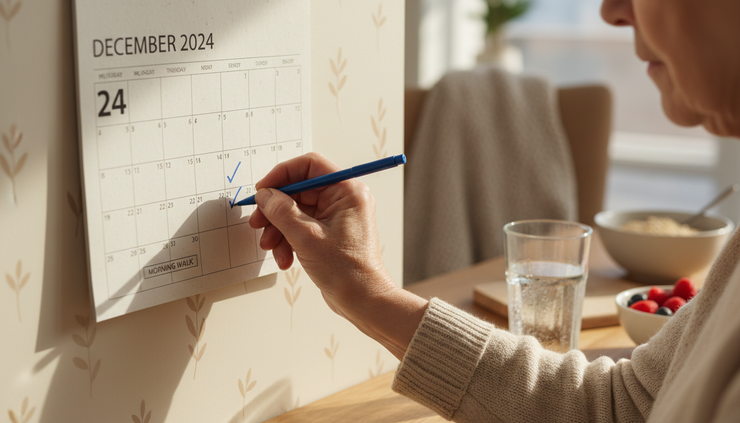
Track progress on a paper calendar.
Small rewards help. A check mark on a calendar may sound simple, but it gives the brain a little “I did it” moment.
The real win is consistency. Ten active minutes most mornings can beat one big workout that only happens once in a while.
If staying consistent has been hard, a little outside support can help. For guided routines, coaching, and practical plans built around active aging, you can explore My Senior Coach pricing plans.
FAQ
What time should seniors do a morning routine?
The best time is whenever the body feels awake and steady. Some people like moving right after getting dressed. Others need breakfast first. If mornings bring dizziness or low energy, start later and keep it gentle.
Should stretching come before walking?
Yes, gentle mobility before walking is usually a good idea. It helps loosen the ankles, hips, shoulders, and back. Keep it light. Save deeper stretching for after the body is warm.
How long should a senior morning routine be?
A helpful routine can be as short as 10 minutes. A fuller version may take 30 to 45 minutes, including breakfast and a walk. The best length is one that can be repeated most days without feeling exhausting.
What if joint pain is worse in the morning?
Start with slow, gentle movement and avoid pushing into sharp pain. Warmth may help, such as a warm shower or warm room. If pain is new, severe, or getting worse, check with a healthcare professional.
Is walking enough to stay active?
Walking is a great start, but strength and balance exercises matter too. Even a few sit-to-stands, heel raises, and supported balance moves can help with daily activities.
A simple morning can carry the whole day
The best morning routine doesn’t need to be long, intense, or perfect. It just needs to help the body wake up, loosen up, build confidence, and move safely.
Start with water. Check how you feel. Do a few gentle movements. Practice balance near support. Add a little strength. Walk if you can. Eat something that helps you keep going.
That’s enough to build a strong habit, one morning at a time.


Comments