
Walk With Confidence: Simple Ways Seniors Can Improve Their Gait

A small change in the way you walk can make a big difference in how steady, safe, and independent you feel.
Maybe your steps have gotten shorter. Maybe you catch your toe on the rug now and then. Maybe you feel fine at home, but walking across a parking lot or through a busy store makes you tense up. That tension is understandable. When walking starts to feel uncertain, confidence can shrink fast.
The good news? Gait can often improve for seniors with simple habits, strength work, better footwear, and the right support. You don’t need to train like an athlete. You just need a steady plan, a safe place to practice, and a little patience.
This guide is informational and isn’t a substitute for medical care. If you’ve had falls, dizziness, new weakness, pain, numbness, or sudden changes in how you walk, check in with a doctor or physical therapist.

What gait really means
Gait is simply the way you walk. It includes your step length, posture, balance, foot placement, arm swing, and walking speed.
A healthy gait doesn’t have to look perfect. Everyone walks a little differently. What matters is that your walking feels steady, efficient, and safe.
Common gait changes with age can include:
Shorter steps
Slower walking speed
Less arm swing
Shuffling feet
Wider stance for balance
Looking down often
Feeling unsteady when turning
Trouble starting or stopping
Some changes happen because of weaker muscles or stiff joints. Others come from vision changes, medications, foot pain, nerve problems, or fear of falling. Sometimes it’s a mix.
The goal isn’t to walk like you did at 30. The goal is to move with more control, less worry, and more trust in your body.
Start by noticing what’s changed
Before trying to fix your gait, take a few minutes to observe it. You don’t need fancy equipment.
Choose a hallway, driveway, or quiet sidewalk. Walk at your normal pace. If it feels safe, ask someone you trust to watch from the side and behind. You can also have them record a short video on a phone so you can see what’s happening.
Look for these clues:
What you notice | What it may suggest |
Toes catching the floor | Weak ankle muscles, poor shoes, fatigue, or uneven flooring |
Leaning forward | Tight hips, weak core, habit, or fear of falling |
Very short steps | Balance concerns, stiffness, pain, or lack of confidence |
Wide steps | Feeling unsteady or trying to create a bigger base |
One foot dragging | Weakness, nerve issues, pain, or a medical concern |
Looking down constantly | Fear of tripping, poor lighting, or vision concerns |
If one side of your body suddenly feels weak, your speech changes, or your walking changes quickly, get medical help right away. Sudden gait changes should never be ignored.
For slower, gradual changes, this simple check gives you a starting point. It also makes it easier to explain what’s happening if you talk with a clinician.
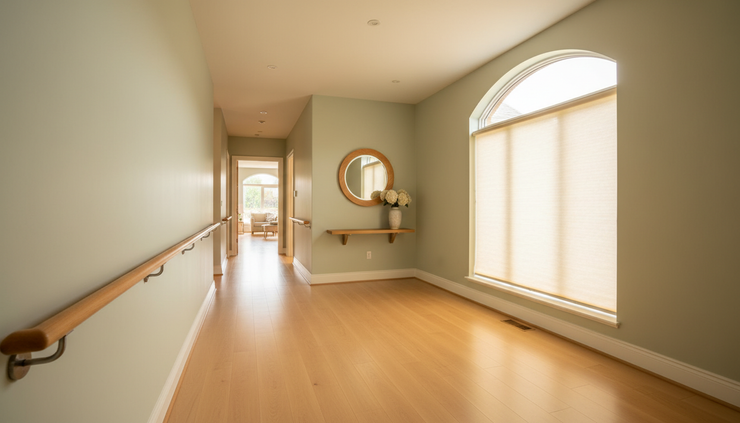
Make your walking space safer first
It’s hard to practice good walking if your space is full of trip hazards. A safer home gives you more chances to move with confidence.
Start with the places you walk most: bedroom, bathroom, kitchen, hallway, front steps, and the path to your car.
Clear the basics:
Remove loose throw rugs or secure them with non-slip backing
Keep cords away from walking paths
Use night lights in the bedroom, hallway, and bathroom
Clean up clutter near doorways
Add grab bars where needed, especially in the bathroom
Keep frequently used items within easy reach
Make sure stairs have sturdy railings
Wear shoes or supportive slippers instead of socks on smooth floors
Lighting matters more than many people think. If you can’t clearly see the edge of a step, a pet toy, or a change in flooring, your body has to guess. That can make you shorten your steps or tense up.
A safe space doesn’t just lower fall risk. It helps your brain relax, which can make your gait smoother.
Build strength where walking needs it most
Walking uses more muscles than it seems. Your hips help you stay upright. Your thighs help you rise from chairs and climb steps. Your calves and ankles help you push off and clear the floor. Your core helps keep your body centered.
You don’t need long workouts. A few minutes most days can help, especially when you stay consistent.
Practice sit-to-stands
Sit in a sturdy chair with your feet flat on the floor. Cross your arms over your chest or place your hands lightly on the chair if needed. Stand up, then slowly sit back down.
Try 5 to 10 repetitions.
This move builds leg strength for everyday life. It helps with getting out of chairs, stepping off curbs, and walking with more control.
Try heel raises
Stand behind a sturdy chair and hold the back for support. Rise onto the balls of your feet, then lower slowly.
Try 8 to 12 repetitions.
Heel raises strengthen your calves and ankles. That can help with push-off, which is the part of walking that moves you forward.
Add toe raises
Stand holding a countertop or chair. Keep your heels on the ground and lift your toes. Lower them slowly.
Try 8 to 12 repetitions.
Toe raises can help you clear the floor better and reduce toe catching. Move slowly and stop if you feel pain.
Strengthen your hips
Stand behind a chair. Keep your body tall. Move one leg gently out to the side, then bring it back in. Don’t lean your upper body.
Try 6 to 10 repetitions on each side.
Hip strength supports balance. It also helps keep your steps steadier when walking on uneven ground.
Work on balance in small, safe doses
Balance improves best when you practice in a safe way. Always stand near a counter, sturdy chair, or wall. If you feel very unsteady, ask someone to stay nearby or work with a physical therapist.
Start simple.
Stand with feet close together
Stand tall with your feet close, but not touching. Hold the counter if needed. Try to stay steady for 10 to 20 seconds.
If that feels easy, loosen your grip. If it feels too hard, move your feet farther apart.
Shift your weight side to side
Stand with feet hip-width apart. Slowly shift your weight to one foot, then the other. Keep your movements small and controlled.
This teaches your body to adjust without panic. That’s useful when someone passes close by, a dog pulls on a leash, or the sidewalk slopes.
Practice gentle marching
Hold a counter or chair. Lift one knee a few inches, lower it, then lift the other.
Try 10 slow marches.
Marching helps with foot clearance. It also reminds your body that walking includes lifting, not just sliding.
Use a simple walking pattern
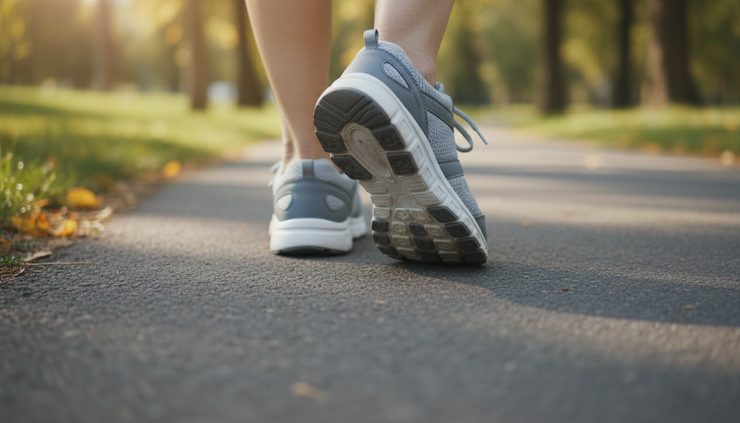
When people feel unsure, they often look down, shuffle, and hold their breath. That can make walking feel even harder.
Try this instead:
Stand tall, as if a string is gently lifting the top of your head.
Look ahead about 10 to 15 feet, not straight down at your shoes.
Let your shoulders relax.
Step forward with your heel first, then roll through the foot.
Let your arms swing naturally.
Take slow, even breaths.
Don’t force a giant stride. Overstriding can make you less stable. Aim for steps that feel smooth and controlled.
If you catch yourself shuffling, pause. Reset your posture. Then take one clear step. Sometimes one good step is enough to restart the pattern.
Turns deserve special care. Instead of twisting quickly, take a few small steps in a half circle. Turn your whole body, not just your upper body. This can feel slower, but it’s often much safer.
Choose shoes that help instead of hurt
Shoes can change your gait right away. A loose slipper, worn-out sneaker, or slick sole can make walking harder than it needs to be.
Look for shoes with:
A firm heel back
Non-slip soles
Good arch support
A wide enough toe box
Laces, straps, or closures that keep the shoe secure
Low, stable heels
Enough cushioning to feel comfortable without being wobbly
Avoid walking long distances in flip-flops, backless slippers, or shoes that slide around. If bending to tie shoes is difficult, elastic laces or hook-and-loop closures can help.
If you have diabetes, nerve problems, bunions, swelling, or foot pain, ask a podiatrist or medical professional about the best footwear for your needs.
Don’t ignore vision, hearing, and medications
Gait isn’t only about legs. Your brain uses vision, inner ear signals, feeling in your feet, and muscle strength to keep you upright.
That means a few health checks can make walking safer.
Keep eyeglass prescriptions current
Wear hearing aids if prescribed
Ask a doctor or pharmacist if any medications may cause dizziness
Report numbness, burning, or tingling in the feet
Mention lightheadedness when standing
Get foot pain checked instead of walking around it
Pain changes the way you move. So does dizziness. So does blurry vision. Fixing or managing these issues may improve walking more than exercise alone.
Know when a cane, walker, or therapist can help
Some people avoid walking aids because they feel like a step backward. But the right aid can actually help you do more. A cane or walker may let you walk farther, stand taller, and worry less.
The key is fit. A cane that’s too high or too low can create new problems. A walker used the wrong way can make posture worse. If possible, have a physical therapist, occupational therapist, or trained clinician help adjust and teach it.
Physical therapy can be especially helpful if you’ve had a fall, surgery, joint replacement, stroke, Parkinson’s disease, arthritis, or long-term balance problems. A therapist can look at your specific gait and give you exercises that match your body.
If you’re trying to decide what kind of support fits your situation, explore senior coaching options and pricing. A little guidance can make it easier to build a plan you’ll actually use.
Make walking a daily habit without overdoing it
Confidence grows through repetition. Short walks done often can be better than one long walk that leaves you sore or worn out.
Try this gentle approach:
Walk for 5 minutes after breakfast
Take a second short walk later in the day
Use a flat, familiar route
Bring a phone if walking outside
Rest before you get exhausted
Increase time slowly as walking feels easier
Pay attention to how you feel during and after. Mild effort is fine. Sharp pain, chest pain, severe shortness of breath, dizziness, or sudden weakness is not. Stop and get medical advice if something feels wrong.
A walking buddy can help too. Conversation naturally slows the pace, and having someone nearby can make new routes feel less intimidating.
FAQ
Why am I shuffling when I walk?
Shuffling can happen for many reasons, including weak leg muscles, balance worries, stiff joints, foot pain, medication side effects, or nervous system conditions. If shuffling is new or getting worse, it’s smart to talk with a medical professional.
Can seniors really improve their gait?
Yes, many people can improve their gait with strength exercises, balance practice, better footwear, safer surroundings, and medical support when needed. Progress may be gradual, but small gains can make daily walking feel much easier.
How often should I practice gait exercises?
A few minutes most days is a good start for many people. Keep it gentle and safe. If you’re recovering from an injury or have a health condition, ask a doctor or physical therapist what schedule fits you.
Is it better to use a cane or avoid it?
Use a cane if it helps you walk more safely and confidently. Avoiding a needed aid can increase fall risk. The best choice depends on your balance, strength, and walking pattern, so proper fitting matters.
What should I do if I’m afraid of falling?
Start with a safer home setup, use support when needed, and practice in short sessions near something sturdy. If fear is keeping you from normal activities, a physical therapist can help you rebuild confidence step by step.
Keep your next walk simple
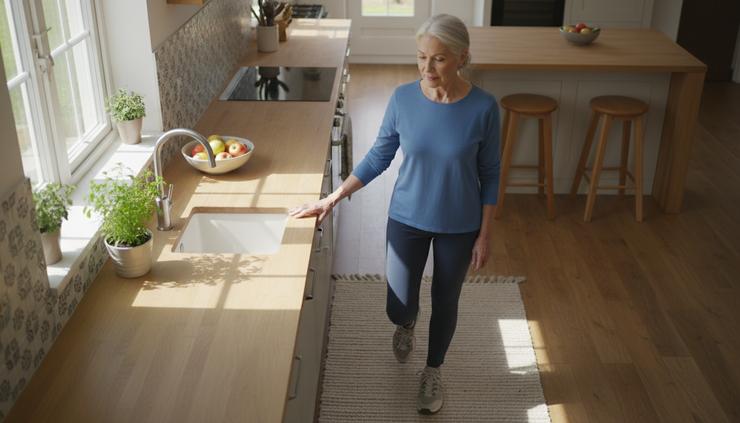
Better walking doesn’t come from one big change. It comes from small, steady choices: clearer pathways, stronger legs, better shoes, safer turns, and a little practice most days.
Start with one thing today. Clear a hallway. Check your shoes. Do five sit-to-stands. Walk to the mailbox with good posture and calm breathing.
That’s how confidence returns, one steady step at a time.


Comments