
Why Seniors Are Stronger Than They Realize

There’s a funny thing about strength. Most people picture it as lifting something heavy, moving fast, or bouncing back like nothing happened.
But real strength often looks quieter than that.
It looks like getting up after a rough night of sleep and still making breakfast. It looks like learning a new phone after decades of using a landline. It looks like going to a doctor’s appointment you’d rather skip, asking one more question, and taking care of yourself anyway.
A lot of seniors underestimate how much strength they’ve built over a lifetime. Not because it isn’t there, but because it may not look the way it used to. Strength changes. It becomes steadier. Wiser. More practical. Sometimes, it becomes so familiar that it’s easy to miss.
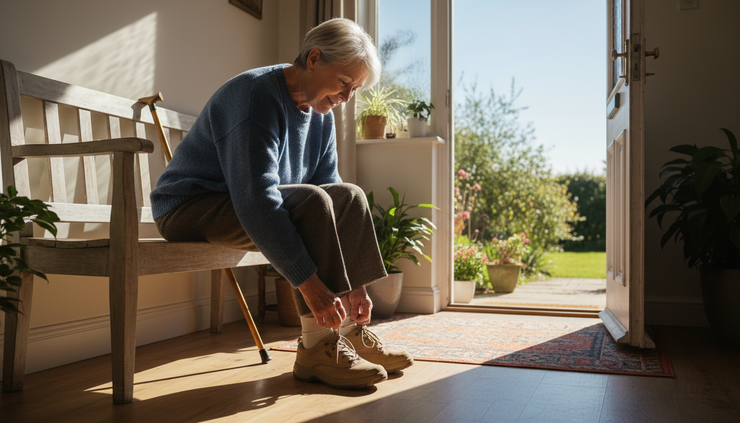
Strength isn’t only physical for seniors to get stronger
Physical strength matters for seniors to get stronger, of course. Being able to stand, walk, lift groceries, climb steps, garden, cook, or get in and out of a car can make daily life easier and safer.
But strength is bigger than muscle.
It includes balance, patience, judgment, courage, humor, self-control, and the ability to adapt when life changes. Some of those strengths often grow with age.
Think about how many situations life has already asked you to handle:
Changes in work, family, health, or finances
Moves, losses, and new beginnings
Parenting, caregiving, or supporting others
Learning new routines again and again
Making hard decisions with limited information
That’s not weakness. That’s practice.
A younger person may have more speed. A senior may have more perspective. Both are valuable, but perspective is the kind of strength that only time can build.
The trick is recognizing it. Many people compare today’s body to a younger version of themselves and decide they’re “not strong anymore.” That’s a painful and unfair measuring stick.
A better question is, what kind of strength is showing up now?
Maybe it’s the strength to pace yourself. Maybe it’s the strength to say no. Maybe it’s the strength to ask for help before a problem becomes bigger. Those things count.
Your body may still be more capable than you think
It’s normal for the body to change with age. Recovery can take longer. Joints may be stiffer. Energy may rise and fall in new ways. None of that means the body is finished improving.
The body responds to care at every age.
Gentle movement, strength exercises, balance practice, stretching, enough protein, sleep, hydration, and regular checkups can all support better function. This post is informational only, so it’s wise to talk with a healthcare professional before starting a new exercise plan, especially if there are medical concerns or a history of falls.
Still, here’s the encouraging part: small efforts can matter.
You don’t need to train like an athlete. Daily life gives plenty of real opportunities to keep strength alive:
Standing up from a chair a few extra times
Carrying light grocery bags safely
Walking to the mailbox
Practicing balance near a sturdy counter
Taking slow, steady walks
Doing gentle stretches while watching TV
The goal doesn’t have to be dramatic. It can be as simple as moving with more confidence.
Strength is often built in small repetitions, not big heroic moments.
One more thing matters here: consistency beats intensity. A short walk most days can be more useful than one exhausting workout that leaves you sore for a week. A few careful movements done well can help more than pushing too hard.
Strength can be quiet, gradual, and still very real.
You’ve already learned how to adapt
A lot of people treat aging as one long list of losses. That’s not the whole story.
Aging also brings proof that adaptation is possible.
Every generation has had to learn things they didn’t grow up with. Online banking. Streaming television. Cell phones. Medical portals. New appliances with screens instead of buttons. Even parking meters have changed.
And yet many seniors figure it out. Maybe not always quickly. Maybe not without frustration. But they learn.
That ability is strength.
Adaptability doesn’t mean loving every change. It means finding a way through. It means asking someone to show you, writing down the steps, trying again tomorrow, or deciding which new things are worth learning and which ones aren’t.
That last part is wisdom.
You don’t have to chase every trend to be adaptable. Sometimes strength is knowing what deserves your energy.

Emotional strength is easy to overlook
Some forms of strength don’t show on the outside at all.
A person can look calm while carrying grief. They can smile while dealing with pain. They can be kind while feeling lonely. That doesn’t mean those feelings are small. It means the person has learned how to keep living with them.
Many seniors have faced losses that younger people haven’t yet had to understand. The loss of loved ones. The loss of familiar routines. The loss of certain roles. The loss of independence in small or large ways.
Getting through those experiences takes emotional strength.
It’s not about pretending everything is fine. Real strength doesn’t require pretending. It can include tears, frustration, fear, and tired days.
Emotional strength may look like:
Calling a friend instead of staying alone with a hard feeling
Allowing yourself to miss someone
Making a new routine after a loss
Accepting help without shame
Finding small joys again
Talking honestly with a doctor, counselor, family member, or coach
Strength and sadness can exist at the same time. So can strength and worry. So can strength and needing support.
That last one is important. Needing help doesn’t cancel your strength. Often, asking for help is one of the strongest choices a person can make.
Life experience gives you a sharper sense of what matters
One gift of getting older is that priorities often become clearer.
After years of responsibilities, relationships, surprises, mistakes, and repairs, many people become better at spotting what’s worth worrying about and what can be released.
That’s a powerful kind of strength.
It may show up as:
Less interest in other people’s approval
More comfort speaking honestly
Better instincts about character
More patience with children or grandchildren
A clearer sense of what brings peace
A stronger ability to let small things pass
This doesn’t mean every senior feels calm all the time. Nobody does. But life experience can create a kind of inner filter. You’ve seen enough to know that many problems pass, some people change, and a few things truly deserve your attention.
That kind of judgment is hard-earned.
It also makes older adults valuable to families, neighborhoods, faith groups, volunteer teams, and communities. Not because they have all the answers, but because they often ask better questions.
“What matters most here?”
“Is this worth losing sleep over?”
“Who needs support right now?”
Those questions come from strength.

Social strength matters more than people admit
Independence gets a lot of attention, and for good reason. Most people want to make their own choices for as long as possible.
But complete independence isn’t how human life works. Everyone needs other people.
Social strength is the ability to build, keep, repair, or create connection. It can be just as important as physical strength.
That might mean keeping up with an old friend, joining a class, talking to neighbors, attending a faith gathering, volunteering, or letting a family member know what kind of help would actually be useful.
Social strength also means setting boundaries. Sometimes connection improves when expectations are clear.
For example, saying, “I’d love company on Thursday, but I need quiet time on Sunday,” is strong. So is saying, “Please don’t talk over me at appointments,” or “I can make that decision myself.”
Clear communication protects dignity.
Loneliness can also make people feel weaker than they are. When days feel too quiet, confidence can shrink. A small connection can help bring it back. One phone call, one walk with a neighbor, one shared meal, one group activity. These things may seem simple, but they remind a person that they still belong.
And belonging gives strength room to breathe.
Confidence can be rebuilt in small steps
Sometimes the issue isn’t lack of strength. It’s lack of confidence.
That can happen after a fall, illness, surgery, loss, move, or long period of stress. Even after recovery, the mind may keep whispering, “Be careful. Don’t try. What if something happens?”
Caution has a place. Fear shouldn’t run the whole show.
Confidence often comes back through small wins. Not giant leaps. Small, repeatable wins.
Try thinking in terms of “one safe step forward.”
That could mean:
Walking to the end of the driveway and back
Cooking one simple meal
Making one appointment you’ve been putting off
Practicing one balance exercise with support nearby
Learning one feature on your phone
Asking one trusted person for help with a task
Each small win sends a message: I can still do things.
That message matters. It builds momentum.
It also helps to track progress in a simple way. A calendar, notebook, or checklist can make improvement visible. When confidence is low, the brain tends to forget what went well. Writing things down gives you proof.
Not proof for anyone else. Proof for yourself.
Being strong doesn’t mean doing everything alone
There’s an old idea that strong people handle everything by themselves. That idea has caused a lot of unnecessary suffering.
Strong people use tools. Strong people ask questions. Strong people accept support. Strong people rest.
A cane, walker, hearing aid, meal delivery service, medication organizer, grab bar, or ride from a friend doesn’t mean defeat. It means someone is using what works.
That’s not weakness. That’s smart living.
The same is true with emotional and practical support. A senior coach, counselor, support group, family conversation, or planning service can help make life feel less tangled. Sometimes an outside voice makes it easier to sort through choices, routines, and goals.
If that kind of support sounds useful, you can explore senior coaching plans here.
The point isn’t to become dependent. The point is to build the right support around the life you want.
FAQ
Can seniors really build strength after 60, 70, or 80?
Yes, many people can improve strength, balance, and endurance later in life with safe, steady practice. The right plan depends on health, mobility, and medical history, so check with a healthcare professional before starting something new.
What if I don’t feel strong anymore?
That feeling is common, especially after illness, loss, or a major life change. Start with one small area where progress feels possible. Confidence often returns through small wins, not big promises.
Does asking for help make me less independent?
No. The right help can protect independence. Tools, rides, coaching, home safety changes, and support from trusted people can make it easier to keep making your own choices.
What’s one simple way to feel stronger this week?
Pick one small daily action you can repeat. A short walk, chair stands, calling a friend, drinking more water, or organizing medications can all create a sense of control and progress.

The strength is already there
Strength doesn’t always announce itself. Sometimes it shows up as patience. Sometimes as humor. Sometimes as another try after a hard day.
If you’ve lived through change, cared about people, made hard choices, learned new things, survived losses, or kept going when life didn’t feel easy, you’ve already shown strength.
The next step is to treat that strength as real.
Notice it. Name it. Build on it gently. Let support in where it helps. Give yourself credit for what you’ve carried and what you’re still capable of doing.
You may not be the same kind of strong you were years ago. That doesn’t make the strength smaller. It just means it has grown into something deeper, steadier, and wiser.


Comments