
Gentle Exercise for Seniors to Naturally Control Blood Pressure

High blood pressure can feel sneaky. You may not feel different day to day, but your heart and blood vessels are working harder than they should. The good news is that gentle movement can help. You don’t need a gym, fancy shoes, or a hard workout that leaves you wiped out.
For many adults 65 and older, regular exercise is one of the simplest ways to support healthier blood pressure naturally. It helps your heart pump more efficiently, keeps blood vessels more flexible, supports weight management, improves sleep, and lowers stress. All of those can make a real difference.
This isn’t about pushing through pain or trying to exercise like you did decades ago. It’s about finding safe, steady movement you can repeat most days and actually enjoy.
This article is for general information only. If you have heart disease, very high blood pressure, dizziness, chest pain, diabetes, balance concerns, or you’re changing medications, check with your doctor before starting or changing an exercise routine.

Why gentle exercise for seniors helps lower blood pressure
Blood pressure is the force of blood pushing against artery walls. When it stays high over time, it can strain the heart, kidneys, brain, and blood vessels.
Exercise helps because it trains the heart to work better. A stronger heart can pump blood with less effort. When the heart doesn’t have to work as hard, the pressure inside the arteries may come down.
Gentle exercise can also help in a few other ways:
Blood vessels relax more easily
Movement encourages better circulation and may help arteries stay more flexible.
Stress hormones settle down
A calm walk, light stretching, or slow cycling can help the nervous system shift out of “high alert.”
Sleep often improves
Better sleep supports better blood pressure control.
Blood sugar and weight become easier to manage
Even modest movement helps the body use energy more efficiently.
Stiff muscles and joints loosen up
When moving feels easier, it’s easier to stay active.
You don’t have to exercise hard to get benefits. In fact, for many seniors, the best routine is the one that feels comfortable enough to keep doing.
What “gentle” really means
Gentle doesn’t mean useless. It means your body is working, but you’re still in control.
A good way to judge effort is the talk test. During moderate activity, you should be able to talk in short sentences. You may breathe a little harder, but you shouldn’t be gasping.
If you can sing easily, you may be moving too lightly to build much endurance. If you can’t speak at all, slow down.
Gentle exercise might include:
Walking around the block
Marching in place near a chair
Water aerobics
Riding a stationary bike
Chair exercises
Light resistance band work
Slow dancing in the kitchen
Gardening at an easy pace
Tai chi or gentle yoga
The goal is consistency. A 10-minute walk after breakfast that you do most days beats one exhausting workout that makes you avoid exercise for a week.
Start with walking if you’re not sure what to do
Walking is simple, low cost, and easy to adjust. It’s also one of the most practical forms of exercise for blood pressure support.
Start where you are. If five minutes is enough today, that counts.
Try this easy walking plan:
Week | Goal | What it might look like |
1 | 5 to 10 minutes | Walk at a comfortable pace once a day |
2 | 10 to 15 minutes | Add a few extra minutes if you feel steady |
3 | 15 to 20 minutes | Walk most days, resting when needed |
4 and beyond | 20 to 30 minutes | Build toward a routine that feels doable |
You can split the time up. Three 10-minute walks can be just as useful as one 30-minute walk, especially if longer walks bother your knees, hips, or back.
A few walking tips help keep it safe:
Wear shoes with good grip and support.
Walk in daylight when possible.
Choose flat, even surfaces.
Carry a phone if walking alone.
Use a cane, walking poles, or a walker if they help you feel steady.
Slow down on hot, humid, icy, or windy days.
If outdoor walking isn’t a good option, try walking indoors at a mall, community center, hallway, or around the house.
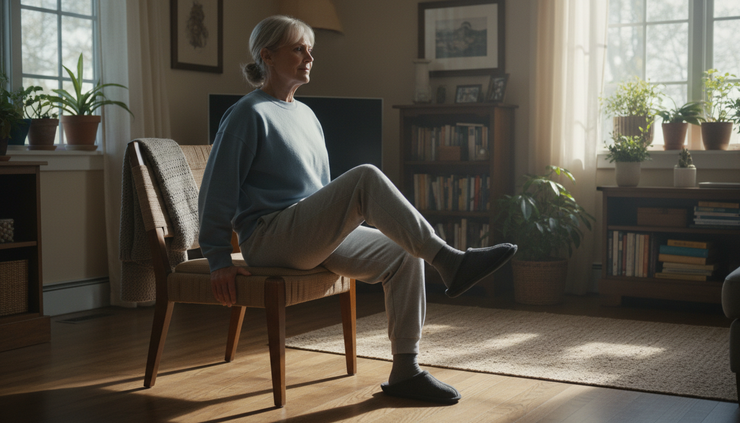
Chair exercises work well on tired or unsteady days
Some days, standing exercise may not feel right. Maybe your balance is off, your joints ache, or your energy is low. Chair exercises let you keep moving without asking too much from your body.
Choose a sturdy chair without wheels. Sit tall with both feet flat on the floor. Keep movements slow and smooth.
Here’s a simple chair routine:
Shoulder rolls
Roll your shoulders backward 5 to 10 times, then forward 5 to 10 times.
Seated marching
Lift one knee, lower it, then lift the other. Go for 30 seconds to 1 minute.
Toe taps
Keep your heels on the floor and tap your toes up and down.
Heel raises
Keep your toes on the floor and lift your heels.
Arm reaches
Reach both arms forward, then lower them. If that feels fine, reach gently overhead.
Sit-to-stand practice
If safe, stand up from the chair and sit back down slowly. Use the armrests if needed.
Do one round. If that feels good, rest and try a second. This kind of movement may look simple, but it keeps blood flowing and helps maintain strength for daily tasks like getting out of a car or climbing a step.
Add light strength training to support your heart
Cardio gets most of the attention, but strength training matters too. Stronger muscles make daily life easier. They also help your body handle blood sugar better, support balance, and protect joints.
You don’t need heavy weights. Light resistance is enough to start.
Good options include:
Resistance bands
One or two-pound hand weights
Soup cans
Body-weight movements
Wall push-ups
Chair sit-to-stands
Try strength exercises 2 days a week, with a day of rest between sessions.
A simple routine might include:
Wall push-ups, 8 to 10 repetitions
Seated band rows, 8 to 10 repetitions
Sit-to-stands, 5 to 10 repetitions
Side leg raises while holding a chair, 8 repetitions per side
Biceps curls with light weights, 8 to 10 repetitions
Move slowly. Don’t hold your breath. Breath-holding can cause blood pressure to spike during effort. A simple rhythm helps: breathe out during the harder part, breathe in as you return.
If a movement causes sharp pain, stop. Muscle effort is fine. Joint pain, chest pain, or dizziness is not something to push through.
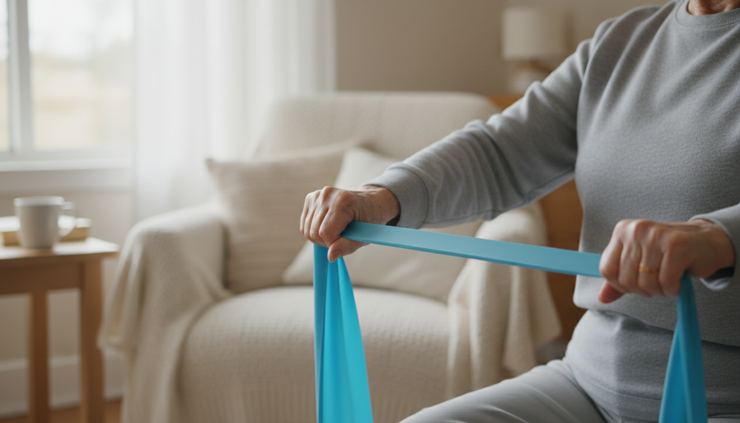
Stretching and balance exercises help you stay steady
Stretching may not lower blood pressure by itself the way regular aerobic activity can, but it still earns a place in your routine. It helps you move more comfortably, which makes walking and strength work easier to keep up.
Balance work is just as useful. A safer, steadier body gives you more freedom to be active.
Try these gentle options near a counter or sturdy chair:
Heel-to-toe standing
Place one foot directly in front of the other, like you’re standing on a line. Hold the chair if needed. Try 10 to 20 seconds, then switch feet.
Side steps
Hold the counter and take a slow step to the right. Bring the other foot in. Take several steps, then go left.
Calf stretch
Stand facing a wall. Step one foot back and press the heel gently toward the floor. Hold for 15 to 30 seconds.
Neck and shoulder release
Sit tall. Slowly turn your head to one side, then the other. Keep it gentle. Add shoulder rolls if they feel good.
Balance exercises should feel controlled. If you feel wobbly, use both hands for support or skip that move for now.
How much exercise is enough
Many health guidelines suggest adults aim for about 150 minutes of moderate activity each week, plus strength work a couple of days a week. That might sound like a lot, but it breaks down to about 30 minutes on 5 days.
And no, you don’t have to start there.
For seniors who are new to exercise, a better first goal is simply this:
Move a little most days, then slowly add time when your body feels ready.
Here are a few easy ways to build minutes without making it a big project:
Walk for 10 minutes after breakfast.
Do chair exercises during a favorite TV show.
Take a slow lap around the grocery store before shopping.
March in place while waiting for the kettle or coffee maker.
Stretch before bed.
Park a little farther away when it feels safe.
Small habits add up. The body responds well to repeated gentle effort.
Keep exercise safe if you have high blood pressure
Exercise should leave you feeling better, not frightened or drained. A few simple habits can help.
Check your blood pressure as your doctor recommends. Some people like to check it before exercise, especially when starting a new routine. Avoid exercising if your readings are unusually high for you unless your doctor has told you what’s safe.
Stop exercising and seek medical help if you notice:
Chest pain or pressure
Severe shortness of breath
Fainting or feeling like you might faint
Sudden weakness or numbness
Confusion
New irregular heartbeat
Severe headache
Pain spreading to the jaw, neck, back, or arm
Also be careful with extreme temperatures. Heat can make you lightheaded, and cold weather can make the heart work harder. Indoor exercise is a fine choice when the weather isn’t friendly.
Drink water, warm up slowly, and cool down instead of stopping suddenly. A few minutes of easy movement before and after your walk can make exercise feel much smoother.
A simple weekly routine to try
Here’s a gentle plan that blends walking, strength, stretching, and rest. Adjust it to fit your energy, health, and schedule.
Day | Gentle plan |
Monday | 10 to 20 minute walk |
Tuesday | Chair exercises and light stretching |
Wednesday | 10 to 20 minute walk |
Thursday | Light strength training |
Friday | 10 to 20 minute walk |
Saturday | Balance practice and easy household movement |
Sunday | Rest or a short relaxed stroll |
If you’re already active, you can add time. If this feels like too much, cut it in half. The right plan is the one you can repeat without feeling punished by it.
Make it easier to stick with
Motivation comes and goes. Routines help more than willpower.
Try pairing movement with something you already do:
Walk after morning coffee.
Stretch after brushing your teeth.
Do seated marches before lunch.
Practice balance while waiting for dinner to warm up.
Walk with a neighbor once or twice a week.
Keep a simple paper log if you like seeing progress. Write down the date, what you did, and how you felt. That’s enough.
Also, celebrate the quiet wins. Maybe you climbed stairs with less effort. Maybe your afternoon energy improved. Maybe your blood pressure readings started looking steadier over time. These changes matter.
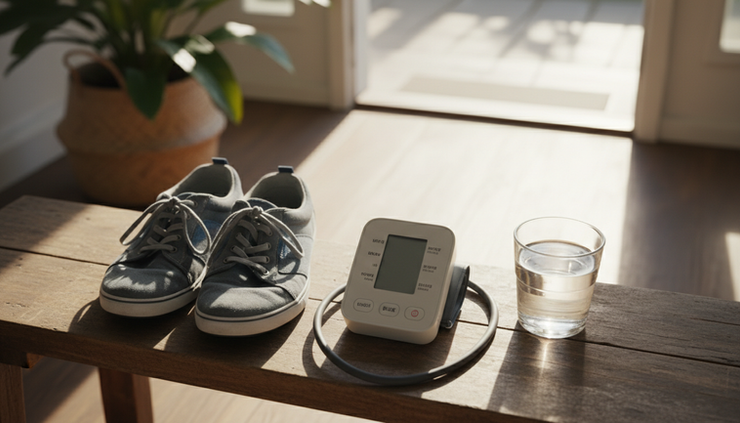
Gentle movement can be powerful
Gentle exercise for seniors to naturally control blood pressure doesn’t need to be complicated. Start with walking if you can. Use chair exercises when you need support. Add light strength work a couple of times a week. Stretch and practice balance so your body feels steadier.
Most of all, go slowly enough that you can keep going.
If you’re unsure where to begin, ask your doctor what level of activity is safe for you. Then choose one small thing to do tomorrow, maybe a 5-minute walk or one round of chair exercises. That first simple step is often the one that starts the whole habit.


Comments