
How Seniors Can Stay Fit and Healthy During Travel Season

Travel can throw your normal routine right out the window. Meals happen at odd times. Flights run late. Hotel pillows feel strange. A “quick visit” with family turns into hours of sitting, snacking, and trying to keep up with everybody else’s schedule.
The good news is that staying fit during travel season doesn’t require a gym, special equipment, or a perfect plan. A few small habits can help you feel steadier on your feet, keep your energy up, and enjoy the trip instead of needing three days to recover when you get home.
This guide is informational only, so check with your doctor or physical therapist before changing your exercise routine, especially if you have heart concerns, balance issues, joint pain, diabetes, or any condition affected by activity, food, or hydration.

Start with a travel fitness plan for seniors you’ll actually use to stay healthy
A travel fitness plan for seniors to stay healthy should be simple enough to remember when you’re tired. If it feels too complicated, it’ll get left behind with the extra sweater you meant to pack.
Think in terms of your “minimum routine.” This is the smallest amount of movement that helps you feel like yourself. For many people, that might be:
A 10-minute walk after breakfast
Gentle stretching before bed
Standing up during long travel days
Taking the stairs for one floor when it feels safe
Doing a few seated exercises during a flight or car ride
That’s enough to keep the habit alive. You can always do more if you feel good.
Before you leave, look at your trip in broad strokes. Are there long drives? Airport connections? Restaurant-heavy days? Grandkids who wake up early and want to go, go, go? Planning around those moments helps you avoid the “I’ll figure it out later” trap.
A good rule for travel season is this: protect your energy before you spend it. That might mean walking in the morning before a big family dinner, resting before a sightseeing afternoon, or choosing one main activity instead of packing the whole day.
Pack for movement, comfort, and safety
What you bring can make healthy choices much easier. You don’t need to pack like you’re training for a race. Just bring the items that remove friction.
Comfortable walking shoes matter most. Pick a pair you’ve already worn, not brand-new shoes that haven’t met your feet yet. Travel days often include more walking than expected, especially in airports, train stations, hotels, museums, and parking lots.
If you use a cane, walking poles, compression socks, an ankle brace, or a knee sleeve, bring what you normally use. Travel is not the best time to “tough it out.” Familiar support can help you feel more confident and reduce the chance of overdoing it.
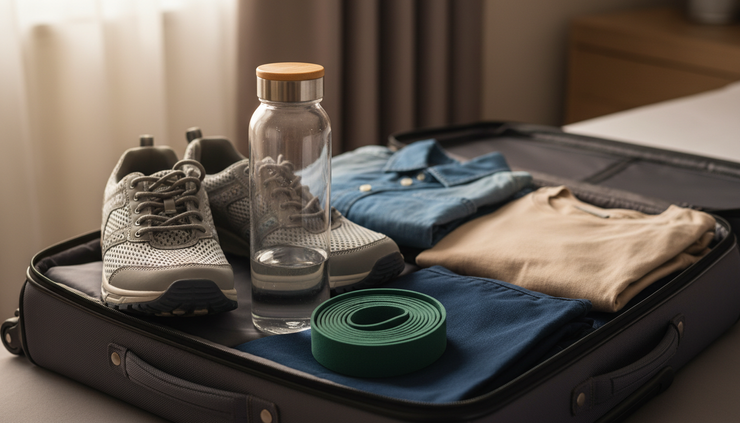
A small fitness-friendly packing list might include:
Supportive shoes with good tread
Refillable water bottle
Light resistance band
Comfortable clothes for walking
A small bag for medication and snacks
Sunscreen and a hat for outdoor walks
Copies of key medical information, if needed
The resistance band is optional, but it’s handy. It weighs almost nothing and can help with simple strength moves in a hotel room or guest bedroom.
Also think about your carry-on. Keep medication, glasses, hearing aid supplies, snacks, and water close. If your suitcase gets delayed, your health basics stay with you.
Keep moving on long flights and car rides
Long sitting can leave anyone stiff. For older adults, it can also make hips, knees, ankles, and backs feel cranky. The goal is to add small movement breaks before stiffness builds up.
If you’re flying, try to stand or walk the aisle when it’s safe and allowed. Even a short trip to the restroom area can loosen your legs. If you’re driving, plan rest stops every couple of hours when possible. Walk for a few minutes, do a gentle calf stretch, or simply stand tall and breathe.
Seated movements help too. They’re discreet and easy.
Try these during a long ride:
Ankle circles
Lift one foot slightly and circle your ankle slowly. Switch directions, then switch feet.
Heel and toe raises
Keep your feet on the floor. Lift your heels, then lower them. Lift your toes, then lower them.
Seated marches
Lift one knee a little, set it down, then lift the other. Keep it comfortable.
Shoulder rolls
Roll your shoulders back a few times, then relax them down.
Gentle neck turns
Look to one side, pause, then look to the other side. Skip this if it causes dizziness or pain.
These movements aren’t meant to be intense. They’re meant to remind your body that it’s still allowed to move.
If you have a history of blood clots, swelling, or circulation problems, ask your doctor for travel advice before a long trip. They may have specific guidance for you.
Make walking your easiest workout
Walking is one of the best travel exercises because it fits almost anywhere. You can walk hotel hallways, shopping centers, parks, cruise decks, airport terminals, rest areas, or sidewalks near a family member’s home.
The trick is to make walks feel natural, not like another appointment.
You could:
Walk around the block after morning coffee
Take a slow lap through the airport before boarding
Walk inside a mall if the weather is bad
Do a short hallway walk before breakfast
Suggest a family stroll after a big meal
Visit a garden, museum, or historic area at an easy pace
If balance is a concern, choose smooth, well-lit paths. Avoid icy sidewalks, uneven trails, loose gravel, and crowded areas where people may bump into you. Use handrails when they’re available.
A helpful way to pace yourself is the “talk test.” During a moderate walk, you should be able to talk in short sentences. If you’re gasping or can’t speak comfortably, slow down or take a break.
And yes, it counts if the walk is short. Three 10-minute walks in a day can be more realistic than one long walk, and often easier on joints.

Use a simple hotel room routine
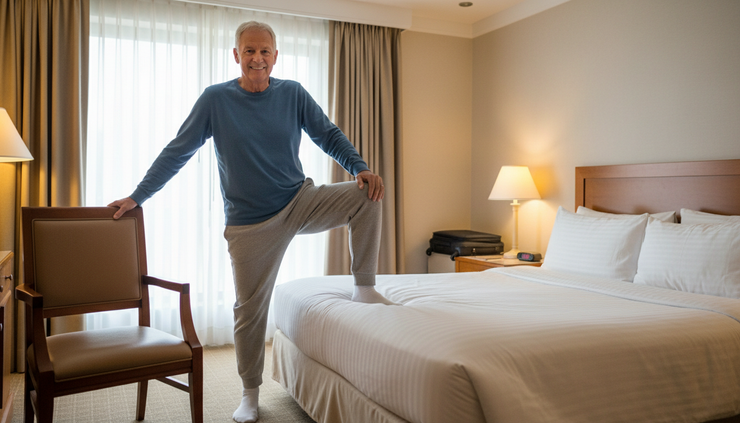
A hotel room or guest room can become a mini workout space in about two minutes. You only need enough room to stand safely.
Before starting, move bags out of the way. Wear shoes or go barefoot only if the floor feels safe and dry. Use a sturdy chair, wall, or countertop for balance. Avoid rolling desk chairs or light furniture that can slide.
Here’s a gentle routine that works well for many travelers:
Stand tall and breathe
Take 3 to 5 slow breaths. Let your shoulders relax.
March in place
Hold a stable surface if needed. March for 30 to 60 seconds.
Sit to stand
Sit in a sturdy chair. Stand up slowly, then sit back down. Try 5 to 10 times. Use your hands if needed.
Wall push-ups
Place your hands on a wall at chest height. Bend your elbows and bring your chest slightly toward the wall, then press back. Try 5 to 10.
Calf raises
Hold a counter or chair back. Rise onto your toes, then lower. Try 5 to 10.
Gentle side steps
Step to the side, bring your feet together, then step the other way. Keep it slow and controlled.
Easy stretch
Stretch your calves, chest, or back gently. Don’t bounce.
This routine can take less than 10 minutes. It helps with strength, balance, and stiffness without taking over your day.
If you feel dizzy, short of breath, have chest pain, or feel unusual weakness, stop and get medical help if needed.
Eat well without turning meals into a project
Travel food can be fun. It can also be salty, sweet, oversized, and unpredictable. You don’t need to avoid every treat. You just need a few steady habits so your body doesn’t feel like it’s being surprised at every meal.
Breakfast is a good place to start. If you begin with protein and fiber, you’re less likely to feel wiped out by late morning. Good travel-friendly choices include eggs, oatmeal, Greek yogurt, whole-grain toast, fruit, nuts, or cottage cheese.
At restaurants, simple choices help:
Choose grilled, baked, or roasted foods when they sound good
Add a vegetable or salad when available
Split a large entree or take leftovers
Ask for sauces or dressings on the side
Keep a snack with protein in your bag
Hydration matters too. Older adults may not always feel thirsty right away, and travel can make that worse. Airplanes, warmer climates, salty foods, and busy schedules can all dry you out.
A refillable water bottle is one of the easiest health tools you can bring. Sip throughout the day. If you take medication that affects fluids, kidneys, or blood pressure, follow your clinician’s guidance on how much to drink.
Also, be careful with alcohol if you drink. It can affect balance, sleep, hydration, and medication. Having water between drinks can help, and skipping alcohol on heavy travel days is often a smart move.
Protect your sleep and recovery
Sleep is often the first thing to suffer during travel season. Different beds, late dinners, time zone changes, and busy family homes can all make rest harder.
A few small routines can help your body settle.
Try to keep a similar bedtime when you can. Get daylight in the morning, especially if you’ve changed time zones. Keep naps short if long naps make it harder to sleep at night. Bring earplugs, an eye mask, or a familiar pillowcase if those help.
Recovery also means leaving space in the schedule. It’s tempting to say yes to everything, especially when visiting people you love. But too many full days in a row can lead to soreness, irritability, or falls from fatigue.
Build in quiet time. Read for 20 minutes. Sit outside. Take a slow walk alone. Put your feet up before dinner. Rest is part of staying fit, not a break from it.
Stay steady and reduce fall risks
New places come with new trip hazards. Rugs curl up. Bathrooms are unfamiliar. Lighting is poor. Suitcases end up right where your foot wants to go.
Take a minute when you arrive to make the space safer.
Move clutter out of walkways. Place your shoes where you won’t trip over them. Use nightlights or keep a bathroom light on. Ask for help with heavy luggage instead of wrestling it onto a rack or into a car trunk.
In hotels, check the shower before stepping in. If the floor is slick, use a bathmat or ask the front desk whether a non-slip mat is available. If you need a room close to the elevator or with a walk-in shower, request it ahead of time when possible.
For outdoor walking, watch for uneven sidewalks, wet leaves, snow, ice, and loose stones. Slow down at curbs. There’s no prize for crossing a parking lot quickly.
One more thing: don’t rush when you stand up. Sit at the edge of the bed for a moment, especially at night or first thing in the morning. Let your body catch up before you start walking.
Know when to slow down
Travel often brings a little discomfort. A stiff back after a flight or tired feet after sightseeing can be normal. Still, some signs deserve attention.
Slow down or seek medical advice if you notice:
Chest pain or pressure
New or worsening shortness of breath
Dizziness or fainting
Sudden weakness
New swelling, redness, or pain in one leg
A fall, even if you feel okay at first
Confusion or unusual fatigue
Pain that changes how you walk
Listening early can keep a small issue from becoming a trip-ending problem.
A simple travel day routine
If you want one easy plan to follow, use this on any travel day:
Drink water before you leave
Wear supportive shoes
Keep medication and snacks in your carry-on
Stand or walk whenever there’s a safe chance
Do seated ankle and shoulder movements
Eat one balanced meal with protein
Stretch gently when you arrive
Go to bed before you’re completely exhausted
That’s it. No guilt, no complicated rules.
If you’d like more personal support with healthy routines, wellness planning, or aging well at home and on the go, you can explore My Senior Coach pricing plans.
FAQ
How much exercise should I do while traveling?
Aim for a small amount daily rather than a big workout once in a while. Even 10 to 20 minutes of walking, stretching, or light strength work can help you stay loose and energized. Follow your doctor’s advice if you have health limits.
What’s the best exercise for seniors during travel season?
Walking is usually the easiest choice because it fits into airports, hotels, neighborhoods, and rest stops. Gentle strength moves, like sit-to-stands and wall push-ups, are also helpful if they feel safe.
How can I stay active if I have knee or hip pain?
Choose shorter walks on flat surfaces, wear supportive shoes, and use a cane or walking aid if you normally need one. Seated exercises can also help you keep moving without adding too much strain. Stop if pain gets sharp or unusual.
What should I eat on travel days?
Keep it simple. Try to include protein, fiber, and water. Eggs, yogurt, oatmeal, fruit, nuts, sandwiches, soups, and grilled foods can all work well. You can still enjoy treats, just balance them with steady meals.
How do I avoid getting too tired on a trip?
Plan rest before you feel worn out. Keep one or two open pockets of time each day, avoid overscheduling, and take short breaks between activities. Good sleep, water, and comfortable shoes go a long way.
Keep the trip enjoyable
Staying fit and healthy during travel season isn’t about doing everything perfectly. It’s about giving your body what it needs often enough to keep up with the fun.
Walk a little. Stretch a little. Drink water. Rest before you crash. Pack the shoes that love your feet back. Say yes to the moments that matter, and give yourself permission to skip the extras that would leave you drained.
A good trip should send you home with stories, not just sore knees.


Comments