
Senior Cool Down Guide for Safe and Effective Recovery After Exercise

Stopping exercise too fast can leave you feeling shaky, lightheaded, tight, or wiped out for the rest of the day. A good cool down helps your body make a smoother landing.
Think of it like easing a car into the driveway instead of slamming on the brakes. After a walk, strength class, swim, bike ride, or chair workout, your heart, breathing, muscles, and balance all need a few minutes to settle.
This Senior Cool Down Guide for Safe and Effective Recovery After Exercise walks through a simple, safe way to recover without making it complicated. The goal isn’t to stretch like a gymnast. It’s to feel steady, loose, and ready to enjoy the rest of your day.
This post is for general information only and isn’t a replacement for medical advice. If a doctor, physical therapist, or cardiac rehab team gave you specific instructions, follow those first.

Why a senior cool down guide matters more as you get older
After exercise, your body is still working. Your heart is pumping faster. Blood vessels in your arms and legs are more open. Your breathing is deeper. Your muscles are warm and active.
If you stop suddenly, blood can pool in your legs. That can make you feel dizzy or weak, especially if you’ve been walking briskly, climbing stairs, dancing, or doing standing strength work.
A cool down helps by giving your body time to:
Bring your heart rate down gradually
Lower your breathing rate
Reduce sudden dizziness
Keep joints moving while they’re warm
Ease muscle tightness
Notice any pain or unusual symptoms before you move on
It can also make the workout feel more complete. Instead of dropping into a chair and wondering why your knees feel stiff, you give your body a calm transition.
A good cool down doesn’t need to take long. For many people, 5 to 10 minutes is enough after light or moderate exercise. After a harder session, or on a hot day, you may need a little longer.
Start with the golden rule of cooling down
The best first step is simple. Keep moving, but make it easier.
If you were walking fast, slow to an easy stroll. If you were cycling, pedal with almost no resistance. If you were doing water aerobics, walk slowly through the water. If you were exercising in a chair, keep moving your arms and legs at a gentle pace.
Don’t drop straight from effort to stillness unless a medical professional has told you to stop.
A simple cool down has three parts:
Ease the effort
Move slowly for a few minutes.
Stretch gently
Use comfortable stretches for the muscles you worked.
Reset
Drink water, breathe, and check how you feel.
That’s it. No fancy routine needed.

A safe 10-minute cool down routine
Here’s a simple routine that works after walking, light strength training, a senior fitness class, or a home workout. Adjust the timing based on your energy and comfort.
Time | What to do | How it should feel |
2 minutes | Walk slowly or march in place | Easy and steady |
1 minute | Roll shoulders and gently swing arms | Loose, not forced |
1 minute | Slow your breathing | Calm and controlled |
4 minutes | Stretch calves, thighs, chest, and back | Mild pull, no pain |
2 minutes | Sip water and check in with your body | Clearheaded and settled |
Walk or march slowly
Start by moving at a very easy pace. If you exercised standing up, keep a hand near a wall, counter, railing, or sturdy chair if balance is a concern.
Try this:
Walk slowly around the room
March gently in place
Step side to side
Tap one foot forward, then the other
Keep your posture tall but relaxed. Let your arms swing naturally. You should be able to talk without feeling breathless.
Relax your shoulders and neck
Many people hold tension in the shoulders during exercise, especially while walking with poles, lifting weights, or gripping exercise equipment.
Try these gentle moves:
Roll your shoulders backward 5 times
Roll your shoulders forward 5 times
Turn your head slowly to look right, then left
Tilt one ear slightly toward one shoulder, then switch sides
Keep the movements small. Neck stretches should never feel sharp, tingly, or forced.
Slow your breathing
Breathing helps tell your nervous system, “We’re safe. We can settle now.”
Try this pattern:
Breathe in through your nose for 3 counts
Breathe out slowly for 4 or 5 counts
Repeat for 4 to 6 breaths
If counting feels annoying, skip it. Just make the exhale a little longer than the inhale.
Gentle stretches that work well after exercise
Stretching after a workout usually feels better than stretching before, because the muscles are already warm. The key is to stay gentle.
A cool down stretch should feel like a mild pull. It should not feel sharp, burning, electric, or painful.
Hold each stretch for about 15 to 30 seconds. Breathe while you hold it. Avoid bouncing.
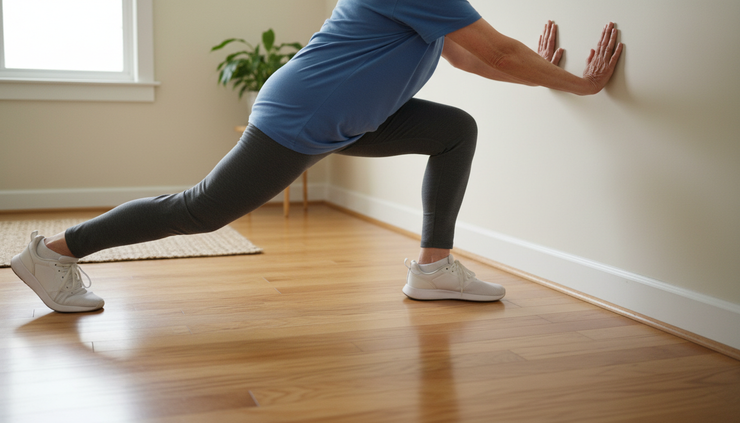
Calf stretch
Stand facing a wall or sturdy chair. Step one foot back. Keep both toes pointing forward. Bend the front knee slightly and keep the back heel down.
You should feel the stretch in the back of the lower leg.
Switch sides.
This is especially helpful after walking, hiking, dancing, or climbing stairs.
Back of thigh stretch
Sit near the front edge of a sturdy chair. Extend one leg forward with the heel on the floor and toes pointing up. Keep your back long and lean forward slightly from the hips.
You should feel a gentle stretch behind the thigh.
Switch sides.
Don’t round your back or reach hard for your toes. The stretch works even if your hands stay on your lap.
Front of thigh stretch
Hold a wall, counter, or sturdy chair. Bend one knee and bring your heel toward your hip. If you can comfortably reach your ankle, hold it. If not, just bend the knee as far as comfortable.
Keep your knees close together and stand tall.
If this bothers your knee or balance, skip it and do a gentle seated version instead. Sit tall, slide one foot slightly back under the chair, and stop when you feel a mild stretch in the front of the thigh.
Chest stretch
Stand or sit tall. Bring your arms slightly behind you and open your chest. Keep your shoulders relaxed, not squeezed up toward your ears.
This feels good after using a walker, doing push movements, gardening, or spending time seated.
Upper back stretch
Reach both arms forward as if you’re hugging a large beach ball. Let your upper back gently round. Keep breathing.
This can ease tension after strength training, carrying groceries, or any workout where your arms did a lot of work.
How to cool down after different types of exercise
The basic idea stays the same, but the details change a bit depending on what you did.
After walking
Slow your pace for the last few minutes. Don’t stop as soon as you reach the front door or car.
Try this flow:
Walk slowly for 3 to 5 minutes
Do calf stretches
Stretch the back of each thigh
Drink water
Sit for a minute before standing again if you feel tired
If you walk outside in cold weather, cool down indoors when possible. Muscles can tighten quickly in the cold.
After strength training
Strength workouts can raise your blood pressure and make muscles feel pumped or heavy. Take time to move lightly before stretching.
Try this:
March in place for 2 minutes
Swing your arms gently
Stretch the muscles you trained
Open the chest and relax the shoulders
Avoid holding your breath during stretches
If you lifted weights, put equipment away only after you feel steady. Fatigue can make tripping more likely.
After swimming or water exercise
Water can hide how hard you’re working. You may feel fine in the pool, then tired when you climb out.
Cool down by walking slowly in the shallow end or doing gentle arm movements in the water. After getting out, pause before heading to the locker room. Use handrails and take your time.
Stretch after you’re dry and stable.
After chair exercise
Chair workouts still need a cool down. Your heart and muscles worked, even if you stayed seated.
Try this:
March your feet slowly while seated
Open and close your hands
Roll your shoulders
Stretch calves by extending one leg at a time
Sit tall and take slow breaths
Before standing up, pause and make sure you don’t feel dizzy.
Watch for warning signs during recovery
Most post-workout feelings are normal. Warm muscles, mild tiredness, and light sweating can all happen. But some symptoms need attention.
Stop and get medical help right away if you have:
Chest pain or pressure
Severe shortness of breath
Fainting or feeling like you might faint
Sudden weakness on one side
New confusion
Pain spreading to the jaw, back, shoulder, or arm
A racing or irregular heartbeat that doesn’t settle
Severe headache unlike your usual headaches
Call your doctor if you often feel dizzy after exercise, have unusual fatigue, or notice swelling, pain, or shortness of breath that’s new for you.
Also be extra careful in hot or humid weather. Heat can make recovery harder. Move to shade or air conditioning, sip water, and give yourself more cooldown time.
Small recovery habits that make a big difference
Cooling down isn’t only about stretching. What you do right after exercise can shape how you feel for the next few hours.
Drink water before you feel thirsty
Thirst can be less noticeable with age. Keep water nearby and sip after your workout.
You don’t need to overdo it. A few steady sips are usually better than chugging a large amount at once. If your doctor has you on fluid limits, follow that guidance.
Eat if your workout was long or tiring
After a longer walk or strength session, a small snack can help. Think simple:
Yogurt
Peanut butter on toast
A boiled egg
Cheese and whole-grain crackers
Fruit with nuts
A smoothie
If you manage diabetes or another condition that affects blood sugar, follow your care plan.
Change out of damp clothes
Sweaty clothes can make you chilled, especially after swimming or outdoor exercise. Change into dry layers if needed.
Give joints a few calm minutes
Arthritic joints may feel fine while warm, then stiffen later. Gentle range-of-motion movements can help. Try ankle circles, easy knee bends, wrist circles, or slow shoulder rolls.
Write down what worked
A quick note can be useful. You might write:
Walked 20 minutes
Cool down felt good
Left calf tight
Needed extra water
Over time, patterns show up. That makes it easier to adjust.
Common cool down mistakes to avoid
A cooldown should help you feel better, not turn into another workout.
Watch out for these common mistakes.
Stopping too suddenly
After moderate exercise, don’t sit or lie down right away unless you feel unwell and need to do so for safety. Slow movement is usually the better bridge.
Stretching too hard
More stretch doesn’t mean more benefit. Pain is a sign to back off.
Holding your breath
Breath holding can add strain. Breathe slowly through each stretch.
Skipping balance support
There’s no prize for stretching without holding on. Use a wall, chair, rail, or counter whenever it helps.
Rushing because the workout is “done”
The cool down is part of the workout. If you have 30 minutes, plan for 25 minutes of exercise and 5 minutes of recovery.
Make cooling down easier to remember
The best routine is the one you’ll actually do. Keep it simple enough that it becomes automatic.
Try this easy pattern:
Slow down, stretch what worked, sip water, check in.
You can also attach the habit to something you already do. After every walk, stretch by the kitchen counter. After every chair class, take six slow breaths before standing. After every swim, pause at the bench before walking to the shower.
If you’d like help building a safer routine that fits your fitness level, health goals, and schedule, take a look at personalized senior coaching plans.
FAQ
How long should a senior cool down after exercise?
Most people do well with 5 to 10 minutes after light or moderate exercise. If the workout was harder, the weather was hot, or you still feel winded, take longer.
Is it better to stretch before or after exercise?
Gentle movement is usually best before exercise. Stretching often feels better after exercise, when muscles are warm. Keep stretches mild and avoid bouncing.
What if I feel dizzy during my cool down?
Stop, hold on to something stable, and sit if needed. Breathe slowly and sip water if appropriate. If dizziness is severe, new, or doesn’t pass, get medical help.
Should I cool down after chair exercises?
Yes. Chair exercises still raise your heart rate and use your muscles. Slow seated marching, shoulder rolls, gentle stretches, and calm breathing work well.
Can I skip the cool down if I only exercised for 10 minutes?
A short cool down can still help. Even 2 or 3 minutes of slower movement and breathing is better than stopping suddenly.
The simple takeaway
A safe cool down doesn’t need to be long or perfect. It just needs to be steady.
Slow your pace. Stretch gently. Breathe. Drink some water. Notice how you feel before jumping into the next part of your day.
That small recovery window can help you feel more stable, less stiff, and more confident the next time you move.


Comments