
The Best Daily Habits to Stay Strong and Healthy After 65

Strength after 65 isn’t built by doing one heroic workout or eating one perfect meal. It’s built in small daily choices: getting up from the chair often, eating enough protein, drinking water, sleeping well, and keeping your balance sharp.
The good news is that most of the best habits are simple. They don’t require fancy equipment. They don’t require a gym membership. And they don’t have to take over the day.
A quick note before we get practical: this article is for general information, not medical advice. If there’s a heart condition, joint pain, dizziness, balance trouble, recent surgery, or a new health concern, it’s smart to check in with a doctor or physical therapist before changing an exercise routine.

Move every day, strong and healthy even when it’s only a little
A daily walk may not look dramatic, but it’s one of the most useful habits for staying strong after 65. Walking supports the heart, legs, hips, posture, mood, and balance. It also helps keep daily life easier, from carrying groceries to climbing stairs.
You don’t need to start with a long walk. Start with what feels safe and repeatable.
That might be:
A 10-minute walk after breakfast
A slow lap around the block
A few trips up and down the hallway
A walk through a store when the weather is rough
Two shorter walks instead of one longer one
The goal is consistency. If walking outside feels unsteady, use a cane, walking poles, or walk with someone. Good shoes matter too. Choose shoes with support, a secure heel, and soles that don’t slide easily.
A helpful rule is to keep the pace comfortable enough to talk, but not so easy that it feels like standing still. On tired days, keep it gentle. On better days, add a little more distance or a slightly faster pace.
Small daily movement beats occasional overdoing.
Build strength with simple resistance moves
Muscle naturally changes with age, but it can still respond to use. Strength training helps protect independence because it supports everyday tasks: rising from a chair, carrying laundry, getting in and out of the car, opening jars, and staying steady on uneven ground.
You don’t need heavy weights to start. Body weight, resistance bands, and light dumbbells can do a lot.
A simple routine might include:
Sit-to-stands from a sturdy chair
Wall push-ups
Heel raises while holding a counter
Light biceps curls with small weights or water bottles
Side leg lifts while holding a chair
Gentle rows with a resistance band
Try doing strength work two or three days a week if it feels right and a doctor has cleared activity. Leave a rest day between harder sessions. Muscles need time to recover.
Here’s a simple way to begin:
Pick 3 moves.
Do 8 to 10 slow repetitions of each.
Rest when needed.
Stop if there’s sharp pain, chest pain, dizziness, or unusual shortness of breath.
A little muscle fatigue is normal. Pain that feels sharp, sudden, or wrong is a sign to stop.

Practice balance before it becomes a problem
Balance is one of those things people often ignore until it changes. A few minutes a day can make a real difference in confidence.
Start near something sturdy, like a kitchen counter. Keep a hand close enough to grab support.
Try these gentle options:
Stand with feet close together for 10 to 20 seconds.
Shift weight slowly from one foot to the other.
Walk heel to toe along a counter.
Stand on one foot while lightly holding the counter.
Practice turning slowly instead of pivoting quickly.
Balance work should feel challenging, not scary. If there’s a history of falls or dizziness, a physical therapist can help make a safe plan.
It also helps to reduce trip hazards at home. Keep walkways clear. Secure loose rugs or remove them. Use night lights. Store everyday items where they’re easy to reach. Strength matters, but the home setup matters too.
Eat enough protein and real food
Food supports muscle. After 65, getting enough protein becomes especially helpful because the body may not use protein as efficiently as it once did.
Protein is found in foods like:
Eggs
Greek yogurt
Cottage cheese
Fish
Chicken or turkey
Beans and lentils
Tofu
Nuts and nut butters
Lean meat
A simple habit is to include protein at each meal. Breakfast is often the meal where people fall short. Toast and coffee may be easy, but adding eggs, yogurt, peanut butter, or cottage cheese can make it more supportive.
A balanced plate could look like this:
Protein
Colorful plants
Smart carbs
Healthy fats
Fish, eggs, beans, poultry, tofu, yogurt
Berries, greens, carrots, peppers, squash
Oatmeal, brown rice, potatoes, whole-grain bread
Olive oil, avocado, nuts, seeds
Food doesn’t need to be perfect. A bowl of soup with beans, vegetables, and chicken can be a great meal. So can salmon with a baked potato and greens. So can oatmeal with Greek yogurt and berries.
If chewing, appetite, digestion, budget, or cooking energy gets in the way, keep easy options around. Canned tuna, frozen vegetables, rotisserie chicken, low-sodium soups, eggs, and yogurt can help on low-effort days.
Drink water before thirst reminds you
Thirst can become less reliable with age. That makes dehydration easier to miss. Even mild dehydration can leave a person feeling tired, lightheaded, constipated, or foggy.
A simple water routine helps.
Try:
A glass of water after waking up
Water with each meal
A small bottle nearby during the day
Herbal tea in the afternoon
Water before and after a walk
Some medical conditions, like heart failure or kidney disease, may require fluid limits. In that case, follow the care team’s guidance.
One easy check is urine color. Pale yellow often suggests better hydration. Very dark yellow can be a clue to drink more, unless medication or supplements affect the color.

Protect sleep like it matters because it does
Sleep affects strength more than many people realize. Poor sleep can make balance worse, increase cravings, lower energy, and make exercise feel harder.
Good sleep habits don’t have to be complicated:
Wake up around the same time most days.
Get morning light when possible.
Keep naps short if they make nighttime sleep harder.
Turn down bright screens before bed.
Keep the bedroom cool, dark, and quiet.
Limit heavy meals late at night.
If bathroom trips interrupt sleep, it may help to drink more fluids earlier in the day and less close to bedtime. Don’t cut fluids too much without medical advice, especially in hot weather.
Snoring, gasping, restless legs, pain, anxiety, and certain medications can also affect sleep. If sleep stays poor, it’s worth bringing up at a medical visit. Better sleep can make every other habit easier.
Keep joints moving gently
Stiffness can sneak up when movement becomes limited. Gentle mobility work helps joints feel more comfortable and keeps daily motion easier.
Think of mobility as keeping the body “well-oiled.” It doesn’t need to be intense.
A few daily moves can help:
Shoulder rolls
Neck turns within a comfortable range
Ankle circles
Gentle seated marches
Wrist circles
Slow reach-and-relax movements
Easy stretching after a warm shower
Move slowly. Never force a stretch. A mild pull is okay. Pain is not the goal.
For arthritis, warm movement often feels better than long, hard stretching. Many people do well with short movement breaks spread throughout the day instead of one long session.
Break up long sitting
Long stretches in a chair can make the body feel weaker and stiffer. A simple habit is to stand up once or twice an hour during the day.
This doesn’t have to become a workout. Just interrupt the sitting.
Try pairing movement with something already in the day:
Stand during TV commercials.
Walk to the kitchen for water.
Do 5 chair stands before lunch.
March in place while waiting for coffee.
Stretch calves after brushing teeth.
These tiny breaks add up. They also help the brain remember that standing, stepping, bending, and reaching are normal parts of the day.
If standing is difficult, seated movement still counts. Try seated marching, ankle pumps, arm raises, or squeezing a soft ball.
Take care of bones and posture
Strength isn’t only about muscles. Bones and posture matter too.
Weight-bearing movement, like walking, helps bones stay active. Strength training can also support bone health when done safely. Calcium and vitamin D play a role as well, though supplement needs vary from person to person. A clinician can help decide what’s right.
Posture deserves daily attention. Many people spend more time sitting than they used to, and the shoulders slowly round forward.
Try this gentle posture reset:
Sit or stand tall.
Relax the shoulders down.
Imagine the crown of the head lifting.
Pull the shoulder blades slightly back.
Breathe slowly for 3 breaths.
No forcing. No military posture. Just a relaxed, tall position.
Good posture can make breathing easier, walking smoother, and balance more secure.
Stay connected and keep doing things that feel meaningful
Health habits stick better when life feels connected. A walk with a neighbor, a class at a community center, gardening, volunteering, dancing in the kitchen, or playing with grandkids can all support strength in different ways.
Social connection also helps mood. And mood affects movement, sleep, appetite, and energy.
Choose activities that feel enjoyable enough to repeat. If something feels like punishment, it probably won’t last.
A good weekly mix might include:
Walking or gentle cardio
Strength work
Balance practice
Stretching or mobility
Time with people
Time outside when weather allows
Rest days without guilt
The point is to build a life that supports the body, not a schedule that makes every day feel like a test.
Make the habits easy to remember
The best routine is the one that actually happens. Make healthy habits visible and simple.
Try linking habits together:
Daily moment | Easy habit to add |
After waking | Drink water and do ankle circles |
After breakfast | Take a short walk |
Before lunch | Do 5 sit-to-stands |
During TV time | Stand and stretch between shows |
Before bed | Set out walking shoes for tomorrow |
Keep equipment where it’s easy to see. Put resistance bands near a favorite chair. Keep a water bottle on the counter. Place walking shoes by the door.
If motivation is low, shrink the habit. One minute counts. One set counts. One block counts. Starting small keeps the routine alive.
For extra guidance and support with healthy aging routines, you can view My Senior Coach pricing plans.
FAQ
How much exercise is enough after 65?
A common goal is about 150 minutes of moderate activity per week, plus strength training on at least two days. That can be broken into short sessions. Any new routine should fit current health, mobility, and medical advice.
Is it too late to build muscle after 65?
No. Many people can build strength later in life with safe, consistent resistance exercise and enough protein. Progress may feel gradual, but small gains can make daily tasks easier.
What is the safest exercise to start with?
Walking is a practical starting point for many people. Chair exercises, wall push-ups, and gentle balance work are also useful. The safest choice depends on balance, pain, heart health, and current fitness.
What should I do if I feel unsteady?
Use support, slow down, and avoid risky balance exercises alone. If unsteadiness is new, getting worse, or linked with dizziness, call a healthcare professional.
Do I need a gym to stay strong?
No. A sturdy chair, a counter, comfortable shoes, and maybe a resistance band are enough for many helpful exercises.
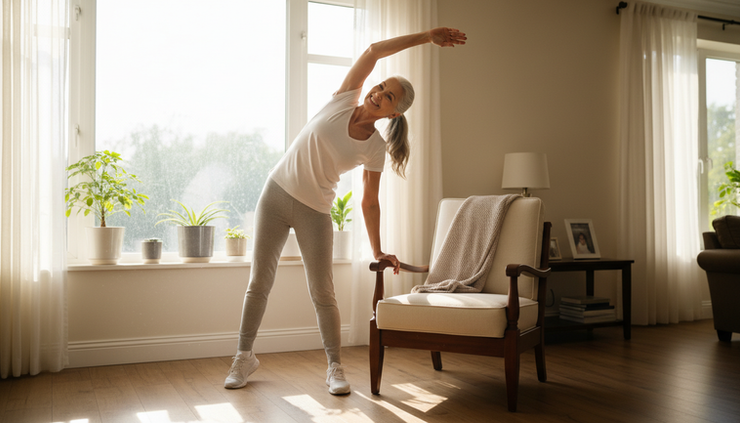
A strong daily routine can stay simple
Staying strong and healthy after 65 comes down to repeatable basics: move daily, build muscle, practice balance, eat enough protein, drink water, sleep well, and keep life connected.
Pick one habit to start this week. Keep it small enough that it feels almost too easy. Then repeat it tomorrow. Strength grows from that kind of steady care.


Comments