
Gentle Ways Seniors Can Rebuild Strength After a Hospital Stay
- Clara Whitcombe

- 14 hours ago
- 8 min read
Coming home from the hospital can feel like crossing the finish line, then realizing there’s another hill right in front of you.
Even a short hospital stay can leave the body weaker than expected. A few days in bed can make legs feel shaky, balance feel off, and simple tasks, like getting out of a chair or walking to the bathroom, feel harder than they used to. That can be frustrating, especially if the illness or surgery already took a lot out of you.
The good news is that strength can often come back with small, steady steps. It doesn’t need to look like a gym workout. For many seniors, especially frail older adults, the safest path is gentle movement, good food, enough rest, and the right support.
This article is for general information only and doesn’t replace medical advice. Before starting new exercises after a hospital stay, check with a doctor, nurse, physical therapist, or home health provider.

Start by finding the new baseline
After a hospital stay, it’s tempting to compare today’s strength with how things felt before. That can make recovery feel discouraging.
A better place to start is the new baseline. Ask, “What can I safely do today?”
That might mean:
Standing for 20 seconds while holding the kitchen counter
Walking from the bedroom to the living room
Doing three slow sit-to-stands with help nearby
Sitting upright for meals instead of eating in bed
Taking one short walk in the hallway
These “small” things are not small after a hospital stay. They’re the building blocks.
If there was surgery, pneumonia, a heart problem, a fall, an infection, or a long time in bed, strength may need to return slowly. Some days will feel better than others. A tired day doesn’t mean progress is gone. It may just mean the body needs more recovery time.
A helpful rule is to begin below what feels possible. If five minutes of walking sounds doable, start with two or three. If standing exercises feel challenging, start seated. Leaving a little energy in the tank helps prevent setbacks.
Make safety the first part of the workout for seniors to build strength after hospital stay
The goal is for seniors to rebuild strength after a hospital stay, not to prove toughness. Safety matters most, especially when balance is shaky or medications cause dizziness.
Before moving around, take a minute to set up the space.
Clear the walking path. Move loose rugs, cords, laundry, and small stools. Make sure shoes or slippers have backs and nonskid soles. Keep a phone or alert button nearby. Use a cane or walker if one was recommended.
If standing up causes lightheadedness, try this simple rhythm:
Sit at the edge of the bed or chair.
Move the feet and ankles for a few moments.
Stand slowly while holding something sturdy.
Pause before walking.
That pause can prevent a fall.
It also helps to watch for warning signs. Stop and rest if there’s chest pain, severe shortness of breath, new confusion, faintness, or pain that feels sharp or unusual. Call a medical professional if symptoms worry you.
For frail seniors, having someone nearby during the first few home exercises can make a big difference. That person doesn’t need to hover. Just being close enough to help can make movement feel safer.
Begin with gentle seated movements
Seated exercises are a friendly first step because they reduce fall risk. They can wake up the muscles, improve circulation, and build confidence.
Try one or two of these at a time. Keep the movements slow and comfortable.
Ankle pumps
Sit tall with both feet on the floor or legs slightly stretched out.
Lift the toes up, then press them down like pushing a gas pedal. Repeat 10 times if comfortable.
This can help the lower legs feel more awake before standing or walking.
Seated marching
Sit near the front of a sturdy chair.
Lift one knee a little, then lower it. Switch sides. The movement can be tiny. Repeat 5 to 10 times on each side.
If lifting the knee feels like too much, try tightening the thigh muscle for a few seconds, then relaxing.
Shoulder rolls
Lift the shoulders gently toward the ears, roll them back, then relax them down.
Repeat a few times. This helps loosen the upper body, especially after days spent in bed.
Hand squeezes
Hold a soft ball, folded washcloth, or small towel.
Squeeze gently, hold for a second, and release. Repeat a few times with each hand.
Grip strength matters more than people realize. It helps with opening containers, holding rails, using a walker, and carrying light items.

Practice standing in a steady, supported way
Standing up from a chair is one of the most useful strength exercises because it connects directly to daily life.
It helps with getting to the bathroom, moving around the kitchen, getting into a car, and staying independent at home.
Start with a sturdy chair that doesn’t roll. If possible, choose one with armrests. Place it against a wall so it won’t slide.
Try supported sit-to-stands
Sit near the front of the chair with feet flat on the floor.
Lean forward slightly, push through the legs and armrests, and stand up. Pause. Then sit back down slowly.
Do just one or two if that’s enough.
The “slow sit” is part of the exercise. It teaches the legs to control the body safely.
If standing all the way up feels too hard, practice leaning forward and lifting the hips slightly, then sitting back down. That still counts.
Use the kitchen counter for support
A countertop can be a steady place for very gentle standing exercises. Hold the counter with both hands.
Try these only if standing feels safe:
Rise onto the toes a little, then lower down
Shift weight gently from one foot to the other
Bend one knee slightly, then straighten it
Stand tall for 10 to 20 seconds
Keep the movements small. Frail muscles don’t need big motion to get stronger. They need regular, safe practice.
Walk in short, planned trips
Walking is one of the best ways to rebuild strength after a hospital stay because it uses the whole body. It also supports stamina, balance, digestion, mood, and confidence.
But after being ill, walking can tire the body fast. That’s why short and planned is better than random and rushed.
A simple plan might look like this:
Morning
Midday
Evening
Walk from the bedroom to the kitchen and back with support
Walk to the mailbox only if safe, or walk indoors for one minute
Take a short hallway walk before dinner
Indoor walking is fine. Hallways, living rooms, and even a clear path around the kitchen table can work.
If a walker was prescribed, use it. A walker is not a failure. It’s a tool that helps the body practice safely while strength returns.
Try to notice quality, not just distance. Are the steps steadier? Is it easier to stand tall? Does breathing settle faster after walking? Those are signs of progress.

Support muscles with food and fluids
Movement tells the body to rebuild. Food gives it the materials.
After a hospital stay, appetite may be low. Food may taste different. Medications can cause nausea or constipation. Even so, regular meals and fluids can make recovery easier.
Protein is especially helpful for rebuilding muscle. Good options include:
Eggs
Greek yogurt
Cottage cheese
Fish
Chicken or turkey
Beans or lentils
Peanut butter
Tofu
Protein drinks, if recommended
Meals don’t have to be large. A small meal or snack every few hours may feel easier than three big meals.
Pair protein with foods that bring energy and nutrients, such as oatmeal, soup, fruit, vegetables, rice, potatoes, or whole-grain toast.
Hydration matters too. Dehydration can make weakness, dizziness, constipation, and confusion worse. Water is great, but fluids can also come from milk, broth, herbal tea, fruit, or soups.
Some people need fluid limits because of heart, kidney, or other medical conditions. Follow the care team’s instructions if they gave specific limits.
Balance activity with rest
Rest is not laziness. After hospitalization, rest is part of healing.
The trick is to avoid both extremes. Staying in bed all day can lead to more weakness. Doing too much can lead to pain, exhaustion, or another fall.
A gentle rhythm often works best:
Move a little
Rest
Eat or drink something nourishing
Move a little again later
This pattern gives the body repeated reminders to rebuild without draining all its energy at once.
A daily routine can help. For example:
Sit up for breakfast
Do ankle pumps after brushing teeth
Take a short walk before lunch
Rest in the afternoon
Practice one sit-to-stand before dinner
Keep it simple. A routine that actually happens is better than a perfect plan that feels too hard.
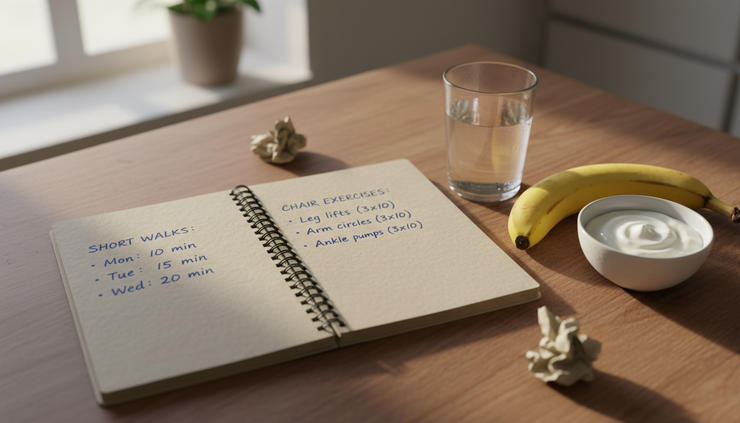
Track progress in tiny wins
Progress after hospitalization can be slow enough that it’s hard to see day by day. Tracking small wins can help.
Choose one or two things to write down:
How many times sit-to-stands were practiced
How far the walk went
How long standing felt comfortable
How energy felt from 1 to 5
Whether help was needed getting out of a chair
The goal is not pressure. The goal is encouragement.
A note like “walked to the bathroom with fewer pauses” is real progress. So is “stood at the sink long enough to wash hands.” These steps matter because they connect directly to daily living.
If progress stalls for several days, or weakness suddenly gets worse, call the doctor or care team. A medication issue, infection, dehydration, poor sleep, or pain can slow recovery.
Ask for the right kind of help
Many seniors recover better when support is organized early. A doctor may recommend physical therapy, occupational therapy, home health, or follow-up visits.
Physical therapy can help with strength, walking, balance, and safe exercises. Occupational therapy can help with bathing, dressing, cooking, and home setup. A nurse may help monitor symptoms, wounds, medications, or chronic conditions.
Family members and friends can help too, especially with tasks that drain energy:
Picking up groceries
Moving tripping hazards
Preparing easy meals
Setting up a chair for rest breaks
Keeping water within reach
Driving to appointments
Support should make recovery safer, not take away independence. Whenever possible, let the older adult do the safe parts and help with the risky parts.
If you’d like more guided support for aging well at home, you can review My Senior Coach pricing plans and choose the level of help that fits your situation.
FAQ
How long does it take to regain strength after a hospital stay?
It varies. Some people feel better in a couple of weeks, while others need months, especially after serious illness, surgery, or a long hospital stay. Slow progress is still progress.
What is the safest exercise to start with?
For many frail seniors, seated ankle pumps, seated marching, and short supported walks are good starting points. A physical therapist can give the safest plan for the person’s condition.
Should seniors exercise if they still feel tired?
Gentle movement can help, but it should stay light. Think short walks, sitting upright, or a few seated exercises. Severe fatigue, chest pain, faintness, or unusual shortness of breath means it’s time to stop and get medical guidance.
Is it normal to feel weaker after only a few days in the hospital?
Yes, it can happen. Bed rest, illness, poor appetite, medication changes, and disrupted sleep can all reduce strength quickly. That weakness can often improve with steady, safe movement and good nutrition.
When should a doctor be called?
Call if weakness suddenly worsens, there’s a new fall, fever, chest pain, severe shortness of breath, confusion, dehydration signs, swelling, or pain that feels new or intense.
A gentle next step for today
Rebuilding strength after a hospital stay doesn’t start with a big workout. It starts with one safe action.
Sit up for a meal. Pump the ankles. Stand once with support. Walk a short hallway. Drink a glass of water. Ask for help before the risky moment, not after it.
The body often responds well to patience and repetition. Keep the steps small, keep the space safe, and let each little win become part of the next one.



Comments