
Holiday Activity Tips for Seniors to Stay Moving and Keep Momentum

Holiday weeks can sneak up on a good routine. One day you’re taking your regular walk, doing your chair exercises, or getting to the pool. Then travel plans, cold weather, big meals, family visits, and late mornings start piling up.
The good news is that staying active during the holidays doesn’t mean sticking to a perfect schedule. It means keeping your body in the habit of moving, even in small ways. A few minutes here and there can help you keep your strength, balance, energy, and confidence.
This guide is informational only and isn’t medical advice. If you have heart concerns, joint pain, dizziness, recent surgery, or a new health condition, check with your doctor before changing your activity level.
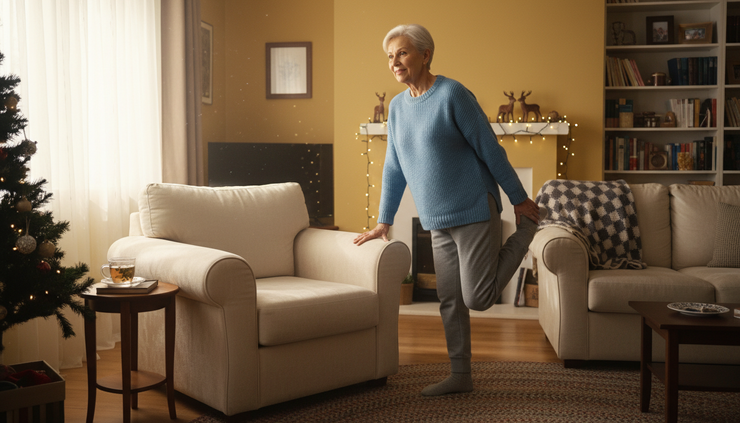
Keep your goal smaller than you think it should be
During the holidays, the goal isn’t to train harder. The goal is to avoid stopping completely.
Momentum works best when it feels easy enough to repeat. If your usual walk is 30 minutes, a holiday version might be 10 minutes. If you usually go to a fitness class twice a week, your holiday version might be simple chair exercises at home.
Try setting a “minimum movement goal” for busy days. Make it so small that it feels almost too easy.
Good holiday minimums might be:
Walk for 10 minutes after breakfast
Do 5 sit-to-stands from a sturdy chair
Stretch your calves, shoulders, and back for 5 minutes
March in place during one favorite song
Take one extra lap around the grocery store before checking out
Small counts. A short walk still reminds your legs, lungs, and brain, “We move.” That reminder matters.
If you wake up tired or have a packed day, aim for the minimum. If you feel good, do more. This keeps activity from becoming an all-or-nothing decision.
Build movement into holiday routines you already have
The easiest activity is the kind you attach to something that’s already happening. You don’t need a special outfit, a gym, or a long block of free time.
Here are simple ways to tuck movement into normal holiday moments.
Move before meals
A short walk before a meal can help you feel looser and more awake. It can also turn waiting time into useful time.
Try this:
Put on supportive shoes.
Walk inside or outside for 5 to 15 minutes.
Keep the pace comfortable enough to talk.
Sit and rest before eating if needed.
If the weather is icy, walk indoors. Use a hallway, a mall, a community center, or even laps around the kitchen and living room.
Stretch while coffee brews or tea steeps
Use those few quiet minutes for gentle movement. Stand near the counter, hold on lightly if needed, and try:
Shoulder rolls
Ankle circles
Gentle side bends
Neck turns
Heel raises
Move slowly. Nothing should feel sharp, painful, or forced.
Turn decorating into light activity
Holiday decorating can involve reaching, bending, carrying, and standing. That’s activity, but it can become tiring fast.
Make it safer by breaking the job into short rounds. Decorate for 15 minutes, then sit and sip water. Keep heavy boxes at waist level when possible. Ask for help with anything on a ladder or anything that feels awkward to lift.
A good rule is simple: don’t rush while holding something. Move slowly, keep one hand free when you can, and use sturdy step stools only if your balance is strong.

Make a simple holiday movement menu
A movement menu gives you choices. That helps on days when your energy, weather, or schedule changes.
Think of it like picking from a restaurant menu. You don’t need every option. You just need a few that work for your body and your space.
If you feel energetic
If you feel average
If you feel tired
If the weather is bad
Take a longer walk, do water exercise, attend a class, or dance to a few songs.
Walk 10 to 20 minutes, do chair exercises, or stretch while watching TV.
Do ankle circles, gentle seated marches, shoulder rolls, and a few slow sit-to-stands.
Walk indoors, use a stationary bike, climb one flight of stairs carefully, or do hallway laps.
Keep the menu somewhere visible. Put it on the fridge, near your favorite chair, or in a notebook. When the day gets busy, you won’t have to think so hard.
For many older adults, the best Holiday Activity Tips for Seniors to Stay Moving and Keep Momentum are the ones that feel flexible. A plan you can adjust is much easier to keep than one that falls apart the first time company arrives.
Protect your balance while staying active
Balance deserves extra attention during the holidays. Homes may have extra cords, decorations, rugs, packages, and visitors’ shoes near the door. Outside, there may be wet leaves, snow, ice, or uneven sidewalks.
Before you add more activity, make movement safer.
Clear your walking path
Take a quick look at the spaces you use most:
Bedroom to bathroom
Kitchen to table
Favorite chair to front door
Hallway or indoor walking route
Move loose rugs if they slide. Tuck cords out of the way. Keep packages off the floor. Make sure there’s good lighting at night.
Choose the right shoes
Supportive shoes matter, even indoors. Slippers can be cozy, but many don’t give much grip or support.
Look for shoes or house shoes with:
A back or secure heel
Non-slip soles
Enough room for toes
Good support around the foot
If you use a cane, walker, or trekking poles, keep them nearby. Don’t let pride talk you out of using what helps you move safely.
Practice balance in small doses
Balance exercises can be simple. Stand near a counter and hold on lightly. Try shifting weight from one foot to the other. Or stand with feet close together for a few seconds.
You can also practice getting up from a chair without using your hands, if it feels safe. Sit tall, place your feet under your knees, lean forward slightly, and stand. Sit back down with control.
Start with just a few. Stop if you feel dizzy, unsteady, or short of breath.

Stay active when family visits or travel changes the plan
Family visits can be wonderful, noisy, tiring, or all three at once. Travel can throw off your meals, sleep, and exercise routine. Instead of waiting for the perfect schedule, use the people and places around you.
Invite someone for a short walk
A walk can be a nice break from sitting, snacking, and talking indoors. It also gives you one-on-one time with a family member.
You don’t need to announce it as exercise. Try saying, “I’m going to take a short walk before dessert. Want to come with me?”
If walking outside isn’t safe, suggest indoor laps. A hallway walk with a grandchild or a slow stroll around a store still counts.
Use travel days for gentle movement
Long car rides and flights can leave you stiff. If it’s safe to do so, take short movement breaks.
During car travel, stop at rest areas and walk for a few minutes. In an airport, walk slowly near the gate instead of sitting the whole time. If you’re seated for a long stretch, do ankle circles and gentle foot pumps.
Pack what helps you stay comfortable:
Supportive shoes
Loose, warm layers
A water bottle
Any needed assistive device
A simple exercise band, if you already know how to use one safely
Keep movement social, not stressful
Holiday activity doesn’t need to look like a workout. Dancing to one song counts. Tossing a soft ball with a grandchild counts. Helping set the table counts. Walking through a light display counts.
The point is to reduce long sitting stretches. After about an hour of sitting, stand up if you can. Walk to the kitchen, do a few heel raises, or stretch your hands and shoulders.
Work with your energy instead of fighting it
Some days feel lively. Some days feel slow. That’s normal, especially during the holidays.
Pay attention to your body’s signals. If you’re more tired than usual, choose gentle movement. If your joints feel stiff, warm up slowly. If you feel dizzy, have chest discomfort, or become unusually short of breath, stop and seek medical guidance.
A simple scale can help:
Green day
You feel steady and rested. Take your normal walk or do your regular activity.
Yellow day
You feel a little tired or stiff. Do a shorter, gentler version.
Red day
You feel unwell, dizzy, weak, or in unusual pain. Rest and call a doctor if symptoms concern you.
This keeps you from doing too much on a hard day, or too little on a good one.
Hydration helps too. Cold weather can make thirst less obvious, and holiday drinks may not replace water. Keep a glass nearby, especially if you’re moving more than usual or eating salty foods.
Make your home activity-friendly during the holiday season
A home that invites movement makes staying active easier. You don’t need a full exercise room. You just need a few safe spots.
Set up one “movement corner” with:
A sturdy chair
Good lighting
Clear floor space
Supportive shoes nearby
A water bottle within reach
You might also keep a light resistance band there if you’ve used one before. If not, ask a physical therapist, trainer, or health professional to show you safe exercises first.
Good chair-based moves include:
Seated marches
Toe taps
Heel raises
Gentle knee lifts
Arm reaches
Shoulder rolls
Try pairing activity with something enjoyable. Move during the first few minutes of a holiday movie. Stretch after a phone call. Do sit-to-stands before opening the mail.
The less you have to prepare, the more likely you are to follow through.
Give yourself credit for real-life movement
Many people overlook the movement they already do. During the holidays, real-life activity can add up.
Give yourself credit for:
Carrying light groceries
Cooking while standing
Tidying guest rooms
Walking through stores
Climbing stairs carefully
Playing with grandchildren
Taking out small bags of trash
Bringing in mail or packages
Of course, chores don’t replace every part of a balanced routine. Strength, balance, flexibility, and endurance all matter. Still, recognizing daily movement can help you feel encouraged instead of discouraged.
If you like tracking, use a simple calendar. Put a check mark on any day you move on purpose. A 5-minute stretch earns a check. A mall walk earns a check. Chair exercises earn a check.
The streak isn’t about perfection. It’s about seeing proof that you’re still showing up.
Get support if staying consistent feels hard
Sometimes it helps to have a plan, reminders, and someone in your corner. If you’d like guidance that fits your routine and goals, take a look at My Senior Coach pricing plans and see what kind of support feels right.
The holidays are full enough. You don’t have to figure everything out alone.
Frequently Asked Questions
How much activity should seniors aim for during the holidays?
Aim for what you can repeat safely. For many people, 10 to 20 minutes of light walking or gentle exercise most days is a good holiday goal. If that’s too much, start with 5 minutes and build from there.
What if cold weather makes outdoor walking unsafe?
Choose indoor options. Walk in a mall, community center, hallway, grocery store, or around your home. The safest activity is the one you can do without worrying about ice, poor lighting, or uneven ground.
Are chair exercises enough to keep momentum?
Yes, chair exercises can help maintain the habit of movement, especially on busy or low-energy days. Add standing or walking when it feels safe, but don’t dismiss seated movement. It can still support circulation, flexibility, and strength.
How can I stay active without getting too tired?
Use short sessions. Try 5 to 10 minutes, then rest. Gentle movement spread through the day often feels better than one long session. Keep water nearby and stop if you feel dizzy, weak, or unusually short of breath.
What’s the best way to restart after missing several days?
Start smaller than your usual routine. Take a short walk, stretch gently, or do a few chair exercises. After a few days, add time or effort if your body feels ready.

Keep moving in a way that feels kind to your body
Holiday momentum comes from small, steady choices. Walk a little. Stretch a little. Stand up often. Choose safe shoes. Clear your path. Rest when your body asks for it.
You don’t need a perfect routine to stay active through the season. You need a routine that bends with real life and starts again easily the next day. That’s what keeps you moving, not just through the holidays, but well after they’re over.


Comments