
How Better Posture Can Improve Breathing in Older Adults

Updated: Aug 2
Breathing can feel harder when the body is folded forward. That’s true at any age, but it can show up more often later in life, especially after years of sitting, reading, driving, watching TV, or guarding sore joints.
The good news is that posture isn’t about standing like a soldier or forcing the shoulders back all day. Better posture is really about giving the ribs, lungs, and diaphragm more room to move. Small changes can help each breath feel a little easier, steadier, and less tiring.
This article is for general education only. If shortness of breath is new, severe, getting worse, or comes with chest pain, dizziness, blue lips, or confusion, get medical help right away.

Posture and breathing in older adults are more connected than most people realize
Breathing is a whole-body movement. The lungs do the air exchange, but they don’t work alone. The ribs, spine, diaphragm, belly muscles, shoulders, and neck all play a part.
The diaphragm is the main breathing muscle. It sits under the lungs like a dome. When it contracts, it moves downward and helps draw air in. For the diaphragm to move well, the rib cage and belly need some space.
When posture slumps, a few things can happen:
The ribs have less room to expand.
The belly gets compressed, which can limit diaphragm movement.
The upper back rounds, which makes deep breathing harder.
The neck and shoulder muscles may start helping too much.
Breathing may become quicker and shallower.
That doesn’t mean every breathing issue is caused by posture. Conditions like asthma, COPD, heart disease, pneumonia, anxiety, anemia, and medication side effects can all affect breathing. Still, posture is one piece that many people can safely improve with gentle habits.
Think of it like trying to open an umbrella in a small closet. The umbrella may still open a little, but it can’t fully spread out. A rounded, compressed posture can make the rib cage feel the same way.
Why posture often changes with age
Posture changes over time for many normal reasons. Muscles can weaken. Joints may stiffen. The discs between the bones of the spine can lose height. Arthritis can make standing tall feel uncomfortable. Some people also develop more rounding in the upper back.
Daily habits matter too. A lot of common activities pull the head and shoulders forward:
Looking down at a phone or tablet
Sitting in a soft couch for long periods
Reading with the book in the lap
Using a walker that’s set too low
Sleeping propped up in a way that curls the body forward
Avoiding movement because of pain or fear of falling
Once the body gets used to a rounded position, standing or sitting taller can feel strange at first. It may even feel like “too much.” That’s why better posture should be built gently, not forced.
The goal is comfortable length, not stiffness. A helpful posture lets the head balance over the shoulders, the chest stay open, and the lower ribs move freely with each breath.
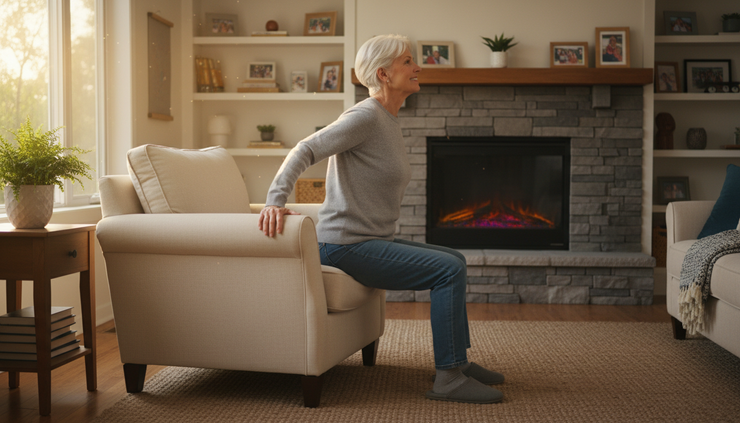
What slouching can do to the breath
A slouched posture usually brings the head forward, rounds the upper back, and narrows the front of the chest. When this becomes a regular position, the body may rely more on shallow chest breathing.
Shallow breathing isn’t always harmful for a moment or two. We all do it sometimes, like when concentrating or feeling stressed. The problem is when it becomes the default pattern.
Here’s how it can feel:
Needing more effort to take a satisfying breath
Feeling tight across the chest or upper back
Getting winded during simple tasks
Breathing mostly in the upper chest
Feeling neck or shoulder tension after activity
Having a weaker cough because the ribs don’t expand well
A rounded posture can also make it harder to exhale fully. That matters because good breathing isn’t only about getting air in. Letting air out matters too. A fuller exhale helps the next inhale come in more naturally.
For people with lung conditions, posture can make a noticeable difference. Many people with breathing trouble instinctively sit forward with hands supported on the knees or arms of a chair. That position can help some accessory breathing muscles work better. So, not every “forward” position is bad. The issue is being collapsed forward, with the chest and belly squeezed, rather than supported and open.
The best posture for easier breathing
There’s no single perfect posture, and no one needs to hold one exact position all day. The best posture for breathing is usually one that feels tall, steady, and relaxed.
Try this simple sitting setup:
Sit near the front half of a firm chair.
Place both feet flat on the floor.
Let the knees point forward and stay about hip-width apart.
Gently lengthen the spine, as if the top of the head is floating upward.
Let the shoulders rest down, not pulled back hard.
Keep the chin level, not poking forward.
Rest the hands on the thighs or lower ribs.
Now take a slow breath in through the nose if that’s comfortable. Notice whether the lower ribs expand a bit to the sides. Then breathe out slowly through the mouth.
This is the main idea behind better posture and breathing in older adults. It’s not about looking perfect. It’s about creating enough space for the ribs and diaphragm to do their jobs.
Try the “soft tall” cue
A lot of people hear “sit up straight” and immediately tense the back, lift the chest too high, and hold the breath. That can make breathing worse.
Instead, try this:
Grow tall, then soften.
Lengthen through the spine. Then relax the shoulders, jaw, belly, and hands. The body should feel open, not braced.
Check the head position
The head is heavy. When it drifts forward, the neck and upper back have to work harder. That can tighten muscles that also help with breathing.
A simple cue:
Bring the ears gently over the shoulders.
Don’t tuck the chin hard. Just guide the head back until the neck feels longer.
Let the ribs move
Some people try to sit tall by holding the stomach tight. That can limit the diaphragm. Unless a doctor or physical therapist has given special instructions, let the belly stay relaxed enough that breathing can move through the lower ribs and abdomen.
Gentle breathing exercises that pair well with posture
These exercises are simple, but they should feel comfortable. Stop if there’s pain, dizziness, chest pressure, or unusual shortness of breath. If there’s a known heart or lung condition, it’s smart to ask a clinician which breathing exercises are best.
Practice rib breathing with your hands
Sit in the soft tall position. Place the hands on the lower ribs, with fingers wrapping gently around the sides.
Breathe in slowly and feel the ribs widen into the hands. Breathe out and feel them settle.
Try 5 to 8 breaths. No need to take huge breaths. Big forced breaths can make some people lightheaded. Aim for quiet, easy movement.
Use pursed-lip breathing
Pursed-lip breathing can help slow the breath down. Many people with lung conditions learn this from respiratory therapists.
Here’s how:
Breathe in through the nose for about 2 counts.
Purse the lips like gently blowing on hot soup.
Breathe out for about 4 counts.
The longer exhale can help reduce the feeling of breathlessness for some people. It can be especially useful during activities like climbing stairs, walking to the mailbox, or getting dressed.
Add a gentle shoulder roll
Rounded shoulders can make the chest feel tight. A small shoulder roll can help reset the upper body.
Sit tall. Circle the shoulders up, back, and down. Keep it slow. Do this 3 to 5 times, then pause and breathe.
Don’t force the shoulders far back. The goal is ease, not a stretch contest.

Daily habits that help posture without overthinking it
Posture improves fastest when it becomes part of normal life. A few small changes, repeated often, can do more than one long session once in a while.
Raise reading material
Bring books, tablets, phones, and crossword puzzles closer to eye level. This reduces the “chin to chest” position that rounds the upper back.
A pillow on the lap can help support a book. A tablet stand can also make a big difference.
Set a timer for movement breaks
Long sitting makes almost everyone slump. Try standing up every 30 to 60 minutes during the day. Walk around the room, reach overhead if comfortable, or take a few soft tall breaths.
Even one minute can help.
Check chair support
A very soft couch may feel cozy, but it can pull the spine into a curled shape. For breathing practice, a firmer chair is usually better.
If the lower back feels unsupported, place a small rolled towel behind it. Keep the feet flat. If the feet don’t reach the floor, use a sturdy footrest.
Get the walker or cane height checked
If a walker is too low, it can encourage leaning forward. A cane that’s too short can do the same. A physical therapist, occupational therapist, or trained medical equipment provider can help adjust the height.
Strengthen the back gently
Posture isn’t only a position. It’s also strength and endurance. If the back muscles tire quickly, slumping becomes more likely.
Gentle options may include:
Seated rows with a light resistance band
Wall angels, if shoulder motion allows
Standing tall at a counter for support
Short walks with relaxed shoulders
Chair yoga or tai chi classes made for older adults
The best exercise is one that feels safe enough to repeat.
When posture may not be enough
Better posture can support easier breathing, but it shouldn’t be used to explain away symptoms that need medical care.
Call a doctor promptly if breathing changes are new or getting worse. Seek urgent help for:
Shortness of breath at rest
Chest pain or pressure
Fainting or severe dizziness
Blue or gray lips or fingertips
Confusion
A fast heartbeat that doesn’t settle
Coughing up blood
Fever with breathing trouble
Also speak with a clinician if shortness of breath keeps limiting daily activities. There may be helpful treatments, breathing therapy, pulmonary rehabilitation, medication changes, or mobility support.
The goal isn’t to “push through.” The goal is to breathe as well as possible and stay active safely.
A simple 5-minute posture and breathing routine
This routine can be done once or twice a day. Keep it easy.
Minute 1
Sit on a firm chair with feet flat. Lengthen through the spine. Relax the shoulders.
Minute 2
Place hands on the lower ribs. Breathe in and feel the ribs widen. Breathe out and feel them soften.
Minute 3
Do 5 slow shoulder rolls. Pause after each one. Keep the jaw relaxed.
Minute 4
Practice pursed-lip breathing. In through the nose for 2 counts, out through pursed lips for 4 counts.
Minute 5
Stand if it’s safe. Hold a counter or chair if needed. Grow tall through the top of the head, soften the shoulders, and take 3 calm breaths.
That’s enough. A routine doesn’t have to be long to be useful. It just has to be repeatable.
For extra support with healthy aging habits, coaching, and practical wellness plans, you can explore senior coaching options and plans.
FAQ
Can poor posture really make breathing harder?
Yes, it can. A rounded posture can limit rib movement and make it harder for the diaphragm to move freely. It’s not the only cause of breathing trouble, but it can be a real factor.
Is it better to breathe through the nose or mouth?
Nose breathing is often helpful because it warms and filters the air. But during activity or breathlessness, mouth breathing may happen naturally. Pursed-lip breathing uses the mouth on purpose to slow the exhale.
How long does it take to notice a difference?
Some people feel a small change right away when they sit taller and relax the shoulders. Bigger changes in posture, strength, and breathing habits usually take regular practice over time.
Should I use a posture brace?
A brace may help in certain cases, but it can also make muscles rely on support instead of building strength. Ask a doctor or physical therapist before using one regularly.
What if sitting up tall causes back pain?
Don’t force it. Try a smaller adjustment, use chair support, or practice for shorter periods. If pain continues, a physical therapist can help find a safer position.

The takeaway
Better posture won’t fix every breathing problem, but it can give the body a better setup. When the spine is gently tall, the shoulders are relaxed, and the ribs can move, breathing often feels less cramped.
Start small. Sit a little taller during meals. Raise the book or tablet. Take a few slow rib breaths before a walk. These tiny habits add up, and they can help daily breathing feel calmer, easier, and more supported.


Comments