
Senior Posture and Alignment Guide for Better Balance and Comfort

A small posture change can make walking feel steadier, standing feel easier, and sitting feel less tiring. And the best part is that you don’t need a gym, fancy equipment, or a perfect body to start.
Posture isn’t about “standing up straight” and holding yourself stiff like a soldier. That usually creates more tension. Good alignment is more like stacking your body so your head, ribs, hips, knees, and feet share the work. When your body stacks well, muscles don’t have to fight gravity all day.
This Senior Posture and Alignment Guide for Better Balance and Comfort walks through simple checks, gentle exercises, and everyday habits that can help you feel more stable and at ease.
Quick note before we get going: this is general wellness information, not medical advice. If you have new pain, dizziness, recent falls, numbness, osteoporosis, balance changes, or a major health condition, check with a doctor or physical therapist before trying new exercises.

Why posture changes with age
Posture changes for lots of normal reasons. Joints may get stiffer. Muscles can lose strength when daily activity slows down. Vision changes can make people look down more often. Foot pain or balance worries can also shift the way someone stands and walks.
Over time, a few common patterns can show up:
The head drifts forward.
The upper back rounds.
The chest feels tight.
The hips tuck under or shift forward.
The knees stay slightly bent while standing.
The feet turn out or shuffle.
None of this means you’ve “failed” at posture. It means your body adapted to what it does every day. The good news is that the body can learn new habits at any age.
Better alignment may help with:
Feeling steadier while walking
Reducing neck and shoulder tension
Making breathing feel easier
Taking pressure off the lower back
Moving with more confidence
Getting up from chairs with less strain
The goal is comfort and function, not perfection.
Start with a simple senior posture guide check
You don’t need to stare in the mirror and pick yourself apart. Try this gentle check once a day, preferably near a wall, counter, or sturdy chair.
Stand with your feet about hip-width apart. Let your arms rest by your sides. Look straight ahead.
Now notice these five areas.
Body area | What to look for | Gentle adjustment |
Feet | Weight mostly on heels or toes | Spread weight across the whole foot |
Knees | Locked or deeply bent | Soften them slightly |
Hips | Tucked under or pushed forward | Let the pelvis feel centered over the feet |
Ribs | Flared up or collapsed down | Let the ribs stack over the hips |
Head | Chin poking forward | Glide the head gently back |
Don’t force anything. Think “stack and soften.”
A helpful image is a tower of blocks. If the top block slides forward, the lower blocks have to work harder to keep the tower from tipping. Your body does the same thing. When the head comes back over the shoulders, the neck and upper back often get a break.
Try this cue:
Grow tall through the top of your head, then relax your shoulders down.
That little phrase keeps you from stiffening up. Tall doesn’t mean tense.
Build a steadier base with your feet
Balance starts at the ground. If your feet don’t feel steady, the rest of your body has to guess where it is in space.
Try these simple foot and ankle movements near a counter.
Rock from heel to toe
Stand tall and hold the counter lightly. Shift your weight toward your toes without lifting your heels. Then shift back toward your heels without lifting your toes.
Move slowly for 8 to 10 rounds.
This wakes up the ankles and helps you feel where your weight is. Keep the movement small enough that you stay in control.
Lift your toes
Stand or sit with both feet flat. Keep your heels down and lift your toes. Lower them slowly.
Try 8 to 12 repetitions.
This can help strengthen the front of the lower legs, which plays a role in foot clearance while walking.
Press through the big toe area
Stand with feet flat. Gently press the base of the big toe into the floor without curling your toes. Hold for two relaxed breaths, then release.
Try 5 times per foot.
This sounds tiny, but it helps you connect with the inside edge of the foot. That can make standing feel more grounded.
Open the chest without forcing the shoulders back
A rounded upper back can make the head drift forward. Many people try to fix this by pinching the shoulder blades hard. That usually doesn’t last and can make the neck tighter.
Instead, focus on gently opening the front of the chest and letting the upper back move.
Try seated shoulder rolls
Sit tall near the front of a chair. Let your arms hang comfortably. Roll your shoulders up, back, and down in a smooth circle.
Do 5 slow circles, then reverse the direction.
Keep your jaw relaxed. If the movement feels crunchy or painful, make the circles smaller.
Use a towel across the chest
Roll a small towel lengthwise. Sit tall and hold the towel in both hands, palms facing up, elbows close to your sides.
Gently pull the towel apart without straining. Let your chest widen. Hold for 3 breaths, then relax.
Repeat 3 to 5 times.
This encourages the shoulders to settle instead of yanking them backward.
Practice the wall angel starter
Stand with your back near a wall. You don’t need to flatten your whole spine. Place your elbows at your sides, bent at about 90 degrees, like you’re holding two trays.
Slide your arms slightly outward and back in. Keep it small and pain-free.
Try 5 to 8 repetitions.
If the wall version feels too hard, do it seated without the wall.
Align the head and neck gently
Forward head posture is common, especially with reading, phones, tablets, sewing, puzzles, and TV. The head is heavy, so when it sits forward all day, the neck and shoulders can feel worn out.
The fix isn’t to shove your chin down. That can strain the throat and jaw. Use a small glide instead.
Do a chin glide
Sit or stand tall. Look straight ahead. Glide your head straight back, like you’re making a soft double chin. Keep your eyes level.
Hold for 2 seconds, then release.
Try 5 repetitions.
This should feel gentle. If it causes pain, dizziness, or tingling, stop.
Set up reading at eye level
Small setup changes matter. Raise books, tablets, or phones closer to eye level. Use pillows, a stand, or a lap desk if that helps.
When watching TV, try to face the screen directly instead of turning your head for long periods.
One easy habit: every few minutes, look across the room and take two slow breaths. That gives the neck a break from looking down.
Strengthen the hips for better standing and walking
The hips are a major part of posture and balance. Stronger hip muscles help keep the pelvis steady, which can make walking feel smoother.
Use a counter or sturdy chair for these.
Practice sit to stand
Sit near the front of a firm chair. Place feet flat and about hip-width apart. Lean slightly forward from the hips, then stand up. Sit back down slowly.
Try 5 repetitions.
Use your hands on the chair if needed. Over time, use less help if it feels safe.
Good sign: your knees point in the same direction as your toes.
Try side leg lifts
Stand tall and hold a counter. Shift weight onto one foot. Lift the other leg a few inches out to the side, keeping toes facing forward. Lower slowly.
Try 6 to 10 repetitions on each side.
Avoid leaning your whole body away from the moving leg. Smaller is better when it’s controlled.
Squeeze the back pocket area
Stand tall. Gently tighten the muscles in your buttocks, as if you’re lightly squeezing the back pockets of your pants. Hold for 2 seconds, then release.
Try 8 repetitions.
This helps wake up the glutes without needing to get down on the floor.
Make posture part of daily routines
The best posture practice is the kind that fits into life. A few seconds here and there can work better than one long session you never want to repeat.
Try attaching alignment checks to things you already do.
While brushing your teeth
Stand with both feet grounded. Soften your knees. Let your ribs stack over your hips.
If balance is a concern, touch the counter with one hand.
While waiting for the microwave
Do 5 heel-to-toe rocks. Keep them slow and easy.
Before getting out of a chair
Place both feet under you. Lean forward from the hips. Push through the whole foot as you stand.
While walking down a hallway
Look forward instead of at your feet the whole time. If that feels unsafe, glance down when needed, then bring your gaze forward again.
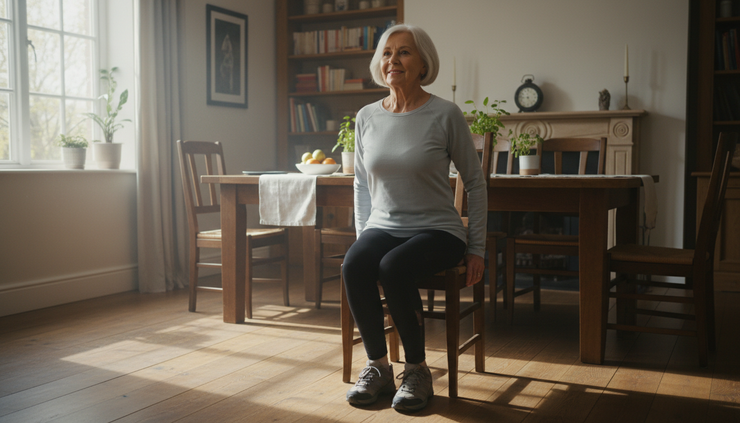
While sitting
Choose a chair that lets both feet touch the floor. Place a small towel roll behind the low back if it feels good.
You don’t have to sit perfectly. Shift positions often. Your body likes movement more than one “correct” pose held too long.
Know when to get extra help
Some posture changes are simple habits. Others need a trained eye, especially when pain, falls, or medical conditions are involved.
Consider asking a healthcare professional for guidance if you notice:
New or worsening pain
Dizziness during movement
Trouble clearing your feet while walking
Recent falls or near falls
Numbness, weakness, or tingling
A sudden change in posture
Fear of walking outside or using stairs
A physical therapist can check strength, flexibility, walking pattern, and balance. They can also tailor exercises to arthritis, joint replacements, osteoporosis, Parkinson’s disease, stroke recovery, or other conditions.
If you’d like friendly support building safer routines at home, you can explore senior coaching options here.
A simple 10-minute posture routine
Here’s a short routine you can try most days. Keep a chair or counter nearby.
Breathing reset
Sit or stand tall. Take 3 slow breaths. Let your shoulders drop as you exhale.
Heel-to-toe rocks
Hold the counter and shift forward and back 8 times.
Shoulder rolls
Roll shoulders slowly 5 times each direction.
Chin glides
Glide the head back gently 5 times.
Sit to stand
Stand up and sit down 5 times, using hands as needed.
Side leg lifts
Do 6 slow lifts on each side.
Tall posture pause
Stand with feet grounded. Stack head, ribs, and hips. Hold for 3 relaxed breaths.
Stop if anything feels sharp, strange, or unsafe. Mild effort is fine. Pain is not the goal.
FAQ
How long does it take to improve posture?
Small changes can feel better right away, especially with sitting and standing habits. Strength and balance changes usually take steady practice over several weeks. Keep it gentle and consistent.
Should seniors use posture braces?
A brace may help in certain cases, but it can also make muscles rely on outside support if used too much. Ask a healthcare professional before using one regularly.
Is it bad to look down while walking?
Not always. Looking down can help on uneven ground or stairs. The goal is to avoid staring at the floor all the time. Practice looking ahead when the path is clear and safe.
Can posture exercises help with back pain?
They may help some people by improving strength, mobility, and body position. Back pain has many causes, so get medical advice if pain is new, severe, or spreading into the legs.
What’s the safest way to start if balance is poor?
Start seated or hold a sturdy counter. Keep movements small. It’s also wise to ask a physical therapist or doctor for a balance check if there’s a history of falls.

The real goal is easier movement
Good posture isn’t about looking perfect. It’s about making everyday life feel better. Standing at the sink, getting up from a chair, walking to the mailbox, turning to talk with someone, these are the moments that matter.
Start with one habit. Stack your body before you stand. Lift your reading material closer to eye level. Do a few heel-to-toe rocks at the counter. Small, repeated choices teach the body a new normal.
Stay patient with yourself. A steadier, more comfortable posture is built one easy practice at a time.


Comments